Giriraj Singh: Yoga fuelling jobs, wellness economy for youth
Synopsis
Union Textiles Minister Giriraj Singh marked International Yoga Day 2026 by framing yoga as a livelihood platform for Indian youth, citing growing demand for yoga instructors, wellness centres and AYUSH services, while linking the discipline's global rise to India's cultural and economic ambitions.
Key Takeaways
Union Textiles Minister Giriraj Singh posted on 22 June 2026 , a day after International Yoga Day , positioning yoga as a driver of employment and self-employment for Indian youth.
Singh highlighted opportunities in yoga instruction, wellness centres, AYUSH services , and the broader health sector as new livelihood avenues.
International Yoga Day has been observed annually on 21 June since 2015 , following a UN resolution proposed by PM Narendra Modi in 2014.
The Ministry of AYUSH , set up in November 2014 , provides the institutional framework for integrating yoga and traditional medicine into public health and the economy.
Singh framed yoga's growing global influence as a source of new recognition for India's cultural identity and the capability of its youth.
The post signals a shift in political messaging around yoga — from cultural symbolism toward an explicit employment and enterprise narrative .
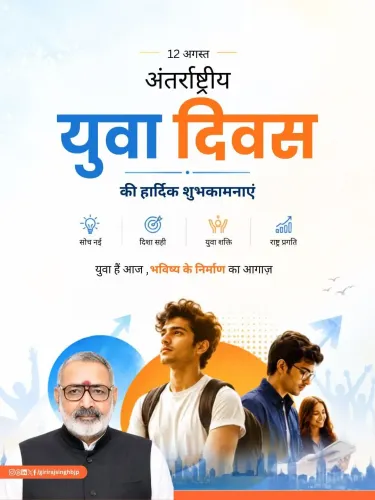
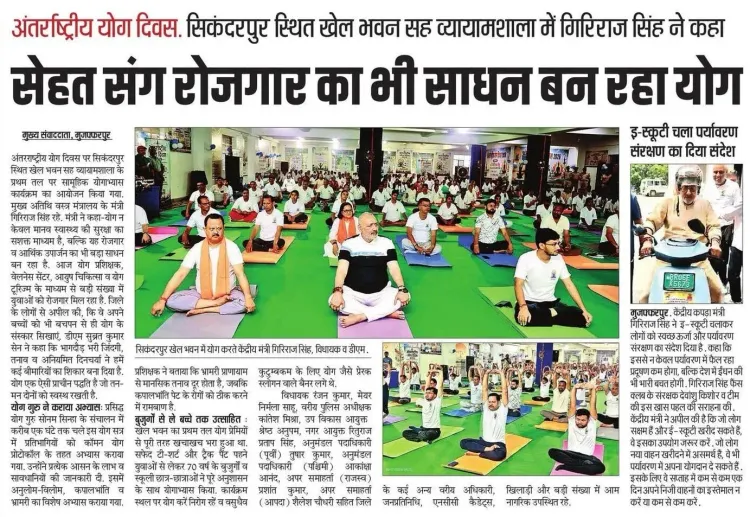
Union Textiles Minister Giriraj Singh on Monday, 22 June 2026, highlighted yoga's expanding role as a driver of employment and self-employment in India, linking its global rise to both cultural soft power and economic opportunity for millions of young Indians.
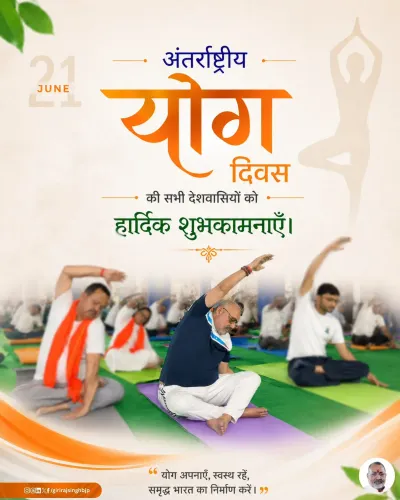
Posting on the occasion of International Yoga Day 2026, Singh wrote in Hindi: 'Yog swasth jeevan ke saath-saath rozgar aur swrozgar ka bhi sashakt aadhar ban raha hai' — 'Yoga is becoming a strong foundation not only for healthy living but also for employment and self-employment.' He pointed to growing opportunities for yoga instructors, wellness centres, AYUSH services, and the broader health sector as new avenues opening up for lakhs of youth.
Context
International Yoga Day is observed annually on 21 June, a tradition that began in 2015 following a United Nations General Assembly resolution. The resolution was proposed by Prime Minister Narendra Modi at the UN in September 2014, marking one of India's most visible cultural diplomacy initiatives of the past decade. Singh's post, published the day after the formal observance, extends the conversation from ceremony to economic utility.
Singh represents Begusarai, Bihar in the Lok Sabha and currently serves as the Union Minister of Textiles. His commentary on the wellness economy, while outside his direct ministerial portfolio, reflects the cross-cutting nature of India's push to brand yoga as both a public health tool and a livelihood platform.
Policy Backdrop
The Ministry of AYUSH, established in November 2014 by upgrading the earlier Department of AYUSH, has been the institutional anchor for integrating Ayurveda, Yoga, Unani, Siddha and Homeopathy into mainstream public health delivery. The National Health Policy 2017 formally recognised AYUSH systems as part of the public health framework, lending policy legitimacy to the wellness economy Singh is now championing.
Since 2014, successive budgets and state-level programmes have supported yoga training infrastructure, AYUSH facilities, and wellness tourism. The government has also embedded yoga into school curricula and positioned it as a soft-power instrument in foreign policy outreach, creating a layered ecosystem that spans health, education, and services trade.
Stakeholders and Impact
The primary beneficiaries Singh identifies are Indian youth — yoga instructors, wellness entrepreneurs, and AYUSH practitioners — for whom the expanding domestic and international demand for yoga-based services represents a tangible livelihood pathway. Globally, the wellness industry has grown into a multi-trillion-dollar market, and India's positioning as yoga's country of origin gives it a structural advantage in capturing a share of that demand.
Singh's framing also carries a soft-power dimension: he argues that yoga's rising global influence is giving India's cultural identity and youth capability a new recognition on the world stage. This aligns with the government's broader 'Brand India' narrative, which ties traditional knowledge systems to modern economic competitiveness.
What's Next
Attention will now turn to Ministry of AYUSH programme guidelines and state budget allocations that follow the Yoga Day 2026 cycle, which typically catalyse fresh announcements on wellness infrastructure and training programmes. Observers will also watch for any inter-ministerial coordination — particularly between the Textiles Ministry and the wellness sector — given India's growing market for yoga apparel, mats, and related products that sit at the intersection of both portfolios. Singh's post signals that the political messaging around yoga is shifting from cultural symbolism toward a more explicit employment and enterprise narrative ahead of the next policy season.
Point of View
The messaging underscores how broadly the BJP is distributing its wellness-economy narrative ahead of potential policy announcements. The framing also dovetails with India's soft-power strategy: by linking yoga's global popularity to domestic job creation, the government conflates cultural pride with material benefit, a durable political formula. If matched by concrete budget allocations or inter-ministerial programmes, this could signal a more integrated approach to the wellness sector than has existed so far.
NationPress
20 Sept 2026
Frequently Asked Questions
What did Giriraj Singh say about yoga and employment?
Giriraj Singh said yoga is becoming a strong foundation for employment and self-employment in India, with growing opportunities in yoga instruction, wellness centres, AYUSH services, and the health sector opening new possibilities for lakhs of youth.
When is International Yoga Day celebrated?
International Yoga Day is observed every year on 21 June. It has been celebrated since 2015 after the United Nations General Assembly passed a resolution proposed by Prime Minister Narendra Modi in September 2014.
What is the AYUSH ministry and what does it do?
The Ministry of AYUSH was established in November 2014 to promote Ayurveda, Yoga, Unani, Siddha and Homeopathy. It serves as the institutional anchor for integrating traditional medicine systems into India's public health framework and wellness economy.
How is yoga connected to India's wellness economy?
Yoga has been positioned by the Indian government as a service-sector livelihood platform, with successive budgets supporting yoga training infrastructure, AYUSH facilities, and wellness tourism. India's status as yoga's country of origin gives it a competitive advantage in the global wellness market.
Why is a Textiles Minister commenting on yoga and health?
While yoga falls outside Giriraj Singh's direct ministerial portfolio, senior BJP leaders routinely participate in cross-cutting national campaigns. There is also a potential inter-ministerial angle, as India's yoga apparel, mats, and wellness product market sits at the intersection of textiles and the wellness economy.