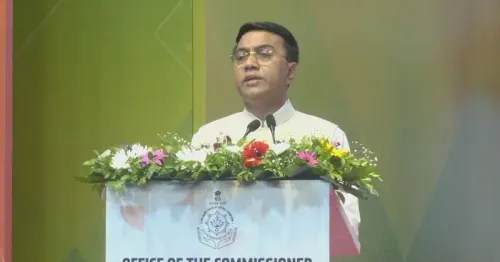
Goa CM Sawant gives police full powers to maintain law and order
Synopsis
Goa Chief Minister Pramod Sawant on 14 August 2026 publicly granted Goa Police full authority to act firmly on law and order, calling on residents to cooperate with police personnel across the state ahead of Independence Day.
Key Takeaways
Goa CM Pramod Sawant issued a public directive on 14 August 2026 granting Goa Police complete operational freedom.
The statement calls on all citizens to respect police authority and cooperate in maintaining peace and security.
Under the Seventh Schedule of the Indian Constitution, public order and police are state subjects, giving the chief minister full civilian authority over the state force.
The directive comes on the eve of Independence Day (15 August) , a period of heightened security across India.
Goa has been governed by the BJP since 2017, with Sawant at the helm since 2019.
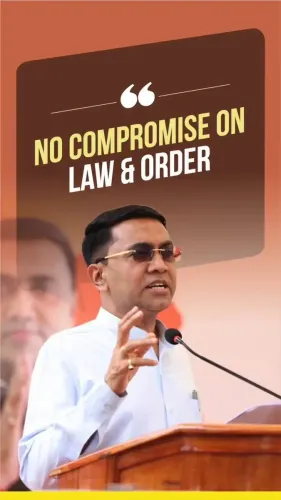
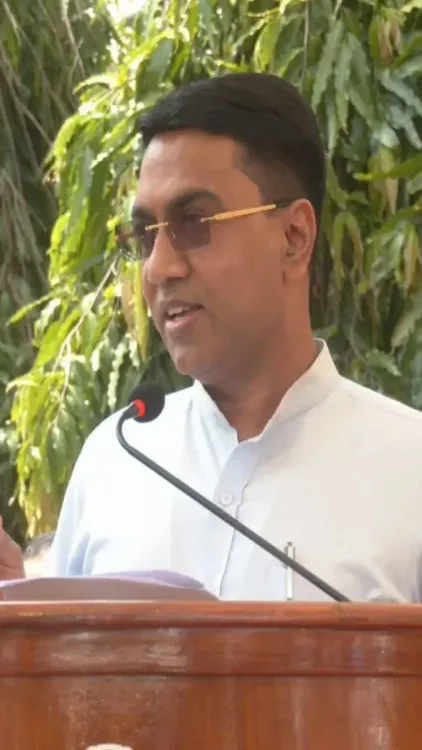
A direct order from the top — and a public signal that Goa Chief Minister Pramod Sawant wants no ambiguity about who is in charge of the streets. On Friday, 14 August 2026, Sawant posted a pointed directive on X, granting Goa Police complete operational authority to act firmly in the interest of law and order, and urging citizens across the state to cooperate with police personnel.
Sawant's statement was unambiguous: 'I have given complete power to Goa Police to act firmly in the interest of law and order, and I urge everyone to respect their authority and cooperate with our police personnel in maintaining peace and security across the State.'
What 'full powers' means in constitutional terms
Under the Seventh Schedule of the Indian Constitution, public order and police are state subjects — meaning the chief minister already holds the highest civilian authority over the state police force. A public declaration of this kind is therefore less a legal instrument and more a political and administrative signal: the government is watching, the force has backing, and deterrence is the message. Indian state chief ministers periodically issue such directives during periods of perceived unrest or ahead of sensitive dates to project zero-tolerance governance. The timing — the eve of Independence Day on 15 August — adds a layer of context: heightened security deployments are standard across all Indian states in this window.Goa Police and the BJP government's law-and-order record
Goa, the western coastal state, has been governed by the BJP since 2017. Sawant has led the government since 2019. The state's police force, though smaller than those of larger Indian states, handles a complex security environment — balancing tourist inflows, coastal borders, and periodic political demonstrations. Public directives of this nature serve a dual purpose: they reassure residents that the administration is in control, and they place accountability squarely on law enforcement to deliver visible results. The coming days will reveal whether specific operations or incidents follow — but for now, the message from Panaji is clear: Goa Police have the green light, and the chief minister expects results.Point of View
But saying it loudly resets expectations for both the police force and the public. Issued on the eve of Independence Day, it fits a pattern seen across BJP-governed states where chief ministers use pre-holiday windows to project administrative firmness. The absence of a named trigger is deliberate: a broad mandate is harder to challenge and easier to sustain. Whether it translates into measurable action on the ground, or remains a posture, will depend entirely on what follows in the next news cycle.
NationPress
28 Sept 2026
Frequently Asked Questions
Why did Goa CM Pramod Sawant give full powers to Goa Police?
Sawant publicly granted Goa Police complete operational authority to maintain law and order, urging citizens to cooperate. The exact incident or context prompting the 14 August 2026 directive has not been officially specified.
Does a chief minister have the authority to grant police 'full powers'?
Under the Seventh Schedule of the Indian Constitution, public order and police are state subjects, so the chief minister already holds the highest civilian authority over the state police. Such declarations are administrative signals rather than new legal grants of power.
When did Pramod Sawant become Chief Minister of Goa?
Pramod Sawant has been Chief Minister of Goa since 2019. The BJP has governed the state since 2017.
What does Goa Police's mandate cover?
Goa Police is responsible for law and order, crime prevention, and security across the state, including its coastal borders and tourist zones.
Is this directive related to Independence Day security?
The statement was posted on 14 August 2026, the eve of Independence Day, a period when heightened police deployments are standard across all Indian states, though Sawant did not explicitly link the directive to Independence Day.