Goa CM Sawant to Meet Handicrafts & Coir Stakeholders Live
Synopsis
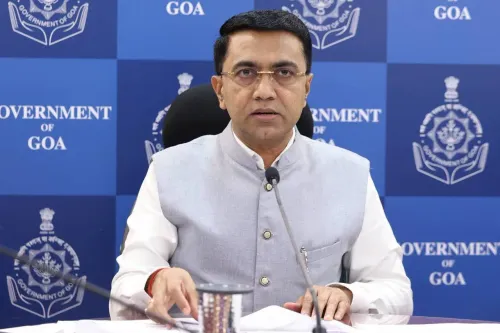
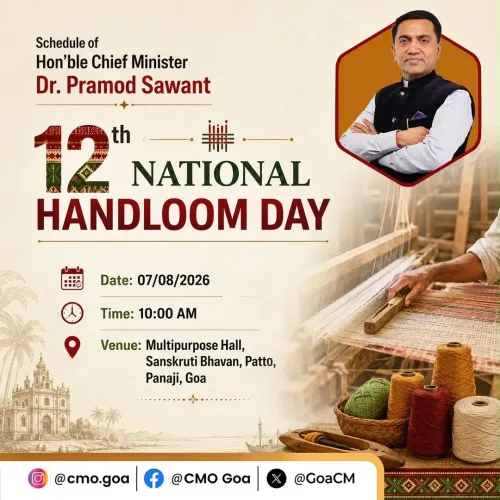
Goa Chief Minister Dr. Pramod Sawant will hold a live stakeholder interaction on 8 August 2026 covering schemes and reforms under the Department of Handicrafts, Textile and Coir and the GHRSSIDC, giving artisans and small-industry workers direct access to the state's top executive.
Key Takeaways
The live interaction is scheduled for 8 August 2026 , announced by the Chief Minister's Office of Goa on 7 August 2026.
Pramod Sawant will personally engage with stakeholders of the handicrafts, textile, and coir sectors.
Both the Department of Handicrafts, Textile and Coir and the Goa Handicrafts, Rural and Small Scale Industries Development Corporation Ltd. are covered in the session.
Beneficiaries include handicraft artisans, textile workers, coir producers, and small-scale industry operators.
The session may yield on-the-spot scheme announcements and will generate feedback to shape future departmental policy.
The interaction reflects Goa's broader push to diversify economic focus beyond tourism toward traditional crafts and MSMEs.
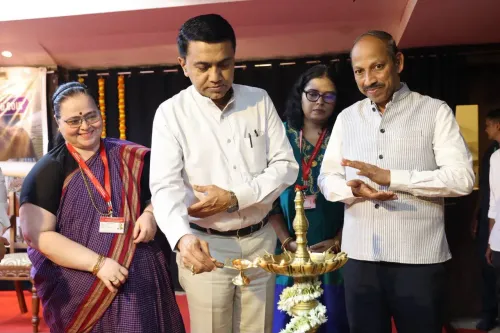
Artisans, weavers, and small-industry workers across Goa will get a direct line to the top on 8 August 2026 — when Chief Minister Dr. Pramod Sawant holds a live interaction with stakeholders of the state's handicrafts, textile, and coir sectors.
The Chief Minister's Office of Goa announced the session on 7 August 2026, confirming that CM Sawant will engage with participants connected to both the Department of Handicrafts, Textile and Coir and the Goa Handicrafts, Rural and Small Scale Industries Development Corporation Ltd. (GHRSSIDC) — the state's principal public-sector arm for rural and small-scale enterprise development.
Who sits across the table from the CM
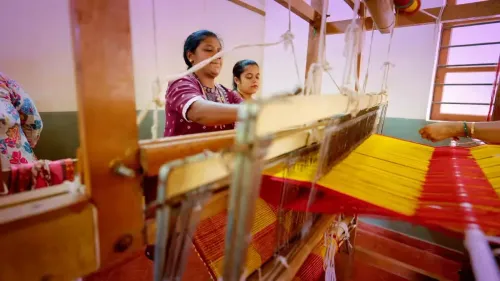
The interaction is open to a wide band of ground-level participants: handicraft artisans, handloom and textile workers, coir producers, and operators of small-scale industries registered under the GHRSSIDC umbrella. For many of these workers, a live session with the Chief Minister is a rare window to flag on-ground bottlenecks in scheme implementation — subsidy delays, raw-material access, or market linkage gaps — directly, without bureaucratic filters.
Why Goa is betting on crafts beyond tourism
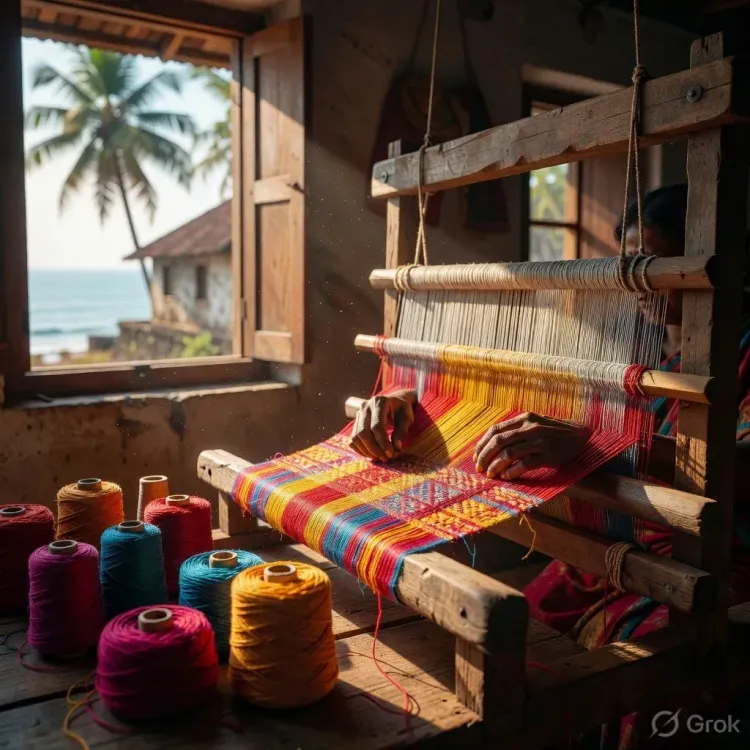
Goa's economy is heavily associated with tourism, but the state government has steadily pushed to build resilience in traditional craft and MSME sectors. The Department of Handicrafts, Textile and Coir drives policy for artisanal production that has roots far older than the state's beach economy — from Kunbi weaving to coir-based cottage industries. The GHRSSIDC, as the implementing corporation, channels credit, training, and market support to rural producers who sit largely outside the formal financial system.
Direct stakeholder interactions of this kind serve a dual purpose: they let the government communicate scheme reforms clearly to beneficiaries, and they generate real-time feedback that can shape subsequent policy revision. Dr. Pramod Sawant, who has led the state since 2019, has used similar formats in other sectors to signal responsiveness between election cycles.
What to watch from the 8 August session
The live format raises the prospect of on-the-spot announcements — a scheme tweak, a new incentive, or a deadline extension — that could directly affect thousands of beneficiaries. Equally important will be the feedback loop: the concerns raised by artisans and small producers on 8 August are likely to inform the department's next planning cycle. Whether those inputs translate into concrete scheme revisions will be the real test of the exercise.
For Goa's craft workers, the clock is already ticking toward tomorrow's session — and the questions they carry into that room will matter as much as the answers they receive.
Point of View
Blending accountability optics with genuine feedback collection. For Goa, where economic diversification beyond tourism is a stated priority, the spotlight on handicrafts and coir signals an intent to mainstream these sectors in policy discourse. Dr. Sawant's use of live formats also serves a political function — demonstrating accessibility ahead of any electoral cycle. The real measure of the session's worth will be whether the feedback gathered on 8 August produces traceable, time-bound scheme revisions.
NationPress
22 Sept 2026
Frequently Asked Questions
When is Goa CM Pramod Sawant's handicrafts stakeholder interaction?
The live interaction is scheduled for 8 August 2026 , as announced by the Chief Minister's Office of Goa on 7 August 2026.
Who can participate in the Goa CM handicrafts live session?
Stakeholders of the Department of Handicrafts, Textile and Coir and the Goa Handicrafts, Rural and Small Scale Industries Development Corporation Ltd. — including artisans, weavers, coir producers, and small-scale industry operators — are the intended participants.
What is the GHRSSIDC in Goa?
The Goa Handicrafts, Rural and Small Scale Industries Development Corporation Ltd. (GHRSSIDC) is a state public-sector undertaking that provides credit, training, and market support to rural producers and small-scale enterprises across Goa.
What schemes will be discussed in the 8 August 2026 CM interaction?
The session covers schemes and reforms under the Department of Handicrafts, Textile and Coir and the GHRSSIDC. Specific scheme details were not disclosed in the official announcement.
Why is Goa focusing on handicrafts and coir sectors?
Goa has been working to diversify its economy beyond tourism by strengthening traditional craft and MSME sectors. The Department of Handicrafts, Textile and Coir and the GHRSSIDC are the primary institutional vehicles for this diversification effort.