Goa CM Sawant Cites World Bank Brief on India Poverty Drop
Synopsis
The World Bank's October 2026 Poverty and Equity Brief shows 49.6 crore Indians rose above the lower-middle-income poverty line from 2011-2023, extreme poverty fell to 2.6%, and 13.4 crore jobs were added from 2017-2023. Goa CM Pramod Sawant cited the brief as proof of progress under PM Modi's Viksit Bharat vision.
Key Takeaways
49.6 crore people moved above the lower-middle-income poverty line between 2011 and 2023 , according to the World Bank's October 2026 Poverty and Equity Brief.
Extreme poverty in India fell from 27.1 per cent to 2.6 per cent over the same period.
13.4 crore jobs were added between 2017 and 2023 , with rural women accounting for a significant share of the gains.
Electricity access now covers 99 per cent of India's population, partly driven by the Saubhagya scheme launched in 2017.
Goa CM Pramod Sawant framed the data within PM Narendra Modi's 'Antyodaya to Viksit Bharat' development arc.
The next NITI Aayog MPI update and the Union Budget are the key near-term policy markers to watch.
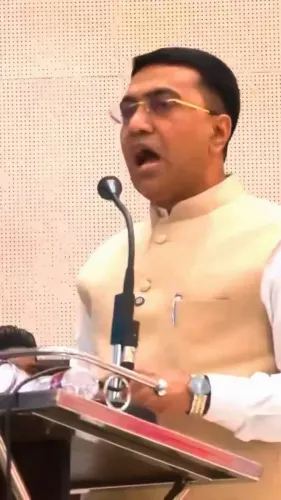
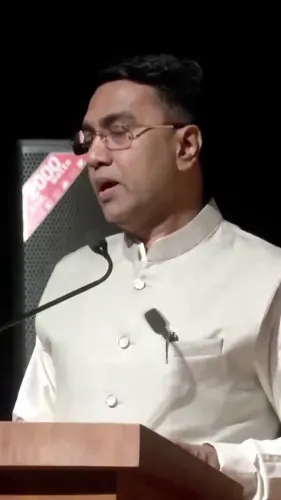
Nearly half a billion Indians crossed the lower-middle-income poverty line in just over a decade — and now a fresh World Bank assessment has put that number in black and white. Goa Chief Minister Pramod Sawant on Monday, 2 November 2026 shared the highlights of the World Bank's October 2026 Poverty and Equity Brief on India, calling it evidence of a 'stronger nation' built on inclusive growth.
The numbers the World Bank put on India's transformation
The brief's headline figure is stark: 49.6 crore people moved above the lower-middle-income poverty line between 2011 and 2023. Extreme poverty, meanwhile, fell from 27.1 per cent to 2.6 per cent over the same period — a collapse of more than 24 percentage points in a single generation. That is not incremental progress. That is a structural shift. On employment, the brief records a gain of 13.4 crore jobs between 2017 and 2023, with rural women accounting for a significant share of the new entrants — a detail CM Sawant specifically flagged. Electricity access, the brief notes, now reaches 99 per cent of the population, closing a gap that once defined the limits of India's welfare state.The policy engine behind the gains
Three threads in India's policy architecture explain the numbers. First, the Saubhagya scheme, launched in 2017, drove last-mile electricity connections to rural and peri-urban households — directly underpinning the near-universal coverage figure. Second, the expansion of Direct Benefit Transfer infrastructure after 2014 reduced leakage in welfare delivery, boosting effective consumption support for low-income households. Third, sustained GDP growth created formal and informal employment at a pace that drew rural women into the workforce in measurable numbers. NITI Aayog had established its own Multidimensional Poverty Index baseline in 2021, giving policymakers a domestic framework that tracks poverty across health, education and living standards — not just income. The World Bank brief now adds an international corroboration to that domestic scorecard.Antyodaya to Viksit Bharat — the arc CM Sawant is drawing
Sawant closed his post with the phrase 'Antyodaya to Viksit Bharat' — 'uplift of the last person to a developed India' — framing the data not as a conclusion but as a waypoint. The Viksit Bharat 2047 vision, anchored to Prime Minister Narendra Modi's goal of a fully developed India by the centenary of Independence, gives these numbers a forward direction: reduce the remaining 2.6 per cent extreme poverty to near-zero, sustain employment creation and deepen quality-of-life improvements for every citizen. Rural women's rising labour-force participation is the subplot to watch. If employment gains among that cohort hold and deepen, the next World Bank brief could show not just poverty exit but genuine income mobility — which is the harder, more durable prize. The data is on the board. The next NITI Aayog MPI update and the forthcoming Union Budget will show whether the policy machine can sustain the momentum.Point of View
A metric that resonates with international development institutions and domestic swing voters alike. The 'Antyodaya to Viksit Bharat' framing signals that the government intends to use the brief not as a destination but as a launchpad for the next phase of welfare ambition.
NationPress
2 Nov 2026
Frequently Asked Questions
What did the World Bank October 2026 India Poverty Brief find?
The World Bank's October 2026 Poverty and Equity Brief found that 49.6 crore Indians moved above the lower-middle-income poverty line between 2011 and 2023, extreme poverty dropped from 27.1 per cent to 2.6 per cent, and 13.4 crore jobs were added between 2017 and 2023.
How did India achieve near-universal electricity access?
India's electricity access reached 99 per cent of the population largely through the Saubhagya scheme launched in 2017, which targeted last-mile connections for rural and peri-urban households.
Why did Goa CM Pramod Sawant post about the World Bank India data?
CM Sawant cited the brief to highlight inclusive growth under PM Narendra Modi's leadership and to connect the data to the BJP's Viksit Bharat 2047 development vision, which aims for a fully developed India by the centenary of Independence.
What role did rural women play in India's employment gains?
According to the World Bank brief cited by CM Sawant, rural women accounted for a significant share of the 13.4 crore employment increase recorded between 2017 and 2023.
What is the NITI Aayog Multidimensional Poverty Index?
NITI Aayog's Multidimensional Poverty Index, baselined in 2021, is a domestic framework that tracks poverty across health, education and living standards — not just income — complementing international measures such as the World Bank's poverty line indicators.