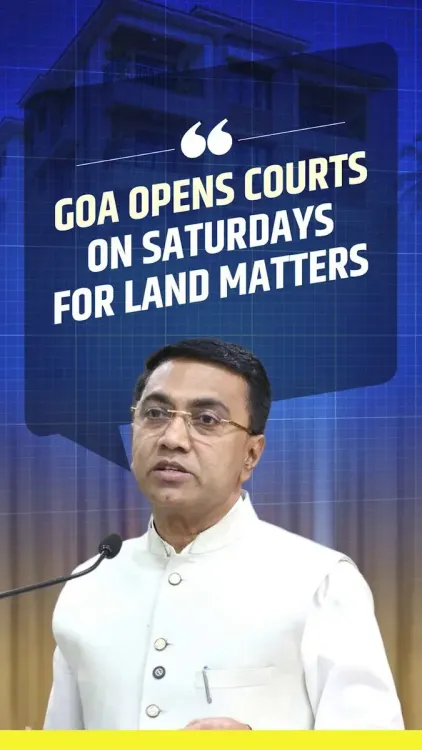
CM Sawant opens Goa revenue courts on Saturdays to clear land cases
Synopsis
Goa CM Pramod Sawant has ordered revenue courts to open on Saturdays to speed up pending land and Mundkar tenancy cases, offering relief to litigants caught in years-long disputes under the Goa Mundkar (Protection from Eviction) Act, 1975.
Key Takeaways
Goa's revenue courts will now sit on Saturdays to fast-track pending land-related cases.
The move specifically targets Mundkar matters — tenancy disputes under the Goa Mundkar (Protection from Eviction) Act, 1975 .
The measure benefits both mundkars (long-term tenants) seeking security of tenure and landowners seeking to clear title encumbrances.
This is an administrative calendar extension, not a new legislative framework.
Case-disposal rate data from Goa's revenue department will be the key metric to judge the initiative's effectiveness.
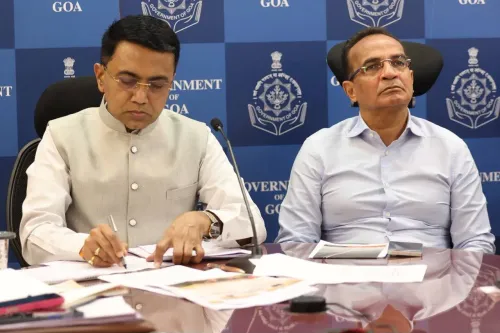
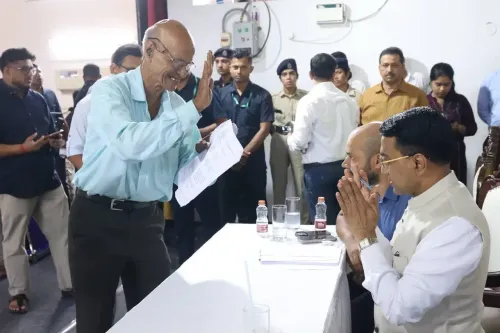
Goa's land dispute backlog just got a new pressure valve. Chief Minister Pramod Sawant announced on Monday, 16 November 2026 that the Government of Goa has extended revenue court working days to include Saturdays, specifically to fast-track pending land-related cases — including the long-contested category of Mundkar matters.
What Mundkar cases mean for Goa's land landscape
Mundkar cases are not ordinary tenancy disputes. They arise from the Goa Mundkar (Protection from Eviction) Act, 1975 — a law that grants long-term tenants, known as mundkars, statutory protection against eviction from private land they have historically occupied. Decades on, these cases continue to pile up in revenue courts, pitting landowners against tenants in disputes that can freeze property rights for years.
The human cost is real: families unable to build, sell, or settle inheritance because a court file sits unresolved. Saturday sittings are a direct answer to that frustration.
Saturday courts and the logic of incremental reform
The move is an administrative rather than a legislative intervention — no new law, no land code overhaul. Instead, the state is simply adding one more working day to the revenue court calendar, compressing the queue without restructuring the system itself.
Across India, states periodically extend revenue court hours or designate special sitting days to address chronic case pendency in land and tenancy matters — a state subject under the Constitution where the Centre sets direction but states hold the lever. Goa's step fits that incremental pattern, running alongside national pushes for land-record digitalisation and reduced land litigation.
Who stands to benefit — and what to watch
The immediate beneficiaries are the two sides of every stalled file: mundkars seeking legal security of tenure and landowners looking to clear encumbrances on their property. For a state where tourism, real estate, and agriculture intersect on the same parcels of land, faster resolution has an economic ripple well beyond the courtroom.
The measure's real worth, however, will show in the numbers — specifically, quarterly case-disposal rates from Goa's revenue department. Faster sitting days help only if judicial officers, support staff, and litigant representation all show up on Saturday mornings too.
Goa opened its courts on Saturday. Whether the files actually close is the question that will follow.
Point of View
CM Sawant is addressing one of Goa's most politically sensitive land-law legacies — a 1975-era tenancy statute that has never stopped generating litigation. The intervention is administratively low-risk but politically visible: it signals responsiveness to ordinary litigants without touching the underlying law. The broader arc here is states using operational tweaks — extended hours, special courts, digitalisation — to manage land-dispute backlogs that decades of legislation have not resolved. Whether Goa pairs this calendar change with digitisation of revenue records will determine if it is a durable reform or a weekend gesture.
NationPress
17 Nov 2026
Frequently Asked Questions
Why is Goa keeping revenue courts open on Saturdays?
The Government of Goa has extended revenue court working days to Saturdays to fast-track the large backlog of pending land-related cases, including Mundkar tenancy matters that have been unresolved for years.
What is a Mundkar case in Goa?
A Mundkar case arises under the Goa Mundkar (Protection from Eviction) Act, 1975, which protects long-term tenants called mundkars from being evicted from private land they have historically occupied. These disputes often involve competing claims between tenants and landowners.
Who benefits from Goa's Saturday revenue court sittings?
Both mundkars seeking legal security of tenure and landowners looking to clear property encumbrances stand to benefit, along with anyone involved in a stalled land dispute in Goa's revenue courts.
Is this a new law or just an administrative change?
It is an administrative measure — the Government of Goa has extended the working calendar of existing revenue courts to include Saturdays. No new legislation has been introduced.
How will the success of Goa's Saturday court initiative be measured?
The key indicator will be quarterly case-disposal rate reports from Goa's revenue department, showing how many pending land and Mundkar cases are actually resolved under the extended sitting schedule.