Viksit Rajasthan 2047 needs good governance: V. Srinivas
Synopsis
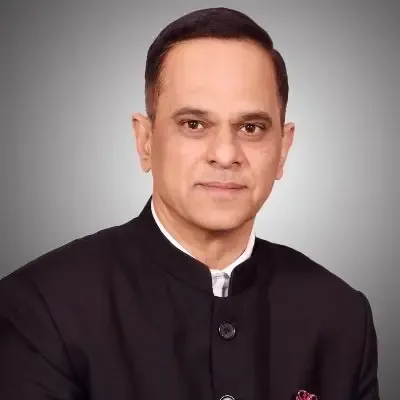
Rajasthan Chief Secretary V. Srinivas says the state's 2047 development goal depends on accountable governance and last-mile services. At an HCM RIPA lecture in Jaipur, he called for faster decisions and grievance resolution, while highlighting digital platforms and a four-part development strategy.
Key Takeaways
Rajasthan Chief Secretary V.
Srinivas linked good governance to the state's Viksit Rajasthan @2047 goal.
He spoke in Jaipur on 23 November at a lecture marking 70 years of HCM RIPA .
Srinivas described a four-pronged strategy covering governance, infrastructure, growth and employment, and social welfare.
He highlighted the Rajasthan Sampark Helpline 181 , Raj-Sampark 2.0 and other platforms for public service delivery.
He called for timely implementation of investment proposals received under Rising Rajasthan.
Good governance is central to achieving Viksit Rajasthan @2047, Rajasthan Chief Secretary V. Srinivas said in Jaipur on 23 November, linking the state's development goal with Prime Minister Narendra Modi's vision of Viksit Bharat @2047. He said the state government was using technology and citizen-focused administration to deliver public services to the last mile.
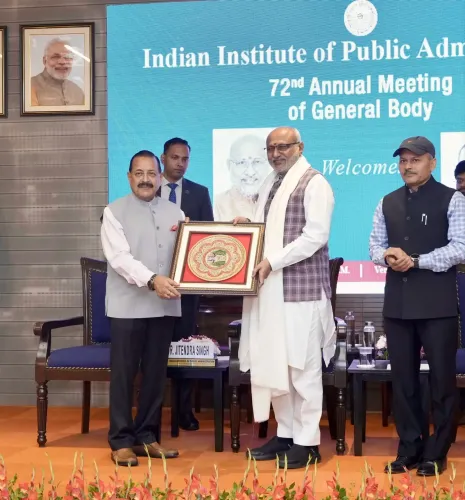
Srinivas made the remarks while inaugurating a Memorial Lecture Series at the Bhagwat Singh Mehta Auditorium, marking 70 years of the Harish Chandra Mathur Rajasthan Institute of Public Administration (HCM RIPA). His address focused on administrative reforms for effective and accountable governance.
Administrative reforms and the 2047 goal
The Chief Secretary urged civil servants to work with sensitivity, make decisions promptly and focus on results. He said transparency, responsibility and accountability were essential to effective administration, referring to the Prime Minister's Panch Pran and the principle of minimum government, maximum governance.
Srinivas described Amrit Kaal, the period leading up to the centenary of India's Independence, as a decisive phase in national transformation. A developed Rajasthan, he said, would make a significant contribution to the goal of a developed India by 2047.
The connection places public administration alongside broader development objectives: the state's ability to deliver services, respond to grievances and carry out policy is part of the approach Srinivas outlined.
Four areas in the state strategy
According to Srinivas, the state government's strategy has four components. The first combines stronger policy, finance and governance; the second covers infrastructure development and sustainability.
The remaining components focus on economic growth and employment generation, and on social welfare and public well-being. Together, they span both the delivery of government services and the conditions the state seeks to create for growth.
He also called for better Ease of Doing Business, deregulation and swift implementation of investment proposals received under the Rising Rajasthan initiative. His remarks did not specify a timetable for those proposals.
Technology and public service delivery
Srinivas asked officers to make technology and innovation part of their administrative work culture. He also stressed the need to remove unnecessary delays in file movement and ensure that public grievances are resolved on time and to a high standard.
Among the platforms he highlighted were the Rajasthan Sampark Helpline 181, Raj-Sampark 2.0, the Raj-Unnati project monitoring system, e-Mitra, Jan Aadhaar and the Single Sign-On (SSO) portal. He also referred to Sectoral Groups of Secretaries (SGoS) in discussing more transparent and accessible governance.
The Chief Secretary pointed to an expanding role for artificial intelligence, Geographic Information Systems and Blockchain in administrative efficiency. His remarks connected the use of these technologies with the wider goal of improving how government functions.
Reforms across public services
Srinivas outlined ongoing reforms spanning water conservation, smart policing, justice delivery, healthcare, education, energy and mining. These areas reach citizens and businesses through different parts of the state administration, making coordination relevant to the programme he described.
The address set out priorities rather than announcing a new deadline or detailed implementation schedule. The focus ahead will be on how departments put the stated emphasis on timely decisions, grievance handling and service delivery into practice.
Point of View
Not by the number of platforms listed. Rajasthan should make grievance resolution times, service outcomes and investment implementation progress accessible for public scrutiny. Technology can support accountability, but it cannot replace clear responsibility when a file or complaint remains unresolved.
NationPress
24 Nov 2026
Frequently Asked Questions
What did V. Srinivas say about Viksit Rajasthan 2047?
Rajasthan Chief Secretary V. Srinivas said good governance is central to achieving Viksit Rajasthan @2047. He linked the state goal to Prime Minister Narendra Modi's vision of Viksit Bharat @2047.
Where did the Rajasthan Chief Secretary make the remarks?
Srinivas spoke at the Bhagwat Singh Mehta Auditorium in Jaipur on 23 November. He was inaugurating a Memorial Lecture Series marking 70 years of HCM RIPA.
What are the four parts of Rajasthan's development strategy?
The four parts cover policy, finance and governance; infrastructure and sustainability; economic growth and employment; and social welfare and public well-being. Srinivas described these as the state government's development priorities.
Which Rajasthan public service platforms did Srinivas highlight?
Srinivas highlighted the Rajasthan Sampark Helpline 181, Raj-Sampark 2.0, Raj-Unnati, e-Mitra, Jan Aadhaar and the SSO portal. He said technology could help make governance more transparent and accessible.
What happens next under the Rajasthan governance plan?
Srinivas called for timely grievance resolution and swift implementation of Rising Rajasthan investment proposals. His remarks did not provide a specific implementation timetable.