Rajasthan Chief Secretary V. Srinivas proposes Asian governance dialogue at Seoul conference
Synopsis
Rajasthan Chief Secretary V. Srinivas used his platform as IIAS president at the Seoul conference to push for a formal Asian governance dialogue — positioning India's digital ID, unified payments, and grievance redressal systems as regional models. If the proposal advances, it could shape a new multilateral framework for Asian public administration exchange.
Key Takeaways
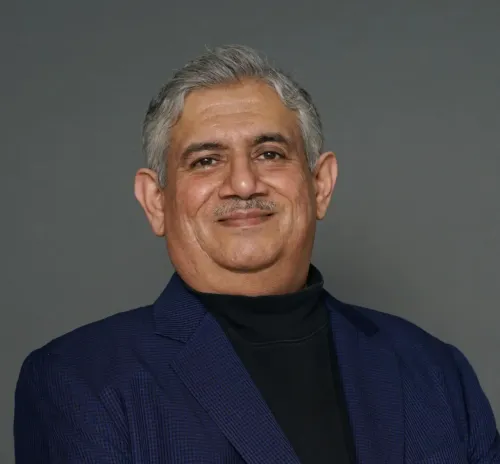
Srinivas , Rajasthan Chief Secretary and IIAS president , proposed a dedicated Asian governance dialogue at the annual conference in Seoul on 17 November .
The proposed forum aims to connect public administration scholars and practitioners across Asia and bridge research-practice gaps.
Srinivas highlighted India's digital identification infrastructure , unified payment systems , and civil service capacity-building programmes as regional models.
Discussions also covered AI adaptation , civil service reform , and digital grievance redressal mechanisms .
The four-day conference runs under the theme 'Growth for Society' and concludes on 20 November .
Srinivas is scheduled to present specific governance practices from Rajasthan and India before the conference ends.
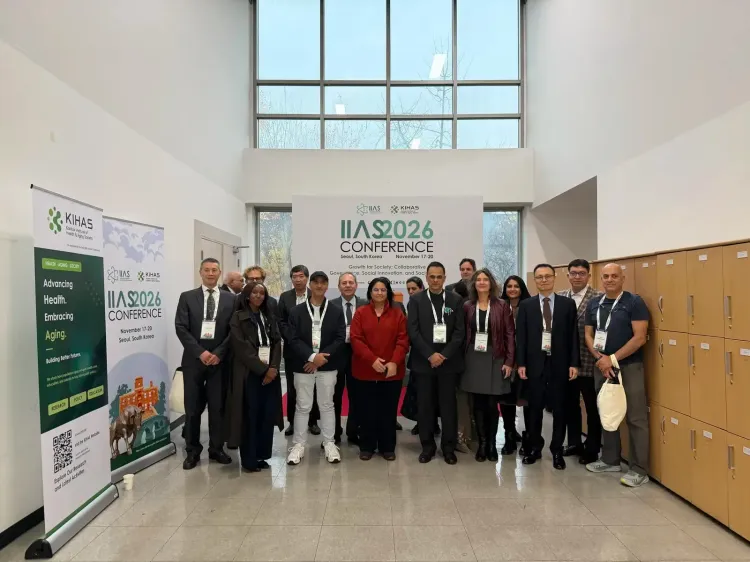
Rajasthan Chief Secretary V. Srinivas on 17 November 2026 proposed a dedicated Asian dialogue for future conferences of the International Institute of Administrative Sciences (IIAS), calling for a structured forum that brings together public administration scholars and practitioners from across the region. Srinivas put forward the proposal in his capacity as president of the IIAS on the opening day of its annual conference held in Seoul, South Korea.
The Proposed Asian Dialogue
The initiative, as outlined by Srinivas during the conference's opening session, aims to create a collaborative platform for researchers and administrators across Asia to exchange governance experiences. A central objective is to bridge the longstanding gap between academic scholarship and on-the-ground administrative practice — an area that Srinivas has identified as a key priority for his presidential term at the institute.
In his address to regional administrative groups, Srinivas emphasised the value of promoting an Asian model of governance and public administration. He raised the proposal further during bilateral meetings with leaders of national administrative academies, also suggesting that international institutions host future conferences to give scholars and policymakers a platform to share public policy insights with global counterparts. He additionally encouraged regional researchers to contribute to international administrative review publications.
India's Governance Innovations in Focus
Highlighting domestic administrative achievements, Srinivas pointed to several national initiatives as models for the region. These included large-scale civil service capacity-building programmes, digital identification infrastructure, and unified payment systems — widely recognised internationally as among India's most consequential governance-technology interventions.
Additional discussions covered centralised public grievance redressal mechanisms that enable online tracking of complaints, as well as digital file-processing platforms aimed at modernising day-to-day government operations. These examples were presented as replicable frameworks for other Asian nations.
Civil Service Reform and AI Adaptation
Srinivas also sought international perspectives on civil service reform, leadership development, and the evolving challenge of adapting public sectors to artificial intelligence and broader digital transformation. The exchange underscores growing recognition among Asian governments that AI governance frameworks require cross-border learning, not just domestic policy.
During the conference, Srinivas chaired both the council of administration and the general assembly, addressed the institute's finance committee, and held bilateral discussions with conference organisers and regional vice presidents — a full schedule that reflected the administrative weight of his presidential role.
Conference Theme and What Comes Next
The four-day conference is running under the theme 'Growth for Society', examining how governments, research institutions, businesses, and civil society can collaborate to address technological disruption and economic inequality. The event concludes on 20 November.
Srinivas is scheduled to present specific governance practices from Rajasthan and India before the conference closes — a presentation that is expected to draw attention to the state's administrative modernisation efforts on a global stage.
Point of View
Anchoring an Asian governance dialogue through the IIAS gives New Delhi a soft-power channel that operates outside the usual geopolitical forums. The harder question is whether the proposal moves beyond a conference plenary to a structured, funded mechanism — IIAS has seen similar regional aspirations stall at the idea stage. India's experience with Aadhaar, UPI, and CPGRAMS is genuinely instructive for the region, but governance export requires sustained institutional commitment, not just presidential advocacy during a four-day conference.
NationPress
18 Nov 2026
Frequently Asked Questions
What did Rajasthan Chief Secretary V. Srinivas propose at the Seoul conference?
V. Srinivas proposed a dedicated Asian dialogue within future conferences of the International Institute of Administrative Sciences (IIAS) to create a forum for public administration scholars and practitioners across Asia to share governance experiences. He put forward the proposal on 17 November as IIAS president on the opening day of the Seoul conference.
What is the International Institute of Administrative Sciences (IIAS)?
The IIAS is a global organisation that brings together public administration scholars, practitioners, and institutions to exchange research and governance experiences. V. Srinivas currently serves as its president, making him India's most senior representative at the organisation.
Which Indian governance initiatives did Srinivas highlight at the Seoul conference?
Srinivas pointed to India's large-scale civil service capacity-building programmes, digital identification infrastructure (such as Aadhaar), and unified payment systems (such as UPI) as models for other Asian nations. He also highlighted centralised public grievance redressal mechanisms and digital file-processing platforms.
What is the theme of the Seoul IIAS conference and when does it end?
The four-day conference is running under the theme 'Growth for Society,' examining how governments, businesses, research institutions, and civil society can collaborate to tackle technological disruption and economic inequality. The conference concludes on 20 November.
What will V. Srinivas present before the Seoul conference concludes?
Srinivas is scheduled to present specific governance practices from Rajasthan and India before the conference ends on 20 November. The presentation is expected to showcase the state's administrative modernisation efforts to a global audience of policymakers and scholars.