Rajasthan-Japan ties grow: Chief Secretary V. Srinivas meets India's Ambassador to Japan
Synopsis
Rajasthan is doubling down on its Japan partnership — from the Neemrana industrial model to Jaipur Metro Phase-II and urban infrastructure projects backed by JICA. Chief Secretary V. Srinivas's meeting with India's Ambassador to Japan signals a push to attract more Japanese capital and create overseas opportunities for Rajasthan's youth in IT and skilled trades.
Key Takeaways
Srinivas met India's Ambassador to Japan, Nagma Mohamed Mallick , at the Jaipur Secretariat on 7 May 2025 .
Discussions focused on investment promotion , ease of doing business , and expanding education and training opportunities in Japan for Rajasthan students.
The Neemrana Model of Excellence and collaboration with JICA were cited as key pillars of the Rajasthan-Japan relationship.
Japan is involved in bio-forest initiatives , Jaipur Metro Phase-II , and the Rajasthan Urban Infrastructure Development Project .
Ambassador Mallick highlighted growing demand for skilled Indian professionals in Japan, especially in information technology .
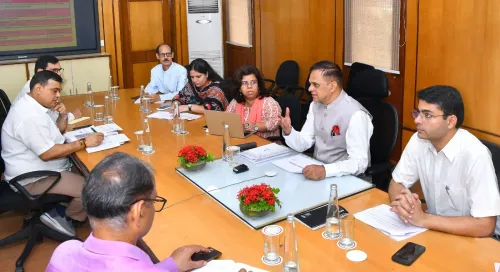
Rajasthan Chief Secretary V. Srinivas on Wednesday, 7 May 2025, highlighted the state's growing partnership with Japan during a high-level meeting at the Secretariat in Jaipur with India's Ambassador to Japan, Nagma Mohamed Mallick. The discussions centred on investment promotion, skilled workforce development, and expanding educational opportunities for Rajasthan students in Japan.
Rajasthan as an Investment Destination
Chief Secretary Srinivas underscored that Rajasthan has been steadily positioning itself as a preferred investment hub, backed by policy reforms, green energy initiatives, and tourism development. He noted that procedures for establishing new industries in the state have been simplified, made transparent, and streamlined, creating a more conducive environment for both domestic and foreign investors.
Srinivas attributed the state's accelerated growth in renewable energy and tourism to sustained efforts in good governance, which he said have opened fresh avenues for capital inflows. He also stressed the need for further deregulation and reduction in compliance requirements to make investment processes more efficient.
The Neemrana Model and JICA Collaboration
A central highlight of the meeting was the success of the "Neemrana Model of Excellence" — a flagship India-Japan industrial township in Rajasthan — and the state's ongoing collaboration with the Japan International Cooperation Agency (JICA). Srinivas described these as cornerstones of the long-standing and positive bilateral relationship between Rajasthan and Japan.
He specifically pointed to Japan's active involvement in key development projects in the state, including bio-forest initiatives, Phase-II of the Jaipur Metro, and the Rajasthan Urban Infrastructure Development Project — all of which reflect the depth of Japan's engagement with the state's infrastructure agenda.
Skilled Workforce and Education Opportunities
Ambassador Mallick noted that demand for skilled Indian professionals is rising in Japan, particularly in high-demand sectors such as information technology. She emphasised the importance of strengthening education and skill development initiatives to enable more Indian youth — especially from Rajasthan — to capitalise on these global opportunities.
Discussions also covered expanding avenues for students from the state to pursue higher education and training in Japan, signalling a potential uptick in people-to-people ties alongside the economic partnership.
Officials Present at the Meeting
Senior officials who attended the meeting included Shreya Guha, Director General of HCM-RIPA and ex-officio Additional Chief Secretary (Training); Dinesh Kumar, Additional Chief Secretary (Administrative Reforms and Social Justice); Archana Singh, Secretary (Personnel); and Rakesh Sharma, Commissioner and Joint Secretary, Information and Public Relations Department.
This meeting comes amid a broader national push to deepen India-Japan economic ties, with several Indian states competing to attract Japanese manufacturing and infrastructure investment. Rajasthan's proactive bilateral engagement suggests the state is positioning itself as one of the leading destinations for Japanese capital in the coming years.
Point of View
The push to send Rajasthan youth to Japan for IT training is smart but under-resourced — without language preparation and structured placement pipelines, it risks becoming another MoU that never moves beyond paper. The real benchmark will be whether JICA's next project cycle in Rajasthan comes with verifiable employment and infrastructure delivery metrics.
NationPress
24 Sept 2026
Frequently Asked Questions
What was discussed at the Rajasthan-Japan meeting in Jaipur?
Chief Secretary V. Srinivas and India's Ambassador to Japan Nagma Mohamed Mallick discussed investment promotion, ease of doing business, skilled workforce development, and opportunities for Rajasthan students to pursue education and training in Japan. Japan's ongoing infrastructure projects in the state were also reviewed.
What is the Neemrana Model of Excellence?
The Neemrana Model of Excellence refers to the India-Japan Industrial Township in Neemrana, Rajasthan, which has served as a flagship example of successful Japanese investment in India. It has been cited as a key driver of the Rajasthan-Japan bilateral relationship.
Which Japan-backed projects are currently active in Rajasthan?
Japan, through JICA and other channels, is involved in bio-forest initiatives, Phase-II of the Jaipur Metro, and the Rajasthan Urban Infrastructure Development Project. These reflect Japan's broad engagement with the state's infrastructure development agenda.
Why is Japan interested in skilled Indian professionals?
Ambassador Nagma Mohamed Mallick noted that demand for skilled Indian professionals is rising in Japan, particularly in information technology. She called for stronger education and skill development initiatives to help Indian youth access these opportunities.
How is Rajasthan improving its investment environment?
The state has simplified and streamlined procedures for setting up new industries, improved transparency, and is working to reduce compliance requirements. Sustained good governance has also driven growth in renewable energy and tourism, attracting both domestic and foreign investment.