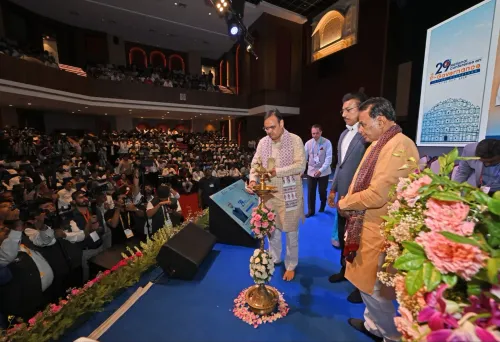
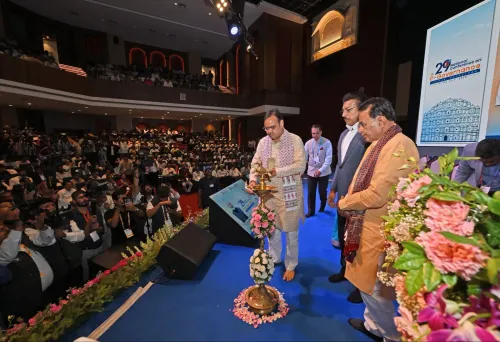
29th National e-Governance Conference: Jitendra Singh calls for intelligent AI use in governance
Synopsis
At the close of the 29th National e-Governance Conference in Jaipur, Minister Jitendra Singh drew a sharp distinction: adopting AI is not enough — governments must use it wisely, with human oversight intact. With 1.65 lakh Gram Panchayats submitting nominations and the Jaipur Declaration released, this edition marks a clear shift from urban-centric digital governance to a nationwide, rural-inclusive movement.
Key Takeaways
The 29th National e-Governance Conference (NeGC) concluded in Jaipur on 3 July 2025 at the Rajasthan International Centre.
Minister Jitendra Singh called for 'intelligent' AI adoption, stressing that human intervention remains essential alongside technology.
Countries including Mauritius , the Maldives , Sri Lanka , and South Africa have adopted Indian e-governance innovations such as Mission Karmayogi and CPGRAMS .
Nearly 1.65 lakh Gram Panchayats submitted nominations for the National e-Governance Awards 2026 , reflecting rural India's growing digital participation.
Around 200 experts and 100 digital platforms participated; the Jaipur Declaration was formally released outlining the future governance roadmap.
Rajasthan committed to piloting recommended governance models as district-level projects.
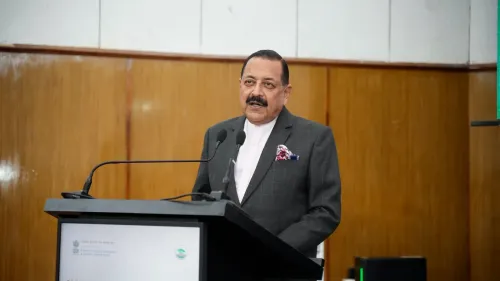
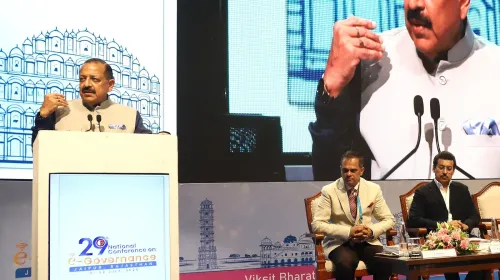
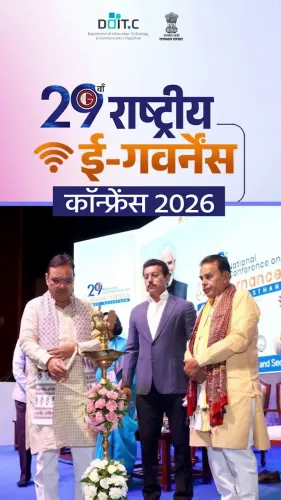
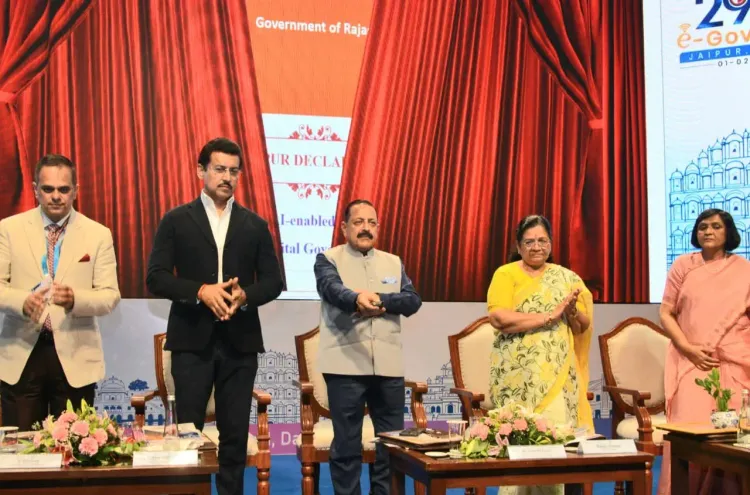
The 29th National e-Governance Conference (NeGC) concluded in Jaipur on 3 July 2025 with Union Minister of State (Independent Charge) for Science and Technology and Earth Sciences Jitendra Singh delivering a pointed message: governments must not merely adopt Artificial Intelligence but deploy it with deliberate intelligence to strengthen public administration. The valedictory session, held at the Rajasthan International Centre (RIC), also saw the presentation of the National e-Governance Awards 2026 and the formal release of the Jaipur Declaration.
Key Address: AI as a Governance Imperative
Minister Singh underscored that AI has moved from being an optional tool to an essential pillar of modern administration. 'The challenge is not merely adopting AI but using it wisely. Human intervention will continue to remain crucial alongside technological advancement,' he said. He urged state governments to set short-term, measurable milestones rather than anchoring all planning solely to the long-term India@2047 vision.
Citing the rapid obsolescence of technologies such as VCRs and STD booths within two decades, Singh questioned how administrative roles would evolve by 2047 in an increasingly digital governance ecosystem — a rhetorical prompt aimed at spurring proactive planning among state officials.
India's Governance Reforms and Global Recognition
Singh noted that under Prime Minister Narendra Modi, the Centre has pursued a futuristic governance approach by continuously leveraging emerging technologies to improve transparency, efficiency, and public service delivery. He pointed to the repeal of obsolete laws as a measure that has simplified administrative processes significantly.
Referencing flagship initiatives such as Mission Karmayogi and the Centralised Public Grievance Redress and Monitoring System (CPGRAMS), Singh said India's governance reforms have drawn international attention, with countries including Mauritius, the Maldives, Sri Lanka, and South Africa adopting several Indian e-governance and administrative innovations.
Rajasthan's Digital Governance Leadership
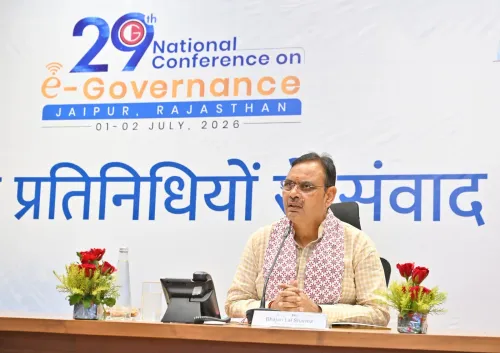
Rajasthan Information Technology and Communication Minister Rajyavardhan Singh Rathore said that while the world is debating AI, India is advancing towards 'responsible and inclusive AI' under Prime Minister Modi's leadership. He stressed that technology must not remain confined to innovation alone but must ensure its benefits reach every section of society.
Rathore described the conference as the beginning of a transformative journey rather than its conclusion, adding that suggestions and innovations shared by experts would be studied in detail and useful models implemented as pilot projects across different districts of Rajasthan. Singh also highlighted that Rajasthan has emerged as a leader in e-governance implementation and remains one of the most preferred cadres among Indian Administrative Service (IAS) officers.
Conference Scale and the Jaipur Declaration
Chief Secretary V. Srinivas said e-governance has evolved beyond system management to become a means of 'managing possibilities'. Around 200 experts and speakers shared experiences and best practices during the two-day event, and nearly 100 digital platforms and technology solutions were showcased.
Union Department of Administrative Reforms and Public Grievances Secretary Nivedita Shukla Verma noted that this year's National e-Governance Awards received nominations from nearly 1.65 lakh Gram Panchayats — a signal that digital innovation has spread well beyond traditional centres of excellence into rural India. The Jaipur Declaration, formally released at the ceremony, outlines the conference's key recommendations and future roadmap for technology-enabled governance across India.
What Comes Next
With the Jaipur Declaration now in hand, state governments are expected to align their digital governance roadmaps with the conference's recommendations. Rajasthan has committed to piloting select models at the district level, potentially serving as a template for other states. The broader question — how India balances AI-driven efficiency with the human accountability that citizens demand — will likely define the next edition of NeGC.
Point of View
And the gap between RIC conference halls and rural service counters remains wide.
NationPress
1 Oct 2026
Frequently Asked Questions
What is the 29th National e-Governance Conference (NeGC)?
The 29th National e-Governance Conference is an annual event that brings together central and state governments, technology experts, and administrators to share best practices in digital governance. The 2025 edition was held in Jaipur on 2-3 July and concluded with the presentation of the National e-Governance Awards 2026 and the release of the Jaipur Declaration.
What did Jitendra Singh say about AI at the conference?
Minister Jitendra Singh said AI is no longer optional but an essential component of modern administration, while cautioning that the real challenge lies in using it wisely rather than merely adopting it. He stressed that human intervention must remain central alongside technological advancement.
What is the Jaipur Declaration?
The Jaipur Declaration is a formal document released at the conclusion of the 29th NeGC, outlining the conference's key recommendations and a future roadmap for technology-enabled, citizen-centric governance in India. It is intended to guide state governments in aligning their digital governance strategies.
Which countries have adopted India's e-governance innovations?
According to Minister Jitendra Singh, countries including Mauritius, the Maldives, Sri Lanka, and South Africa have adopted several Indian e-governance and administrative innovations, including Mission Karmayogi and the Centralised Public Grievance Redress and Monitoring System (CPGRAMS).
How significant was rural participation in the National e-Governance Awards 2026?
Nearly 1.65 lakh Gram Panchayats submitted nominations for the National e-Governance Awards 2026, according to Union Department of Administrative Reforms and Public Grievances Secretary Nivedita Shukla Verma. This reflects a significant spread of digital governance innovation beyond urban centres into rural India.