CM Bhajanlal Sharma Pushes AI, Data Centres at NCeG Round Table
Synopsis
Chief Minister Bhajanlal Sharma met industry experts at the 29th National e-Governance Conference on 1 July 2026, seeking inputs on AI, data centres, quantum computing, semiconductors and startups to advance the Viksit Bharat–Viksit Rajasthan 2047 vision.
Key Takeaways
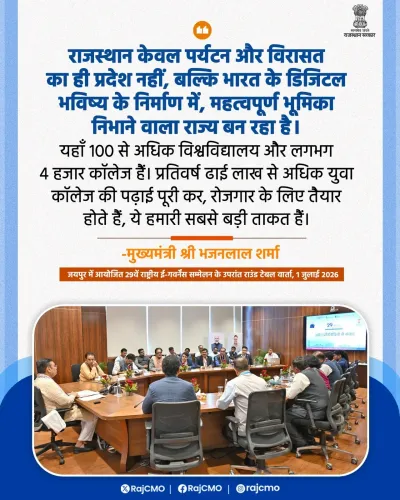
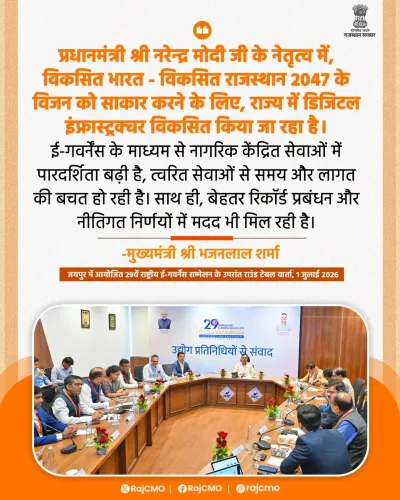
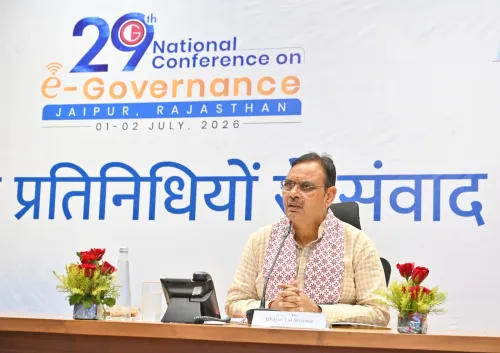
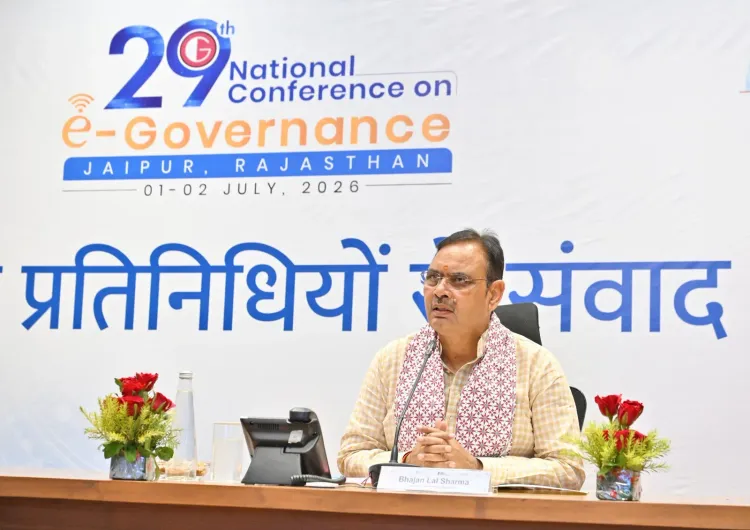
CM Bhajanlal Sharma held a round-table with industry representatives on 1 July 2026 after the 29th National e-Governance Conference .
The session focused on strengthening digital infrastructure, AI, data centres, cloud computing, quantum computing, semiconductors , and the startup ecosystem .
Industry experts were asked for concrete suggestions to help realise the Viksit Bharat–Viksit Rajasthan 2047 vision.
The consultation aligns with the India Semiconductor Mission (outlay: Rs 76,000 crore ) and the Digital India programme, now in its 11th year .
Potential follow-up includes policy announcements or budget allocations for AI parks and data-centre infrastructure in Rajasthan .
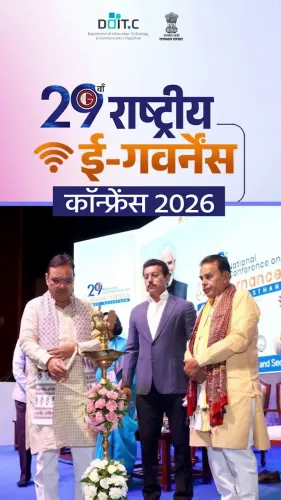
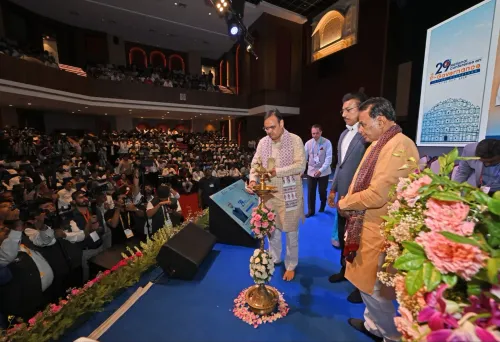
Chief Minister Bhajanlal Sharma of Rajasthan engaged industry representatives at a round-table discussion held on the sidelines of the 29th National e-Governance Conference (NCeG 2026) on 1 July 2026, focusing on strengthening the state's digital and emerging technology ecosystem. The session centred on realising the Viksit Bharat–Viksit Rajasthan 2047 ('Developed India–Developed Rajasthan 2047') vision through targeted investments in frontier technologies.
Context
The Chief Minister's Office of Rajasthan announced that CM Sharma held structured dialogue with industry leaders and domain experts, soliciting concrete suggestions on artificial intelligence, data centres, cloud computing, quantum computing, semiconductors, and the broader startup ecosystem. The conversation was framed around translating the national Viksit Bharat 2047 vision into state-level action, with Rajasthan positioning itself as a technology destination.
The round table followed the formal proceedings of the NCeG 2026, an annual forum convened by the central government to advance digital governance reforms across states and union territories. The 29th edition of the conference marks over a decade of structured federal-state coordination on e-governance since the Digital India programme was launched in July 2015.
Policy Backdrop
The Digital India programme, now in its 11th year — reflected in the conference hashtag #11YearsOfDigitalIndia — has progressively expanded from basic connectivity and service delivery to encompass advanced technology infrastructure. States such as Rajasthan have updated their information technology and startup policies multiple times since 2015 to attract investment and align with central missions.
The India Semiconductor Mission, approved in December 2021 with an outlay of Rs 76,000 crore, provides a national framework within which state-level semiconductor proposals can be anchored. Rajasthan's explicit inclusion of semiconductors in the round-table agenda signals intent to engage with that mission. The Viksit Bharat 2047 vision, articulated by the Prime Minister in his 2022 Independence Day address, has since become the overarching framework that state governments use to pitch long-term development plans to industry.
Stakeholders and Impact
Technology startups, established IT firms, semiconductor companies, and cloud infrastructure providers are the primary stakeholders targeted by the consultation. By seeking direct input from industry on policy and ecosystem gaps, the state government aims to shape investment-ready proposals rather than announcing top-down schemes. This approach mirrors similar industry-consultation models adopted by other states competing for data-centre and AI-park projects.
Rajasthan's geography — relatively low land costs, proximity to Delhi NCR technology corridors, and growing renewable energy capacity — makes it a plausible candidate for large-scale data-centre and semiconductor ancillary investments. Startups operating in Jaipur and other emerging tech clusters stand to benefit from any resulting policy incentives or infrastructure commitments.
What's Next
The inputs gathered from industry representatives and experts at the round table are expected to feed into potential policy announcements or budget allocations targeting AI parks, data centres, and startup incubation infrastructure in Rajasthan. Whether the state follows up with a dedicated technology investment summit or specific scheme notifications will be a key indicator of how seriously the consultation outcomes are pursued.
With the NCeG 2026 providing a national platform, Rajasthan's active participation underscores the broader federal dynamic in which states compete to demonstrate digital readiness. The next concrete milestone to watch is whether the state tables specific proposals under the India Semiconductor Mission or announces dedicated infrastructure for quantum computing and AI research.
Point of View
CM Sharma ties state ambition to a nationally resonant narrative, lending political weight to what might otherwise read as routine stakeholder engagement. The breadth of technologies on the agenda — from quantum computing to cloud — suggests the state is casting a wide net rather than betting on a single sector, which is prudent given the early stage of India's semiconductor and quantum ecosystems. Whether this consultation translates into binding policy or budgetary commitment will determine if Rajasthan meaningfully differentiates itself in an increasingly crowded field of states competing for frontier-technology investment.
NationPress
30 Sept 2026
Frequently Asked Questions
What was discussed at the 29th National e-Governance Conference round table in Rajasthan?
Chief Minister Bhajanlal Sharma engaged industry representatives and experts on AI, data centres, cloud computing, quantum computing, semiconductors, and the startup ecosystem, seeking suggestions to advance the Viksit Bharat–Viksit Rajasthan 2047 vision.
What is the Viksit Bharat–Viksit Rajasthan 2047 vision?
It is Rajasthan's state-level alignment with the national Viksit Bharat 2047 goal — articulated by the Prime Minister in 2022 — to make India a developed nation by its centenary of independence, with the state aiming to accelerate digital and industrial growth in parallel.
What is the India Semiconductor Mission and how does it relate to Rajasthan?
The India Semiconductor Mission, approved in December 2021 with a Rs 76,000 crore outlay, is a central programme to build chip manufacturing and design capabilities. Rajasthan's inclusion of semiconductors in its industry consultation suggests the state may be exploring proposals under this national framework.
When was the 29th National e-Governance Conference held?
The 29th National e-Governance Conference (NCeG 2026) was held around 1 July 2026, with the round table discussion involving CM Bhajanlal Sharma taking place on that date.
How does Rajasthan's digital push fit into the broader Digital India programme?
Digital India, launched in July 2015, is now in its 11th year and has expanded from basic connectivity to advanced technology infrastructure. Rajasthan has progressively updated its IT and startup policies since 2015 to align with central missions and attract technology investment.