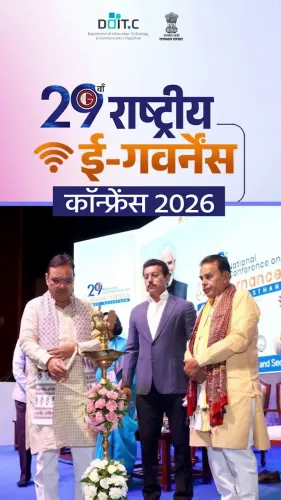
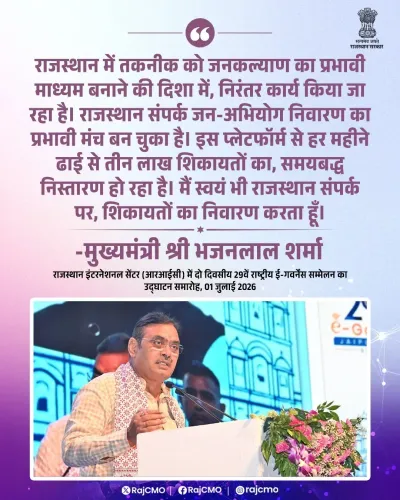
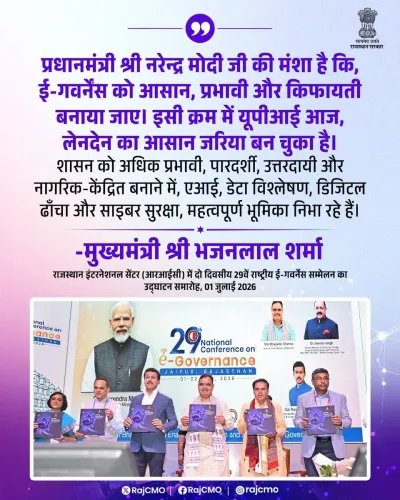
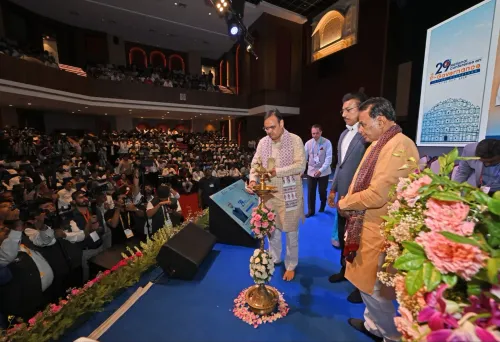
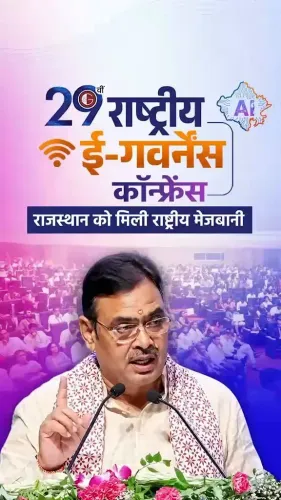
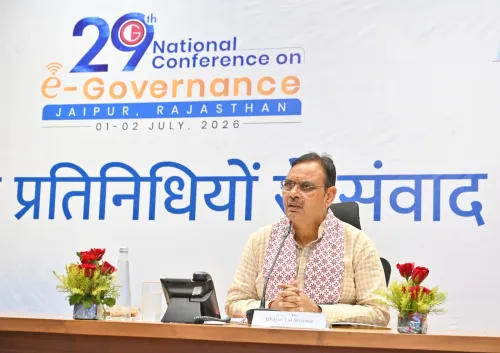
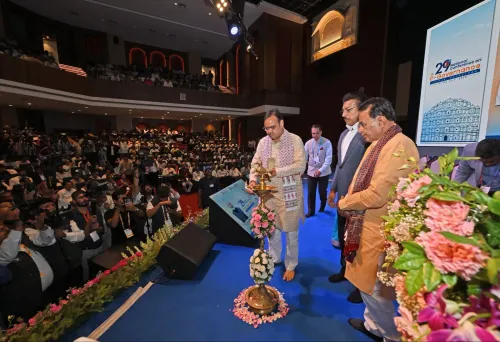
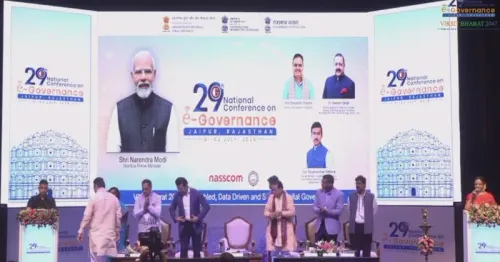
CM Bhajan Lal flags Rajasthan hosting 29th National e-Governance Meet
Synopsis
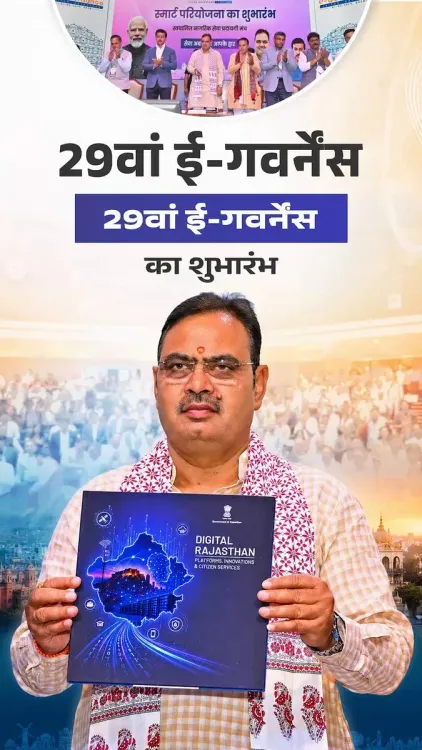
Rajasthan CM Bhajan Lal Sharma announced on 1 July 2026 that Jaipur will host the 29th National e-Governance Conference, marking 11 years of Digital India. He reaffirmed Rajasthan's commitment to advancing digital good governance under PM Modi's leadership.
Key Takeaways
Rajasthan will host the 29th National e-Governance Conference (NCeG 2026) in Jaipur .
CM Bhajan Lal Sharma announced the hosting on 1 July 2026 , calling it a matter of pride and honour for the state.
The conference coincides with 11 years of the Digital India programme , launched by PM Narendra Modi in July 2015.
Sharma reaffirmed Rajasthan's commitment to advancing digital good governance to 'new heights' under PM Modi's guidance.
The annual conference serves as a national platform for states to share best practices and align on digital service delivery standards.
Outcomes to watch include Rajasthan-specific e-governance showcase initiatives and any new central guidelines on digital service standards emerging from the event.
Rajasthan Chief Minister Bhajan Lal Sharma on Wednesday, 1 July 2026 welcomed the state's selection as host of the 29th National e-Governance Conference (NCeG 2026) in Jaipur, calling it a matter of pride and honour for the state. Sharma credited the leadership of Prime Minister Narendra Modi for steering India's e-governance agenda toward simpler, more effective, affordable and environment-friendly service delivery.
Context
Posting on X with the hashtags #NCeG2026 and #11YearsOfDigitalIndia, CM Sharma wrote that India is 'continuously moving forward' under the Prime Minister's guidance to make governance accessible through digital means. He added that Rajasthan is 'committed to taking digital good governance to new heights' with the same resolve. The post accompanied a video, signalling a formal state-level announcement around the conference.
The National e-Governance Conference is an annual platform where central and state governments share best practices on electronic service delivery, align on interoperability standards and showcase digital initiatives that can be scaled nationally. The 29th edition marks a significant milestone, coinciding with the hashtag celebrating 11 years of the Digital India programme.
Policy Backdrop
Digital India was launched in July 2015 by Prime Minister Modi with the goal of transforming India into a digitally empowered society and knowledge economy. Over the past decade, the programme has driven the integration of technology into government service delivery — reducing paperwork, increasing transparency and lowering the cost of accessing public services for ordinary citizens.
Annual national e-governance conferences have served as key convening events within this policy arc, enabling states to present their digital initiatives and receive feedback aligned with national frameworks. Rajasthan has pursued multiple e-governance projects in service delivery since CM Sharma took office in December 2023, positioning the state as an active participant in the broader Digital India ecosystem.
Stakeholders and Impact
The primary beneficiaries of advances discussed at NCeG 2026 are Rajasthan's citizens, who stand to gain faster, cheaper and more transparent access to government services. State government departments responsible for implementing digital platforms, as well as IT solution providers working with the public sector, are also direct stakeholders in outcomes from the conference.
For the BJP-led state government, hosting the national conference provides an opportunity to showcase Rajasthan's digital governance progress on a national stage and attract policy attention and resources toward state-specific initiatives. The conference also serves as a peer-learning forum where other states can adopt successful Rajasthan models and vice versa.
What's Next
Attention will turn to the specific Rajasthan e-governance applications and digital service models that the state government presents at NCeG 2026, as well as any new central guidelines on digital service standards that may emerge from the conference deliberations. The event is also likely to set the tone for the next phase of the Digital India programme as it enters its second decade. Whether the conference produces binding policy commitments or new central-state digital compacts will be closely watched by governance practitioners and civil society groups across the country.
Point of View
A strategic move that reinforces BJP's 'good governance' brand ahead of any future electoral cycle. Hosting a national conference of this stature lets the state government signal administrative competence on a pan-India platform without a direct political claim. The reference to 11 years of Digital India is also a reminder that the programme, launched in Modi's first term, remains a centrepiece of BJP's governance identity. The broader pattern suggests states under BJP leadership are increasingly using digital governance milestones as political capital.
NationPress
30 Sept 2026
Frequently Asked Questions
What is the 29th National e-Governance Conference?
The 29th National e-Governance Conference (NCeG 2026) is an annual event where central and state governments share best practices on electronic service delivery and digital governance; the 2026 edition is being hosted by Rajasthan in Jaipur.
Who is hosting NCeG 2026 and where?
Rajasthan is hosting NCeG 2026 in Jaipur, as announced by Chief Minister Bhajan Lal Sharma on 1 July 2026.
What is Digital India and how long has it been running?
Digital India is a flagship central government programme launched in July 2015 by Prime Minister Narendra Modi to transform India into a digitally empowered society; NCeG 2026 marks 11 years of the programme.
What did CM Bhajan Lal Sharma say about the e-governance conference?
CM Sharma said hosting the 29th National e-Governance Conference is a matter of pride and honour for Rajasthan, and reaffirmed the state's commitment to taking digital good governance to new heights under PM Modi's guidance.
What is Rajasthan's role in India's e-governance push?
Rajasthan has pursued multiple e-governance and digital service delivery projects since CM Bhajan Lal Sharma took office in December 2023, and hosting NCeG 2026 positions the state as a key contributor to India's broader Digital India programme.