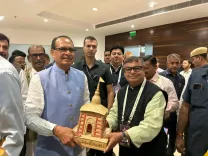
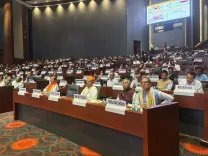
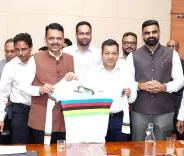
CM Bhajan Lal inaugurates e-Governance'26 conference in Jaipur
Synopsis
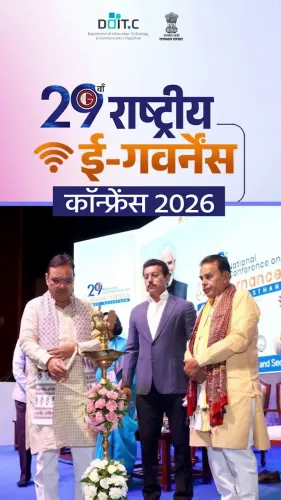
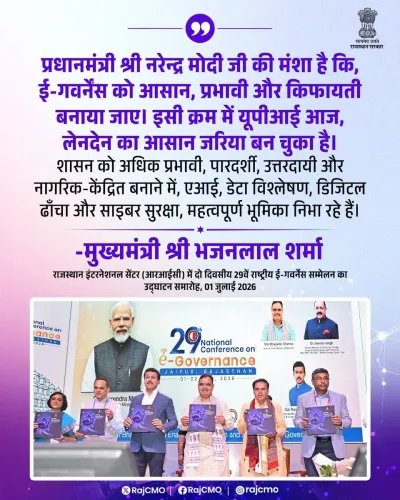
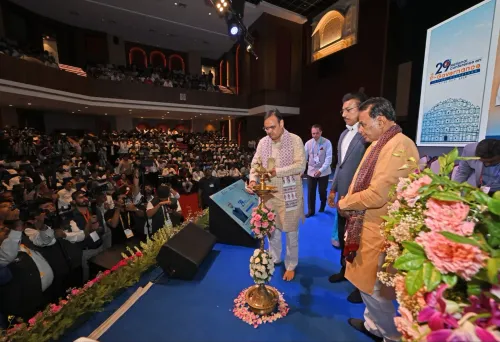
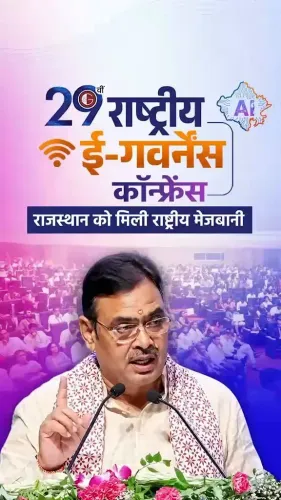
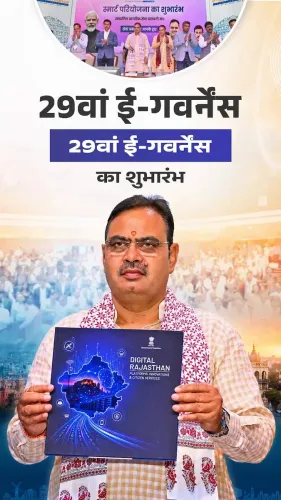
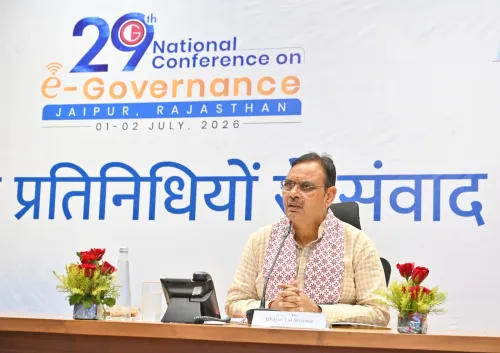
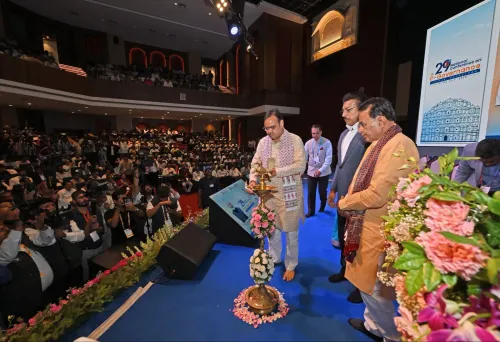
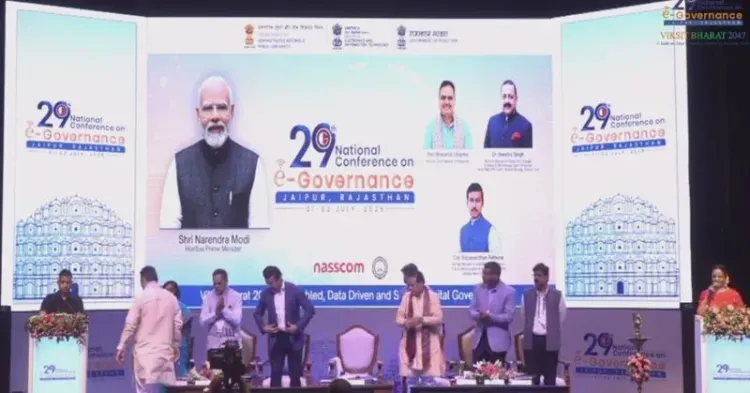
Rajasthan Chief Minister Bhajan Lal Sharma inaugurated the National Conference on e-Governance 2026 at Rajasthan International Centre, Jaipur on 1 July, placing the state at the centre of India's annual deliberation on digital public service delivery.
Key Takeaways
CM Bhajan Lal Sharma inaugurated the National Conference on e-Governance 2026 on 1 July 2026 .
The event is hosted at Rajasthan International Centre (RIC), Jaipur .
The conference is an annual national forum organised by the Government of India on electronic governance policy and technology.
India's e-governance framework is anchored in the National e-Governance Plan (NeGP) of 2006 and the Digital India programme of 2015 .
Rajasthan's e-Mitra kiosk network and digital land records are existing state-level implementations aligned with national standards.
Conference outcomes are expected to shape future state budget allocations on data governance and cybersecurity .
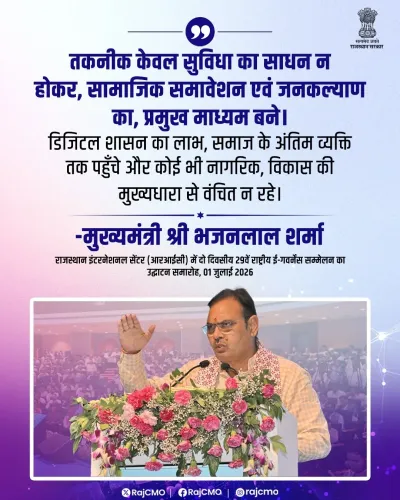
Rajasthan Chief Minister Bhajan Lal Sharma on Wednesday, 1 July 2026 inaugurated the opening session of the National Conference on e-Governance 2026 at the Rajasthan International Centre (RIC), Jaipur, marking the state's role as host for one of India's premier annual forums on digital public administration.
Context
The National Conference on e-Governance is an annual national-level forum jointly organised by the Government of India to deliberate on policy, technology and best practices in electronic governance. Hosting the conference at RIC Jaipur positions Rajasthan as an active participant in shaping the country's digital governance agenda. Chief Minister Sharma shared a live broadcast of the inaugural session on social media, signalling the administration's intent to amplify the event's reach.
The conference brings together senior officials from central and state governments, IT departments, and domain experts to examine how technology can make public service delivery faster, more transparent, and more accessible to ordinary citizens.
Policy Backdrop
India's e-governance architecture traces its roots to the National e-Governance Plan (NeGP), approved in 2006, which established the foundational framework for electronic service delivery across the country. The Digital India programme, launched in 2015, consolidated multiple e-governance projects under a single umbrella, with emphasis on broadband connectivity, mobile access, and platforms such as DigiLocker.
Rajasthan has progressively aligned with these national standards. The state's e-Mitra kiosk network and digitised land-records system are among the visible outcomes of successive e-governance investments, enabling citizens — particularly in rural areas — to access government services without visiting multiple offices.
Stakeholders and Impact
The conference's deliberations directly affect state IT departments, which are responsible for translating national policy into on-ground digital infrastructure. For citizens, effective e-governance translates into reduced paperwork, lower transaction costs, and faster grievance redressal. Rajasthan, with a large rural population spread across one of India's geographically biggest states, stands to gain significantly from improved digital service delivery.
Experts and policymakers attending such forums typically address emerging concerns around data governance, cybersecurity, and interoperability between state and central platforms — areas of increasing importance as more services migrate online.
What's Next
Conferences of this nature typically produce a set of recommendations that feed into subsequent state budget allocations and cabinet decisions. Stakeholders will watch whether Rajasthan announces follow-up measures — such as expanded e-Mitra coverage, new citizen-facing portals, or cybersecurity frameworks — in the weeks following the event. The outcomes of the National Conference on e-Governance 2026 are expected to inform the next phase of digital infrastructure planning across participating states.
Point of View
Hosting the conference offers an opportunity to showcase existing infrastructure while lobbying for central resources to expand it. The event also fits into a broader pattern of state governments using high-profile governance forums to demonstrate administrative competence beyond traditional welfare delivery. Observers will watch whether the conference produces concrete state-level commitments or remains a platform for policy articulation.
NationPress
30 Sept 2026
Frequently Asked Questions
What is the National Conference on e-Governance 2026?
The National Conference on e-Governance 2026 is an annual national-level forum organised by the Government of India to discuss policy, technology and best practices in electronic governance. The 2026 edition is being held at Rajasthan International Centre, Jaipur.
Who inaugurated the e-Governance conference in Jaipur in 2026?
Rajasthan Chief Minister Bhajan Lal Sharma inaugurated the inaugural session of the National Conference on e-Governance 2026 at RIC Jaipur on 1 July 2026.
What is India's e-governance framework?
India's e-governance framework is built on the National e-Governance Plan (NeGP) approved in 2006 and the Digital India programme launched in 2015, which together aim to deliver government services electronically and improve digital infrastructure across all states.
What is e-Mitra in Rajasthan?
e-Mitra is Rajasthan's network of citizen service kiosks that allows residents, especially in rural areas, to access government services, pay utility bills and submit applications without visiting multiple government offices.