Rajasthan CM Bhajanlal Backs Digital India at NCeG 2026
Synopsis
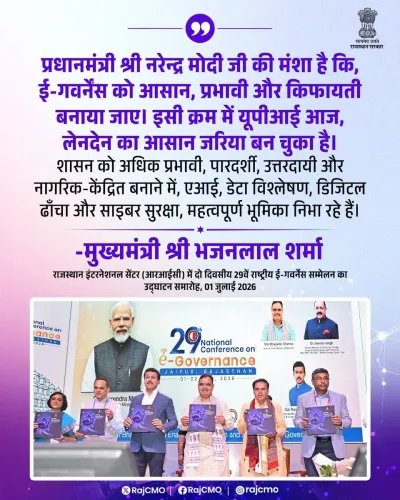
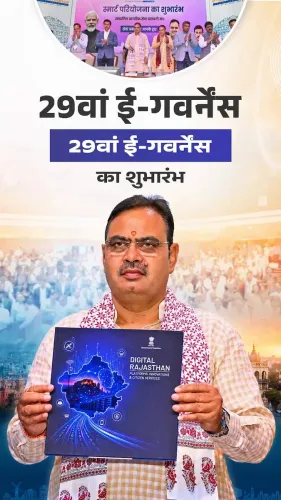
On 2 July 2026, Rajasthan's Chief Minister's Office reaffirmed CM Bhajanlal Sharma's commitment to inclusive digital governance, calling for Digital India's benefits to reach every citizen, on the occasion of 11 Years of Digital India and NCeG2026.
Key Takeaways
The Chief Minister's Office of Rajasthan posted the statement on 2 July 2026 , marking 11 Years of Digital India .
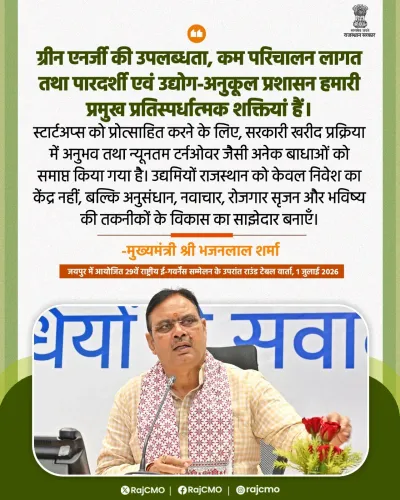
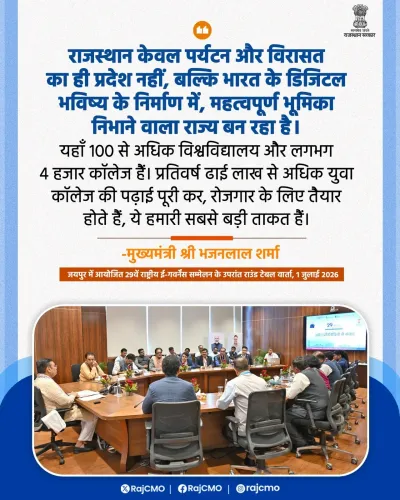
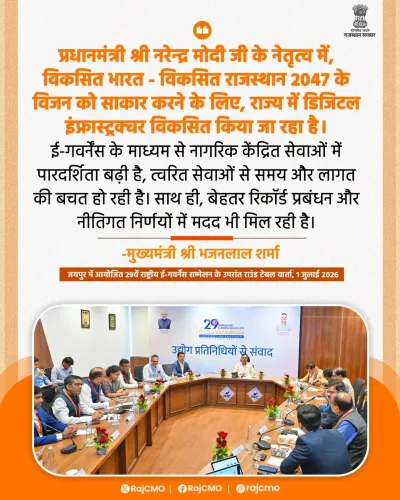
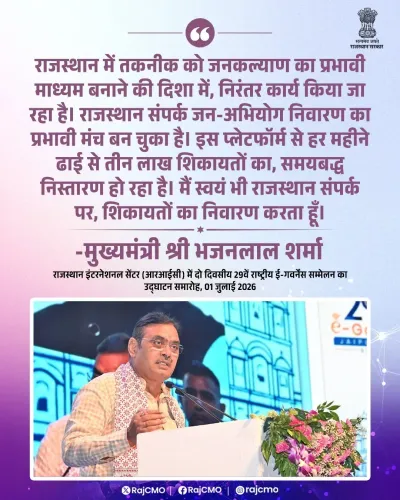
CM Bhajanlal Sharma called for digital governance benefits to reach 'the last person in society' with no citizen left out of the development mainstream.
The Digital India programme was originally launched on 1 July 2015 to build a digitally empowered society and knowledge economy.
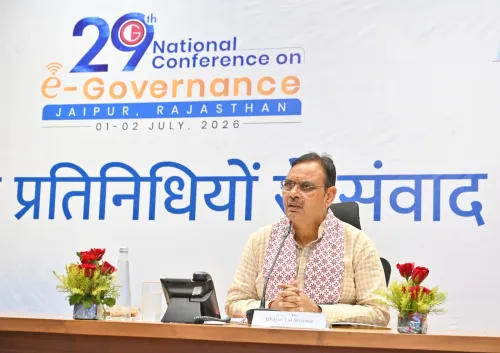
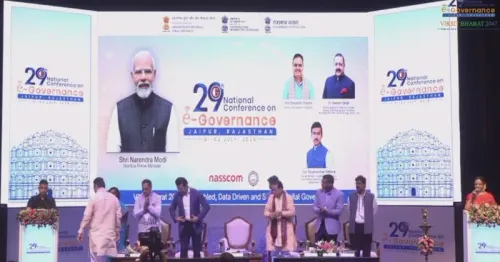
The post was shared in the context of the National Conference on e-Governance 2026 (NCeG2026) , an annual forum for e-governance best practices.
Rajasthan has actively implemented Digital India components including Common Service Centres and online citizen-service portals.
Key beneficiaries highlighted are rural citizens and marginalised communities facing barriers to government service access.
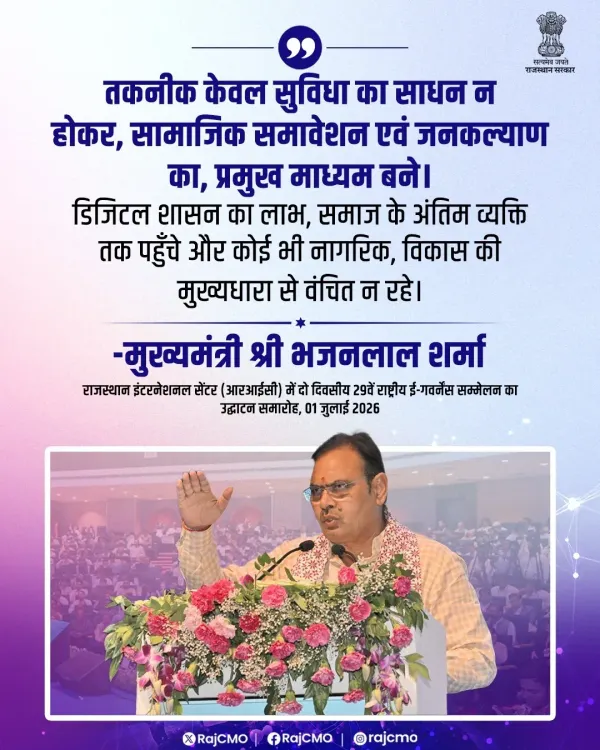
The Chief Minister's Office of Rajasthan, on behalf of Chief Minister Bhajanlal Sharma, on 2 July 2026 reaffirmed the state's commitment to inclusive digital governance, calling for the benefits of digital administration to reach the last person in society and for no citizen to be left out of the development mainstream.
Context
The post, shared on the occasion of 11 Years of Digital India and ahead of the National Conference on e-Governance 2026 (NCeG2026), quotes Chief Minister Sharma's vision in Hindi: 'डिजिटल शासन का लाभ समाज के अंतिम व्यक्ति तक पहुँचे और कोई भी नागरिक, विकास की मुख्यधारा से वंचित न रहे' — meaning, 'Let the benefits of digital governance reach the last person in society, and let no citizen remain excluded from the mainstream of development.' The statement directly echoes the foundational philosophy of the Digital India programme, which completed 11 years on 1 July 2025 and continues into its second decade.
Policy Backdrop
The Digital India programme was launched on 1 July 2015 by the central government with the stated goal of transforming India into a digitally empowered society and knowledge economy. Over the past decade, the initiative has expanded to cover electronic delivery of government services, broadband connectivity to rural areas, and the proliferation of Common Service Centres (CSCs) at the grassroots level.
Rajasthan has been an active participant in the national e-governance ecosystem, deploying online portals for citizen services and integrating CSCs into welfare delivery across its districts. The state has aligned its administrative machinery with central Digital India components, aiming to reduce service delivery gaps for rural and marginalised populations.
Stakeholders and Impact
The primary beneficiaries of inclusive digital governance are rural citizens and marginalised communities — groups that have historically faced barriers to accessing government services due to geography, literacy, or infrastructure deficits. Chief Minister Sharma's emphasis on reaching the 'last person' signals a policy focus on bridging the digital divide rather than simply expanding urban-centric infrastructure.
The NCeG2026 serves as an annual platform where states share best practices, showcase technology pilots, and coordinate with central ministries on e-governance priorities. Rajasthan's participation underlines its intent to benchmark its digital inclusion efforts against national standards and peer states.
What's Next
Stakeholders will watch the proceedings of NCeG2026 closely for any Rajasthan-specific announcements on digital inclusion targets, new citizen-service portals, or funding commitments tied to the Digital India framework. The conference is expected to surface state-level commitments that translate the broad vision of inclusive governance into measurable delivery milestones.
As Digital India enters its second decade, the pressure on states like Rajasthan to demonstrate last-mile impact — not just infrastructure rollout — will only intensify, making the CM's public reaffirmation a signal of the political priority attached to the agenda.
Point of View
Timed precisely for maximum visibility at NCeG2026. The invocation of 'the last person in society' — a phrase rooted in Gandhian political vocabulary — signals that the BJP-led state government is framing digital governance not merely as a technocratic exercise but as a social justice imperative. This positioning matters in a state with a large rural and tribal population where last-mile delivery gaps remain politically sensitive. The broader pattern suggests that as Digital India matures, states are increasingly competing to demonstrate inclusive outcomes rather than just infrastructure metrics.
NationPress
30 Sept 2026
Frequently Asked Questions
What is the National Conference on e-Governance 2026?
The National Conference on e-Governance (NCeG2026) is an annual government forum where central and state officials share best practices in electronic governance and coordinate on digital public service delivery across India.
When was the Digital India programme launched?
The Digital India programme was launched on 1 July 2015 by the central government with the goal of transforming India into a digitally empowered society and knowledge economy.
Who is Bhajanlal Sharma?
Bhajanlal Sharma is the BJP Chief Minister of Rajasthan, in office since December 2023 , and is responsible for overseeing the state's digital governance and welfare delivery initiatives.
What did Rajasthan CM say about Digital India?
CM Bhajanlal Sharma stated that the benefits of digital governance must reach the last person in society and that no citizen should remain excluded from the mainstream of development.
How is Rajasthan implementing Digital India?
Rajasthan has deployed online citizen-service portals and Common Service Centres (CSCs) at the grassroots level, aligning state administration with central Digital India components to reduce service delivery gaps in rural and marginalised areas.