CM Bhajanlal Highlights Rajasthan's Green Energy Edge at NCeG 2026
Synopsis
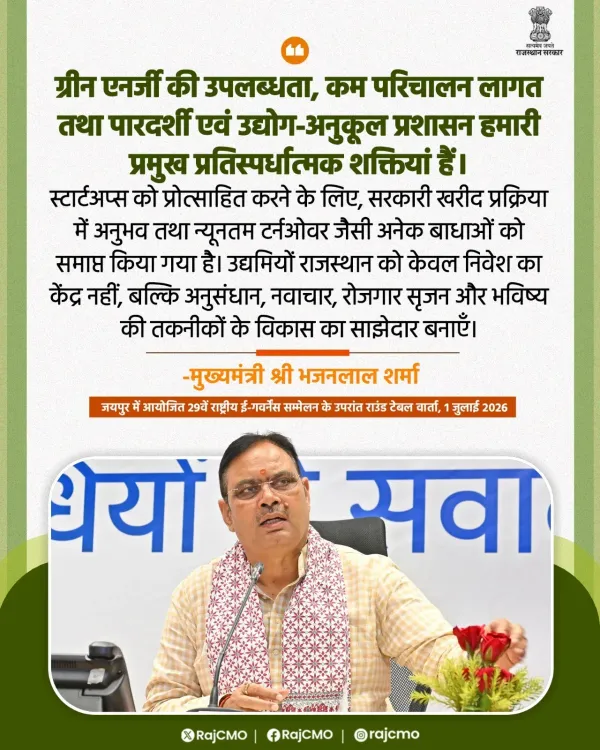
The Chief Minister's Office of Rajasthan, on 2 July 2026, highlighted green energy availability, low operational costs, and industry-friendly governance as the state's primary competitive strengths, coinciding with the 11th anniversary of Digital India and the upcoming NCeG 2026 conference.
Key Takeaways
The Chief Minister's Office of Rajasthan identified green energy, low operational costs, and transparent governance as the state's top competitive strengths on 2 July 2026 .
CM Bhajan Lal Sharma has led Rajasthan since December 2023 , with industrial promotion and digital governance as core priorities.
The post was anchored to the 11th anniversary of Digital India , the central programme launched in July 2015 .
Rajasthan holds significant solar and wind energy reserves, making it competitive for energy-intensive industries such as data centres and manufacturing.
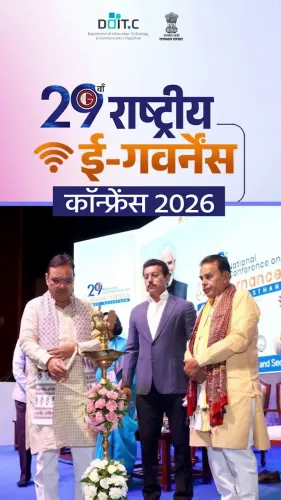
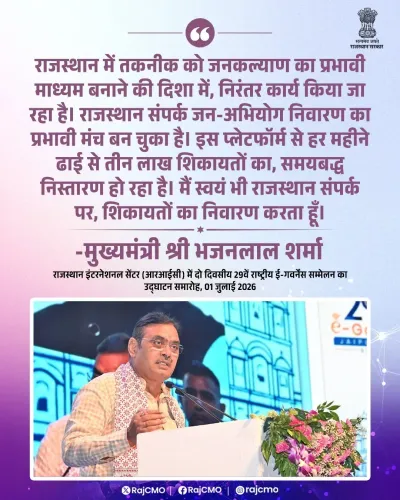
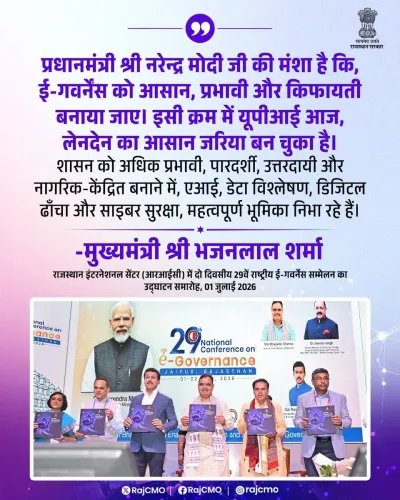
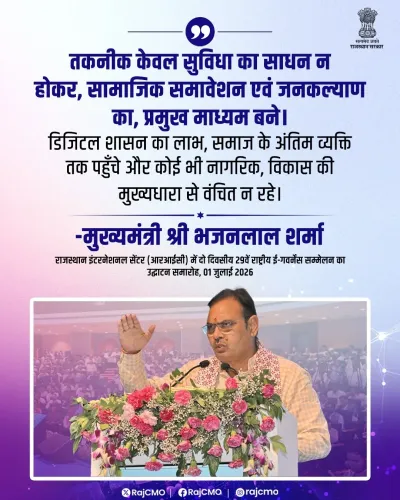
The NCeG 2026 conference is expected to be a platform where states demonstrate measurable outcomes from digital governance reforms.
The messaging targets industrial investors and renewable energy developers evaluating state-level investment destinations.
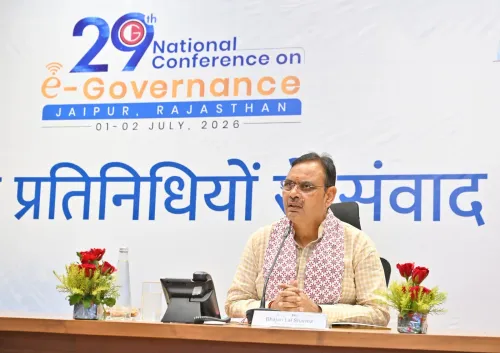
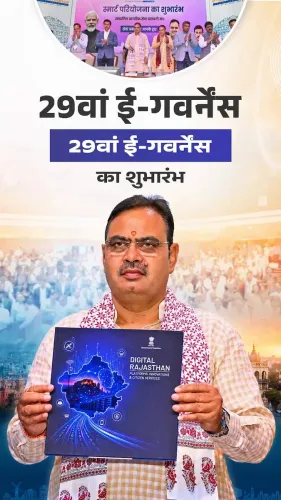
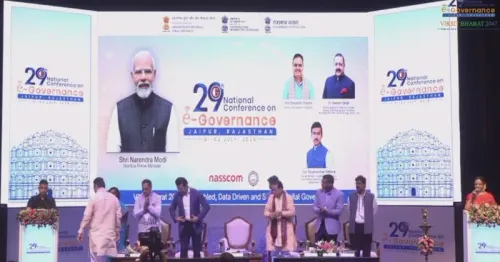
The Chief Minister's Office of Rajasthan, on behalf of Chief Minister Bhajan Lal Sharma, on Thursday, 2 July 2026, highlighted the state's competitive strengths in green energy, low operational costs, and transparent governance — positioning Rajasthan as a premier destination for industrial and digital investment ahead of the National Conference on e-Governance 2026 (NCeG 2026).
Context
The post, shared under the hashtags #11YearsOfDigitalIndia and #NCeG2026, states: 'Green energy availability, low operational costs, and transparent and industry-friendly governance are our primary competitive strengths.' The message coincides with the 11th anniversary of the Digital India programme, launched in July 2015 by the central government to drive paperless, transparent, and electronically delivered public services across all states.
Chief Minister Bhajan Lal Sharma, who has led Rajasthan since December 2023 under the Bharatiya Janata Party (BJP), has made industrial promotion and digital governance reform central planks of his administration. The timing of this communication — pegged to both a national scheme anniversary and an upcoming governance conference — underscores the state's intent to project a reform-forward image to investors and policymakers alike.
Policy Backdrop
Digital India, now in its eleventh year, was conceived as a federal architecture that states could build upon — streamlining licensing, reducing physical compliance burdens, and enabling data-driven administration. Rajasthan, as a state endowed with some of India's most substantial solar and wind energy corridors, has increasingly aligned its investment pitch with the national renewable energy agenda.
Indian states have, since 2015, competed intensely on ease-of-doing-business rankings by combining renewable power capacity with simplified digital processes. Rajasthan's messaging fits squarely within this pattern: green energy as a cost reducer for energy-intensive industries such as data centres and manufacturing, paired with digital governance as a friction reducer for compliance and approvals.
Stakeholders and Impact
The primary audiences for this signal are industrial investors, renewable energy developers, and technology companies evaluating site locations for manufacturing plants and data infrastructure. Low operational costs — partly a function of cheaper green power — are a decisive factor for such enterprises when comparing Indian states.
For Rajasthan's citizens and small businesses, the emphasis on industry-friendly and transparent administration translates into expectations of faster regulatory clearances and reduced bureaucratic friction. The NCeG 2026 forum, an annual platform for sharing best practices in digital service delivery, provides the state an opportunity to demonstrate measurable outcomes from its governance reforms to a national audience of administrators and policymakers.
What's Next
The National Conference on e-Governance 2026 is expected to feature presentations and policy announcements where states including Rajasthan will be assessed on how effectively they have translated digital tools into investment inflows and improved citizen service delivery. Chief Minister Bhajan Lal Sharma's office is likely to use the forum to detail specific initiatives under the state's green energy and digital governance roadmap.
As India pushes toward its national renewable energy targets and deepens the Digital India framework, Rajasthan's positioning as a convergence point of green power and e-governance could shape its competitive standing in investment rankings and federal resource allocation in the months ahead.
Point of View
Who took office in late 2023, this is part of a broader effort to differentiate Rajasthan in a crowded field of states competing for manufacturing and data centre investments. The NCeG 2026 timing is strategically sound: national governance forums amplify state-level messaging at minimal political cost. Whether the rhetoric translates into verifiable investment commitments will be the real test of Rajasthan's positioning.
NationPress
30 Sept 2026
Frequently Asked Questions
What are Rajasthan's competitive strengths highlighted by CM Bhajan Lal Sharma?
CM Bhajan Lal Sharma's office cited green energy availability, low operational costs, and transparent, industry-friendly governance as Rajasthan's primary competitive strengths for attracting investment.
What is NCeG 2026 and why is it significant for Rajasthan?
NCeG 2026, the National Conference on e-Governance 2026, is an annual forum where states share best practices on digital service delivery. It gives Rajasthan a national platform to showcase its digital governance and investment-readiness credentials.
How does Digital India relate to Rajasthan's governance push?
Digital India, launched in July 2015, provides the federal framework on which states like Rajasthan build their own e-governance and ease-of-doing-business initiatives. The 11th anniversary of the programme gave Rajasthan an opportunity to align its state-level messaging with the national scheme.
Why is green energy important for Rajasthan's investment pitch?
Rajasthan has substantial solar and wind energy resources, which lower operational costs for energy-intensive industries such as data centres and manufacturing plants, making the state more attractive compared to peers with higher power costs.
Who is Bhajan Lal Sharma and what is his role in Rajasthan's governance?
Bhajan Lal Sharma is the Chief Minister of Rajasthan from the BJP, in office since December 2023. He has prioritised industrial promotion, digital governance reform, and leveraging the state's renewable energy potential to attract private investment.