CM Bhajanlal Sharma launches digital initiatives at 29th National e-Governance Conference
Synopsis
Chief Minister Bhajanlal Sharma inaugurated the 29th National e-Governance Conference in Jaipur on 1 July 2026, launching the Smart Rajasthan Project, a Rajasthan Language Model Hackathon, an e-Mitra WhatsApp service, and a Rajasthan Innovation Challenge, alongside releasing the Digital Rajasthan Coffee Table Book.
Key Takeaways
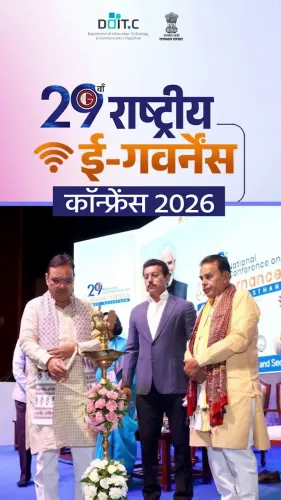
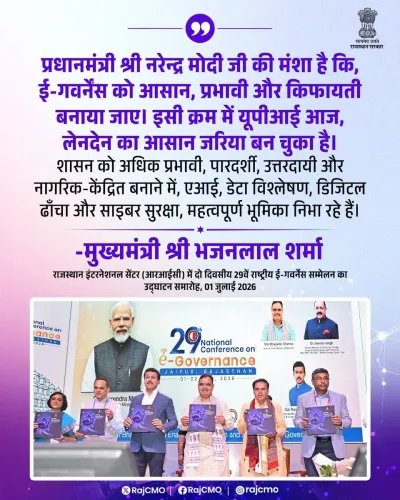
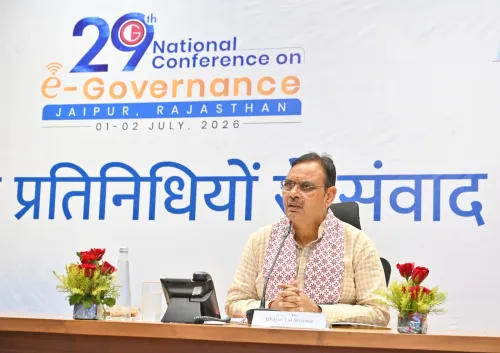
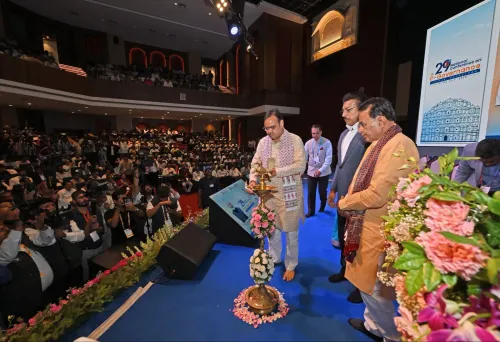
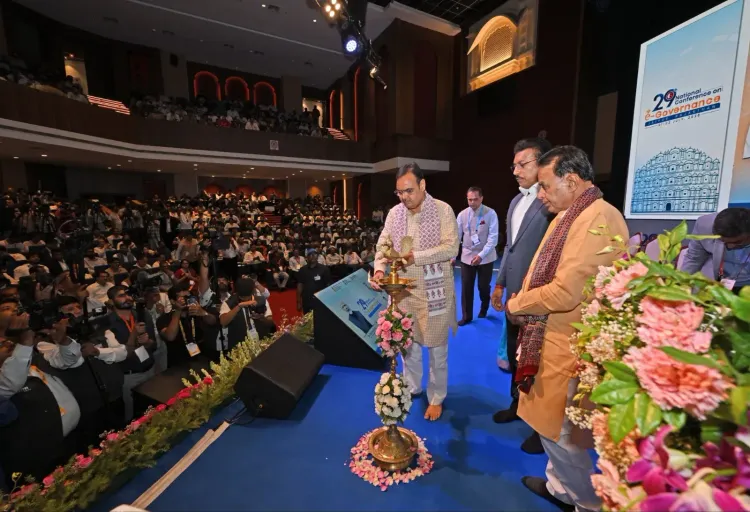
CM Bhajanlal Sharma inaugurated the 29th National e-Governance Conference at Rajasthan International Centre, Jaipur on 1 July 2026 .
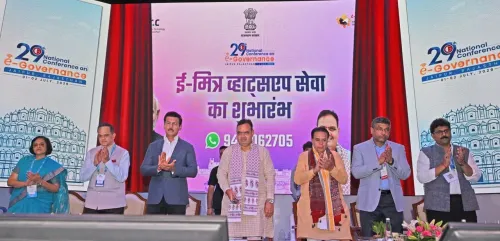
The e-Mitra WhatsApp Service was launched, extending Rajasthan's citizen-service portal to the messaging platform.
The Smart Rajasthan Project — an automated citizen-service delivery platform — was formally unveiled.
A Rajasthan Language Model Training Hackathon was announced to build vernacular AI capabilities for public services.
The Rajasthan Innovation Challenge was launched to invite technology solutions for governance problems.
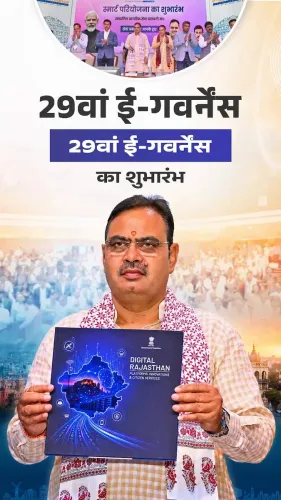
The Digital Rajasthan Coffee Table Book was released, documenting the state's digital governance journey.
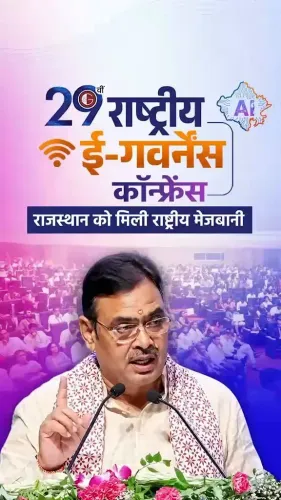
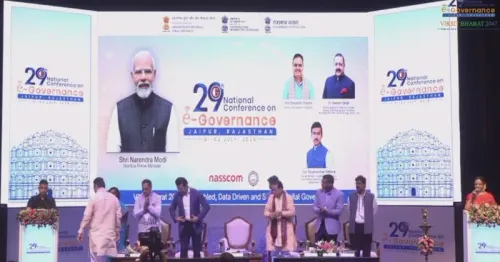
Chief Minister Bhajanlal Sharma of Rajasthan inaugurated the two-day 29th National e-Governance Conference (NCeG 2026) at the Rajasthan International Centre (RIC), Jaipur, on 1 July 2026, launching a clutch of state digital-governance initiatives and releasing a knowledge publication marking the occasion.
What was launched
At the inaugural ceremony, CM Sharma unveiled four distinct e-governance initiatives: the Rajasthan Language Model Training Hackathon, aimed at building vernacular AI capabilities; the Smart Rajasthan Project, an automated citizen-service delivery platform; the Rajasthan Innovation Challenge, a competitive platform for technology solutions; and the e-Mitra WhatsApp Service, which extends the state's long-running single-window citizen portal to the widely used messaging application. He also released the Digital Rajasthan Coffee Table Book — a curated knowledge product documenting the state's digital journey.
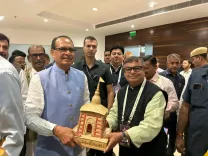
Prior to the formal ceremony, the Chief Minister inaugurated a technology-services exhibition at RIC and walked through stalls showcasing e-governance innovations from various departments and organisations.
Context
The National e-Governance Conference is an annual flagship event co-organised by the Union Government to bring together states, technology practitioners and policymakers to exchange best practices in digital public administration. The 29th edition being hosted in Jaipur signals Rajasthan's positioning as an active participant in India's digital-governance ecosystem.
The conference falls in the #11YearsOfDigitalIndia milestone year — the Digital India programme having been launched in 2015 to build nationwide digital infrastructure, expand internet connectivity and shift government services online. Rajasthan's multiple simultaneous launches align with the programme's anniversary moment.
Policy backdrop
Rajasthan's e-Mitra platform, originally rolled out in the mid-2000s as a single-window service delivery portal, has been iteratively upgraded over two decades. Its extension to WhatsApp reflects a broader national trend of meeting citizens on platforms they already use, reducing the need to visit physical service centres.
The Rajasthan Language Model Training Hackathon addresses a persistent gap in AI-driven public services: most large language models perform poorly in regional languages and dialects. By running a dedicated hackathon, the state is attempting to build localised AI capacity that can power future vernacular interfaces for government services. States across India have increasingly integrated AI and mobile technologies into existing e-governance stacks under the Digital India framework.
Stakeholders and impact
The immediate beneficiaries are Rajasthan's citizens, particularly those in semi-urban and rural areas who rely on e-Mitra centres for accessing government schemes, certificates and welfare entitlements. A WhatsApp-based channel could significantly reduce last-mile friction for this population.
Technology startups and academic institutions stand to gain from the Rajasthan Innovation Challenge and the language model hackathon, both of which create structured pathways for private-sector and research participation in public digital infrastructure.
What's next
Attention will now turn to the phased rollout timelines for the Smart Rajasthan Project and the outcomes of the Language Model Training Hackathon, including whether solutions developed through the competition are integrated into live government services. The two-day conference is also expected to feature deliberations on national e-governance standards and may include award announcements recognising state-level digital innovations. Rajasthan's ability to translate these launch-day announcements into measurable service-delivery improvements will be the real test of the state's digital ambitions.
Point of View
Given WhatsApp's near-universal penetration in semi-urban Rajasthan, and it follows a pattern seen in other large states of grafting government services onto existing consumer platforms rather than building new ones. The Language Model Hackathon is an early-stage bet on vernacular AI that, if it produces usable outputs, could differentiate Rajasthan's digital stack in a crowded field. The true measure of these launches will be their transition from announcement to operational scale — a gap that has historically challenged state e-governance programmes.
NationPress
30 Sept 2026
Frequently Asked Questions
What is the 29th National e-Governance Conference?
The National e-Governance Conference is an annual event co-organised by the Union Government where states and technology practitioners share best practices in digital public administration. The 29th edition was held in Jaipur on 1-2 July 2026.
What is the Smart Rajasthan Project?
The Smart Rajasthan Project is an automated citizen-service delivery platform launched by Chief Minister Bhajanlal Sharma at the 29th National e-Governance Conference to streamline how residents access government services.
What is the e-Mitra WhatsApp Service in Rajasthan?
The e-Mitra WhatsApp Service extends Rajasthan's existing single-window citizen portal, e-Mitra, to WhatsApp, allowing residents to access government services directly through the messaging application without visiting a physical centre.
What is the Rajasthan Language Model Training Hackathon?
The Rajasthan Language Model Training Hackathon is a state-organised competition aimed at building AI language models capable of operating in regional languages and dialects, to improve vernacular interfaces for government services.
What is Digital India and why is 2026 significant?
Digital India is a national programme launched in 2015 to expand digital infrastructure and move government services online. The year 2026 marks 11 years of the programme, which the hashtag #11YearsOfDigitalIndia at the conference commemorates.