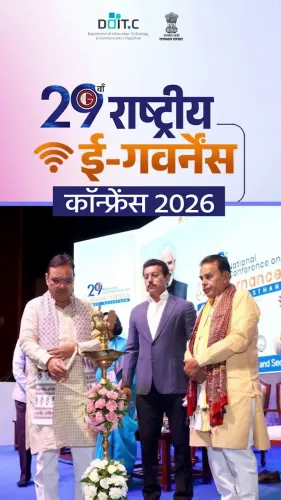
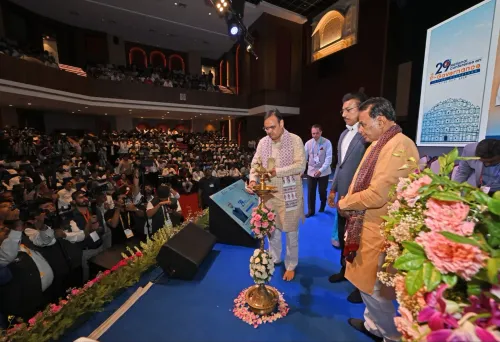
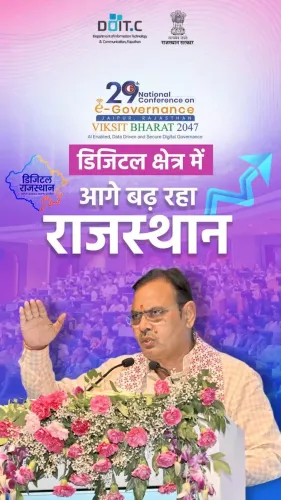
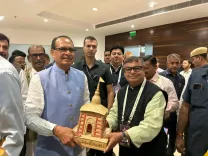
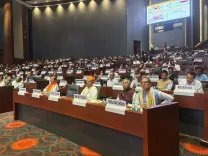
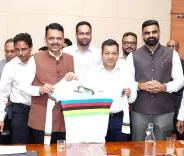
CM Bhajanlal addresses 29th National e-Governance Conference in Jaipur
Synopsis
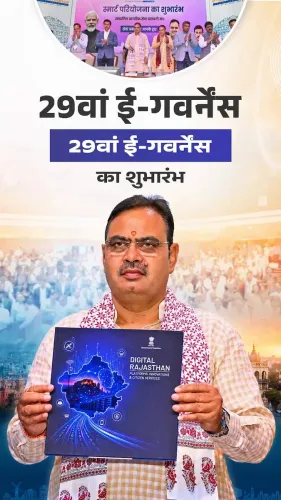
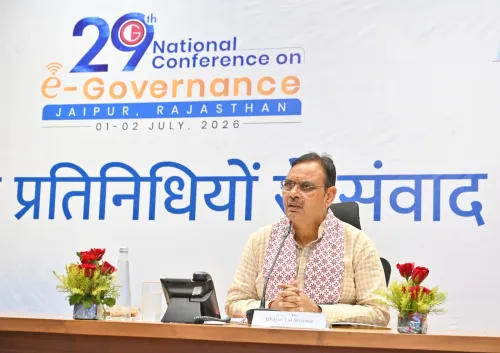
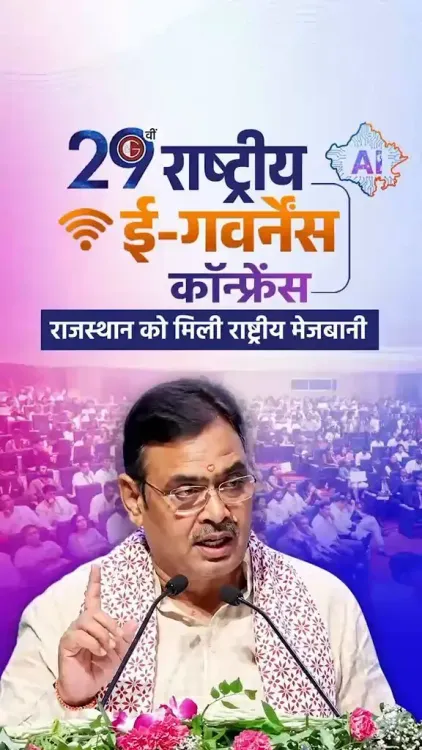
Chief Minister Bhajanlal Sharma addressed the 29th National e-Governance Conference at Rajasthan International Centre on 1 July 2026, citing PM Modi's vision of e-governance as easy, effective, affordable and environment-friendly, and calling the hosting a matter of pride for Rajasthan.
Key Takeaways
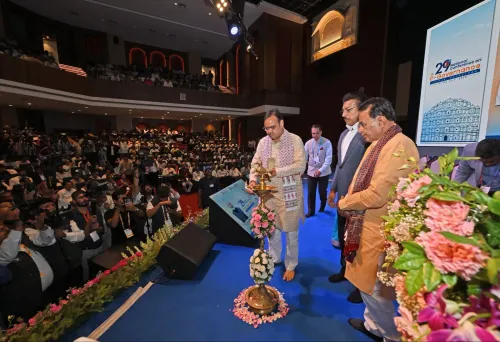
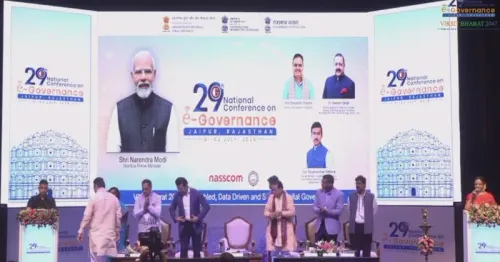
CM Bhajanlal Sharma addressed the 29th National e-Governance Conference (NCeG 2026) at the Rajasthan International Centre on 1 July 2026 .
He described hosting the conference as a matter of 'pride and honour' for Rajasthan .
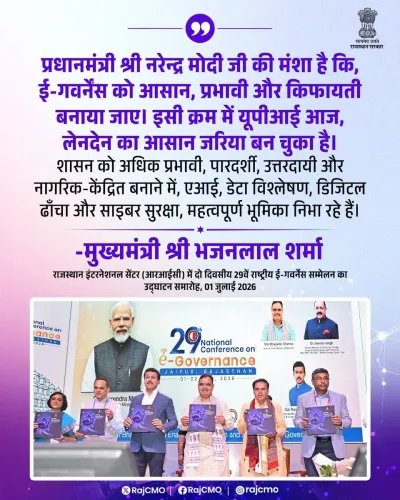
He quoted PM Narendra Modi , who defines e-governance as 'easy, effective, affordable and environment-friendly' governance.
The conference agenda covers artificial intelligence , cybersecurity , digital infrastructure and digital governance .
The event sits within the broader Viksit Bharat 2047 framework and the Digital India programme launched in 2015 .
The Chief Minister's Office of Rajasthan announced on Wednesday, 1 July 2026 that Chief Minister Bhajanlal Sharma addressed the 29th National e-Governance Conference (NCeG 2026) at the Rajasthan International Centre (RIC), calling the opportunity to host the event a matter of 'pride and honour' for the state.
Context
Speaking at the conference, CM Bhajanlal Sharma quoted Prime Minister Narendra Modi, who has described e-governance as representing governance that is 'aasan, prabhavi, kifayati tatha paryavaran ke anukool' — 'easy, effective, affordable and environment-friendly'. The Chief Minister's remarks framed Rajasthan's hosting of the event as alignment with the national digital governance agenda.
The conference, held under the hashtags #NCeG2026, #CyberSecurity, #ArtificialIntelligence, #DigitalInfrastructure and #DigitalGovernance, signals that its agenda spans emerging technology themes alongside core e-governance delivery.
Policy Backdrop
The National e-Governance Conference is an annual event that brings together central and state government officials, technologists and policymakers to review progress and set direction on digital public services. Its lineage traces to the Digital India programme launched in 2015, which sought to expand digital infrastructure, promote paperless administration and extend e-services to citizens across the country.
The Viksit Bharat 2047 vision — the government's roadmap for a developed India by the centenary of independence — has added urgency to these goals, with digital governance now positioned as a core pillar of the broader development framework. States that host the conference are seen as demonstrating active alignment with central priorities on artificial intelligence, cybersecurity and digital infrastructure.
Stakeholders and Impact
Rajasthan, a large state with a significant rural population, stands to benefit from showcasing its digital governance credentials on a national platform. Hosting NCeG 2026 positions the state government as a proactive participant in India's technology-driven administrative reform, which directly affects citizens seeking faster, more transparent public services.
State governments across India watch such conferences closely, as deliberations often shape the direction of centrally sponsored digital schemes and influence how technology budgets are allocated at the state level. Civil society and the private technology sector also track these events for signals on procurement priorities and partnership opportunities in AI and cybersecurity.
What's Next
Attention will now turn to the specific resolutions, policy commitments and technology pilots announced or endorsed at NCeG 2026. Observers will watch whether Rajasthan announces concrete state-level rollouts in artificial intelligence or cybersecurity infrastructure as a follow-through to the conference. The selection of the host state for the 30th National e-Governance Conference will also be a marker of which state government next seeks to signal its digital ambitions at the national level.
Point of View
The Chief Minister reinforces vertical loyalty while positioning Rajasthan as a model state in the Viksit Bharat 2047 narrative. The conference's focus on AI and cybersecurity also reflects a broader competitive dynamic among states, each seeking to attract central technology investment and project administrative modernity. How quickly Rajasthan translates conference rhetoric into measurable digital service improvements will determine whether the political dividend from hosting translates into governance outcomes.
NationPress
30 Sept 2026
Frequently Asked Questions
What is the 29th National e-Governance Conference?
The 29th National e-Governance Conference (NCeG 2026) is an annual national event that brings together central and state government officials and technology experts to review and advance India's digital governance agenda, covering themes such as AI, cybersecurity and digital infrastructure.
Where was NCeG 2026 held?
NCeG 2026 was held at the Rajasthan International Centre (RIC) in Rajasthan on 1 July 2026 .
What did CM Bhajanlal Sharma say at the e-Governance Conference?
CM Bhajanlal Sharma called hosting the conference a matter of 'pride and honour' for Rajasthan and quoted PM Narendra Modi 's description of e-governance as 'easy, effective, affordable and environment-friendly' governance.
What is Viksit Bharat 2047?
Viksit Bharat 2047 is the Indian government's national vision for a fully developed India by the centenary of independence in 2047, with digital governance as one of its core pillars.
What is the Digital India programme?
The Digital India programme, launched in 2015 , is the central government's initiative to expand digital infrastructure, promote paperless administration and extend e-services to citizens across India, forming the policy foundation for annual e-governance conferences.