CM Bhajanlal Sharma: Rajasthan honoured at 29th National e-Governance Conference
Synopsis
Chief Minister Bhajanlal Sharma announced at the 29th National e-Governance Conference in Jaipur on 1 July 2026 that Rajasthan has been nationally recognised for excellence in digital identity and Aadhaar verification, reinforcing the state's standing in India's digital governance ecosystem.
Key Takeaways
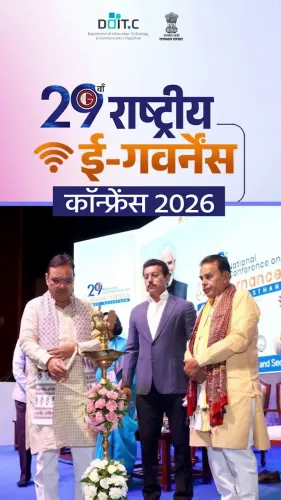
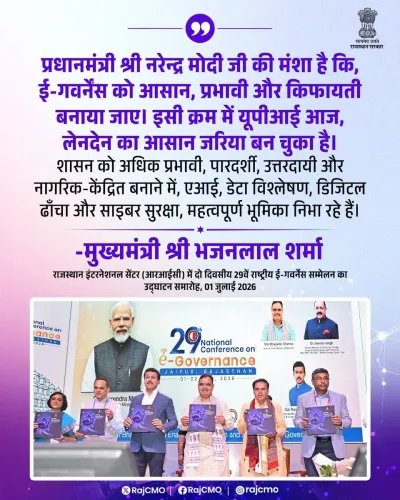
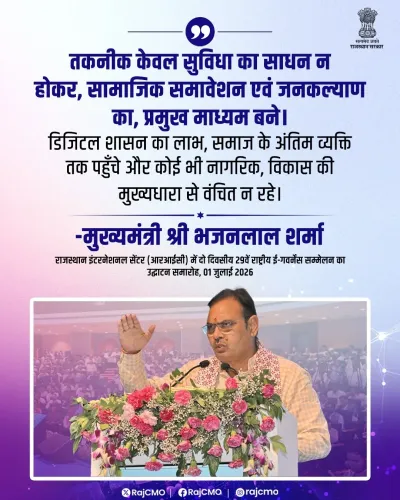
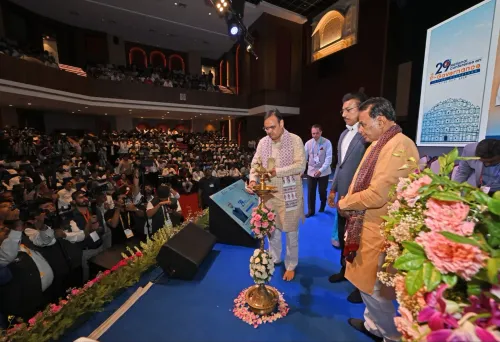
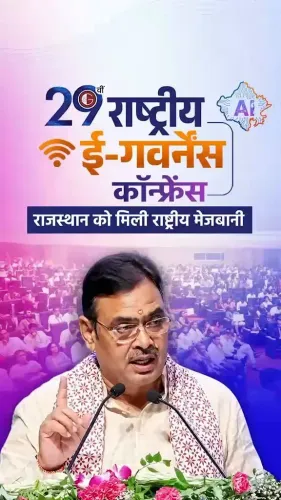
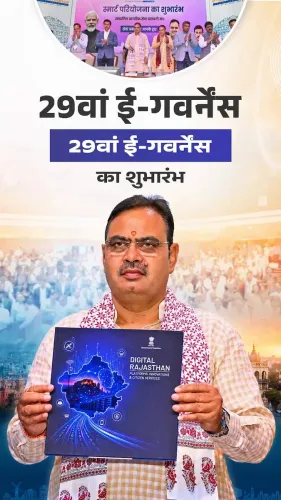
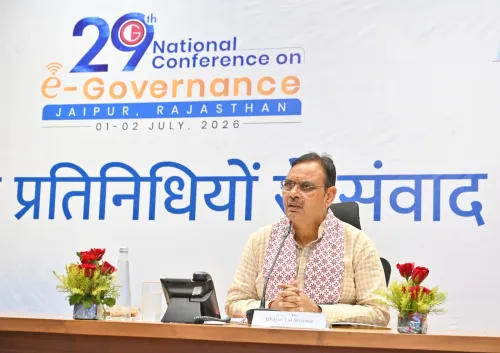
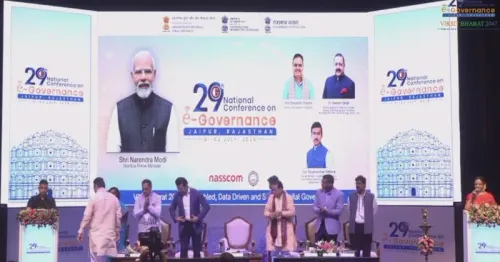
CM Bhajanlal Sharma addressed the 29th National e-Governance Conference (NCeG 2026) at the Rajasthan International Centre, Jaipur on 1 July 2026 .
Rajasthan received national-level recognition for outstanding work in digital identity and Aadhaar verification .
The conference was organised by DARPG and focused on themes of cybersecurity, artificial intelligence, and digital infrastructure .
Rajasthan's recognition builds on its history of Aadhaar-linked welfare delivery dating to the Bhamashah scheme of 2014 and the Digital India programme of 2015 .
The award aligns with the national Viksit Bharat 2047 vision for technology-enabled, secure governance across India.
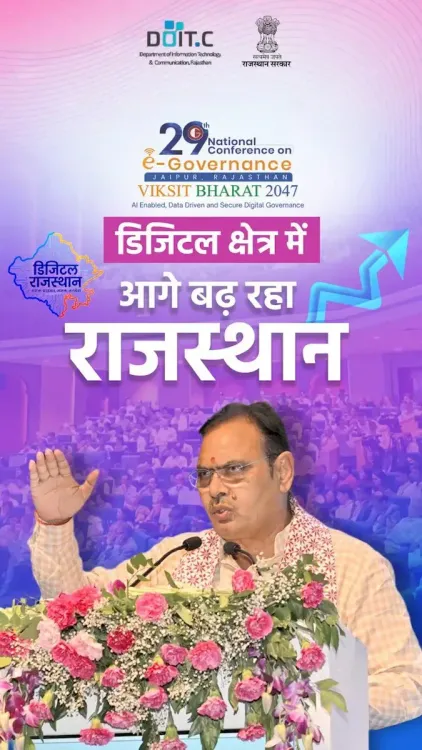
Chief Minister Bhajanlal Sharma addressed the 29th National e-Governance Conference (NCeG 2026) at the Rajasthan International Centre (RIC) in Jaipur on 1 July 2026, announcing that Rajasthan has been recognised at the national level for outstanding work in digital identity and Aadhaar verification.
Context
Addressing the conference, CM Bhajanlal Sharma stated that the state's achievements in digital pehchaan evam Aadhaar satya pan (digital identity and Aadhaar verification) had earned Rajasthan national recognition. The National e-Governance Conference is an annual flagship event organised by the Department of Administrative Reforms and Public Grievances (DARPG), Government of India, to showcase and reward state-level innovations in digital service delivery. The 29th edition brought together officials and policy leaders from across the country to deliberate on themes including cybersecurity, artificial intelligence, and secure digital infrastructure.
Policy Backdrop
Rajasthan's recognition is rooted in a decade-long push under the Digital India programme, launched in 2015, which set benchmarks for Aadhaar integration, e-services delivery, and cybersecurity across states. The state's earlier Bhamashah scheme, introduced in 2014, was a pioneering effort to link Aadhaar-based direct benefit transfers to women-centric welfare programmes, giving Rajasthan an early lead in digital identity infrastructure. Aadhaar, governed by the Aadhaar Act 2016, remains the backbone of India's biometric identity ecosystem and is central to the Centre's vision of frictionless, verifiable digital governance.
Since 2015, states have competed on metrics including Aadhaar saturation, digital grievance redressal, and cybersecurity readiness. Rajasthan has consistently featured in national e-governance rankings for integrating Aadhaar with welfare delivery and land-record management, and this latest recognition continues that trajectory.
Stakeholders and Impact
The award signals direct benefits for Rajasthan's residents, who are the end-users of Aadhaar-linked welfare schemes, digital land records, and online government services. State government departments involved in digital service delivery stand to receive greater policy attention and resource allocation on the back of this national recognition. The conference's focus on artificial intelligence and cybersecurity also indicates that future iterations of these services are expected to be more secure and algorithmically efficient, reducing leakages and fraud in benefit transfers.
The recognition aligns with the broader national goal of Viksit Bharat 2047, which sets ambitious targets for digital infrastructure and technology-enabled administration across all states by India's centenary of independence.
What's Next
The spotlight on AI-enabled governance and cybersecurity protocols at NCeG 2026 is expected to accelerate the rollout of smart grievance redressal systems and hardened digital infrastructure across Rajasthan's departments. DARPG is likely to issue fresh national guidelines on digital governance standards in the wake of the conference, which states including Rajasthan will be expected to adopt. Rajasthan's performance at subsequent NCeG editions will be a key indicator of whether the state can sustain and deepen its lead in secure, identity-verified digital service delivery.
Point of View
Which has sought to position itself as a technology-forward administration since taking office in December 2023. The award reinforces a long-running competitive dynamic among states under the Digital India framework, where national recognition functions as both a governance benchmark and a political signal. The emphasis on AI and cybersecurity at this year's conference also reflects the Centre's push to move e-governance beyond basic digitisation toward intelligent, secure systems — a shift that will test states' institutional capacity in the years ahead. For Rajasthan, sustaining this recognition will require translating conference-floor accolades into measurable improvements in service delivery for ordinary citizens.
NationPress
30 Sept 2026
Frequently Asked Questions
Why did Rajasthan receive a national e-governance award in 2026?
Rajasthan was recognised at the 29th National e-Governance Conference for outstanding work in digital identity and Aadhaar verification, as announced by CM Bhajanlal Sharma on 1 July 2026 .
What is the National e-Governance Conference?
The National e-Governance Conference (NCeG) is an annual event organised by DARPG (Department of Administrative Reforms and Public Grievances) to recognise and promote digital service delivery innovations by Indian states.
What is Viksit Bharat 2047 and how does it relate to digital governance?
Viksit Bharat 2047 is India's national vision for becoming a fully developed nation by 2047, with specific targets for digital infrastructure, secure governance, and technology-enabled administration across all states.
What is the Bhamashah scheme and its role in Rajasthan's digital identity record?
The Bhamashah scheme , launched in 2014 , was Rajasthan's early initiative to link Aadhaar -based direct benefit transfers to women-centric welfare programmes, giving the state a foundational lead in digital identity infrastructure.
Where was the 29th National e-Governance Conference held?
The 29th NCeG 2026 was held at the Rajasthan International Centre (RIC) in Jaipur, Rajasthan , on 1 July 2026 .