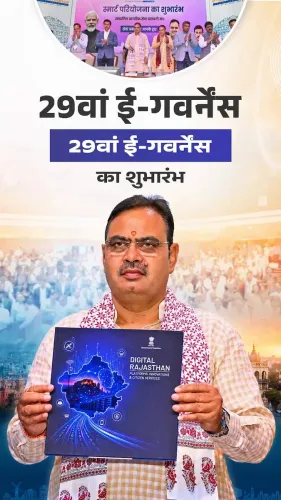
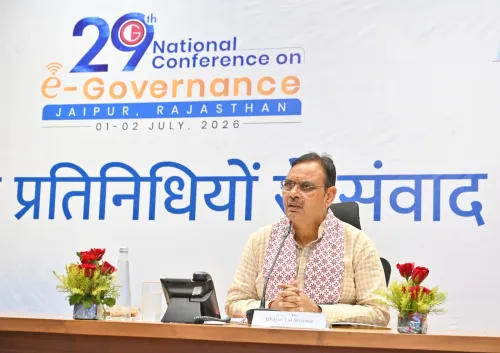
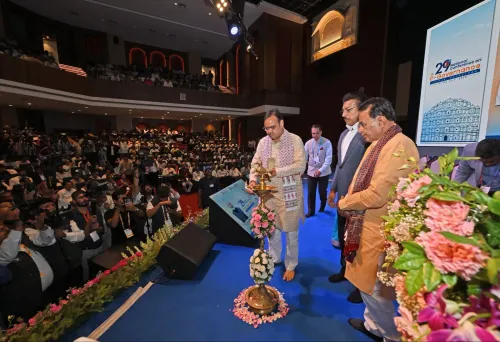
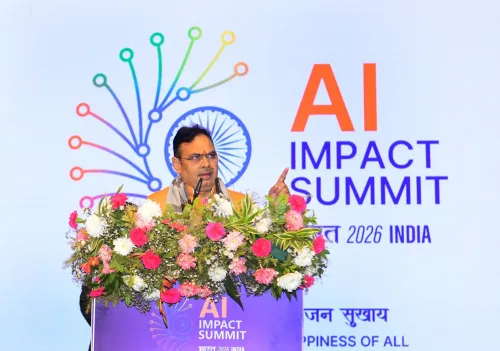
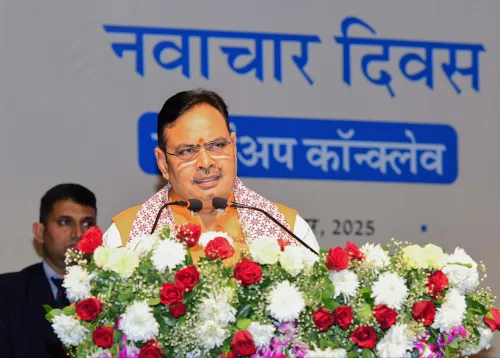
CM Bhajan Lal Pitches AI as Rajasthan's Governance Pillar
Synopsis
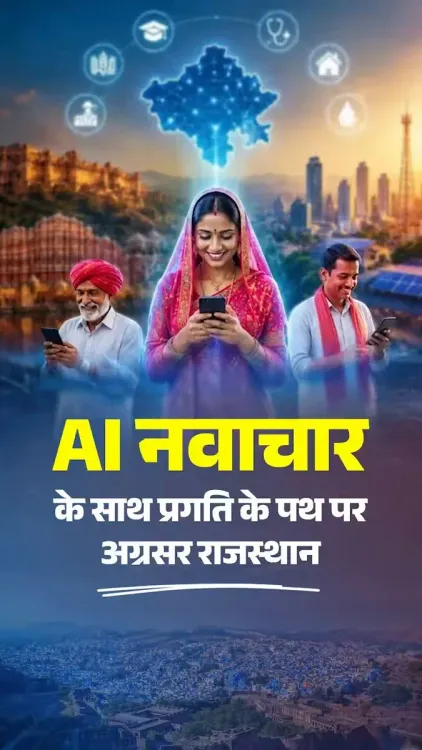
Rajasthan Chief Minister Bhajan Lal Sharma has declared AI the new pillar of governance, innovation, and development in the state, pledging digital initiatives and AI education to build a transparent, self-reliant Rajasthan and equip youth with future-ready skills.
Key Takeaways
Bhajan Lal Sharma declared on 23 May 2026 that AI is the new foundation of good governance, innovation, and development in Rajasthan .
The state government says it is connecting youth with future technology through digital initiatives and AI education .
The vision is framed around building a transparent, effective, and self-reliant Rajasthan .
The push aligns with the national Digital India programme and the National Education Policy 2020 , which both call for AI and technology integration.
Key groups to benefit include students and youth in Rajasthan's government schools and colleges.
Concrete rollout details — curricula changes, AI platforms, policy documents — are yet to be publicly announced.
Rajasthan Chief Minister Bhajan Lal Sharma on Saturday, 23 May 2026, declared that artificial intelligence is becoming the new foundation of good governance, innovation, and development in Rajasthan, asserting that his government is using digital initiatives and AI education to connect youth with future technology while building a transparent, effective, and self-reliant state.
Context
In a post on X, Sharma wrote — 'AI तकनीक राजस्थान में सुशासन, नवाचार और विकास का नया आधार बन रही है' ['AI technology is becoming the new foundation of good governance, innovation, and development in Rajasthan']. He added that the government is giving fresh momentum to building a transparent, effective, and self-reliant Rajasthan by connecting youth with future technology through digital initiatives and AI education. The statement signals the state administration's intent to position Rajasthan as a proactive adopter of AI-driven public service delivery.
The Chief Minister assumed office in December 2023 and has since aligned the state's development agenda with the BJP's broader emphasis on technology-led governance. This post, accompanied by a video, appears to be part of a sustained communication effort on the state's digital direction.
Policy Backdrop
The push fits squarely within the national Digital India programme, launched in 2015, which aims to create a digitally empowered society and knowledge economy. Rajasthan's emphasis on AI education also aligns with the National Education Policy 2020, which called for integration of AI and emerging technologies into school and higher education curricula across India.
Multiple Indian states have introduced digital and AI education programmes in recent years, responding to central policy directions that frame technology-driven governance as a pillar of self-reliance. Rajasthan's framing of AI as a tool for 'suśāsan' [good governance] places it within a growing inter-state competition to demonstrate administrative modernisation.
Stakeholders and Impact
The primary beneficiaries identified by Sharma are Rajasthan's youth and students, who the government says will be equipped with skills aligned to future technology demands. If the stated digital initiatives translate into curriculum changes and platform rollouts, students in government schools and colleges across the state could gain structured exposure to AI tools and concepts.
Broader stakeholders include state government departments, where AI adoption could affect service delivery speed and transparency. Citizens interacting with government services — from revenue records to welfare scheme disbursals — stand to be affected by any meaningful digitisation push.
What's Next
Observers will watch for concrete announcements on AI-related curricula in Rajasthan government schools, state-level AI policy documents, or specific digital platform launches that give operational shape to the Chief Minister's stated vision. The rollout of such programmes will be the real test of whether the governance narrative translates into measurable outcomes for students and public administration alike.
Point of View
Positioning Rajasthan as a model of Digital India implementation ahead of potential policy reviews. The emphasis on 'self-reliance' — echoing the Aatmanirbhar Bharat vocabulary — suggests the state is calibrating its messaging to resonate with both central leadership and a younger voter base increasingly attentive to employment and skills. However, the statement remains aspirational until backed by specific scheme launches or budget allocations, and the gap between governance rhetoric and delivery will determine its political durability. Rajasthan's ability to demonstrate tangible AI outcomes in public services will be watched closely by other BJP-ruled states benchmarking their own digital agendas.
NationPress
19 Sept 2026
Frequently Asked Questions
What did Rajasthan CM Bhajan Lal Sharma say about AI?
Bhajan Lal Sharma said AI technology is becoming the new foundation of good governance, innovation, and development in Rajasthan, and that his government is using digital initiatives and AI education to connect youth with future technology while building a transparent and self-reliant state.
What is Rajasthan's AI education plan?
The Chief Minister has stated that the state government is connecting youth with future technology through digital initiatives and AI education, though specific curriculum details or programme names have not yet been publicly announced.
How does Rajasthan's AI push relate to Digital India?
Rajasthan's stated AI and digital governance agenda aligns with the national Digital India programme launched in 2015 and the National Education Policy 2020, both of which call for technology integration in governance and education.
Who benefits from Rajasthan's AI and digital initiatives?
The primary beneficiaries identified by CM Bhajan Lal Sharma are Rajasthan's youth and students, who the government says will gain skills aligned to future technology demands through state-run digital and AI education programmes.
When did Bhajan Lal Sharma become Chief Minister of Rajasthan?
Bhajan Lal Sharma assumed office as Chief Minister of Rajasthan in December 2023, following the BJP's victory in the state assembly elections.