Govt raises ₹26,639 crore via disinvestment, asset monetisation in FY27

Synopsis
India's disinvestment engine has hit its highest gear in four years — ₹26,639 crore raised in just over three months of FY27, led by OFS deals in Coal India, NHPC, and GIC. With ₹80,000 crore budgeted under miscellaneous capital receipts and no fixed targets, the Centre is betting on market timing over rigid planning to fund its fiscal ambitions.
Key Takeaways
The government raised ₹26,639.33 crore via disinvestment and asset monetisation in FY27 as of 22 July 2025 . ₹20,272.40 crore came from OFS transactions across 7 CPSEs , including Coal India , NHPC , and GIC . ₹6,366.93 crore was raised through asset monetisation, including InvITs and REITs.
Disinvestment proceeds in FY27 are the highest in four years , according to DIPAM data.
The government has set ₹80,000 crore under miscellaneous capital receipts in the FY27 Budget Estimate ; separate disinvestment targets were discontinued from FY2023-24 .
Government shareholding in 68 listed CPSEs is valued at over ₹22.80 lakh crore ; in 16 listed public financial institutions at around ₹19 lakh crore .
The Indian government has raised ₹26,639.33 crore through disinvestment and asset monetisation in the current financial year FY2026-27, as of 22 July 2025, Parliament was informed on Monday, 27 July. The figure includes ₹20,272.40 crore from Offer for Sale (OFS) transactions across seven Central Public Sector Enterprises (CPSEs) and ₹6,366.93 crore from asset monetisation.
OFS Transactions Driving Receipts
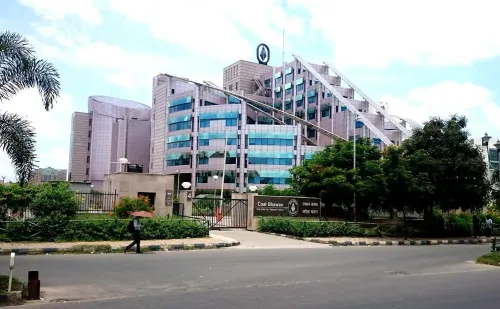
Seven OFS transactions through stock exchanges have powered the disinvestment tally so far in FY27. Coal India Ltd led with receipts of over ₹5,500 crore, followed by NHPC Limited at over ₹4,300 crore and General Insurance Corporation of India (GIC) at over ₹3,000 crore. Central Bank of India contributed over ₹2,200 crore, Indian Railway Finance Corporation Ltd (IRFC) over ₹2,000 crore, Cochin Shipyard Ltd over ₹1,700 crore, and NLC India Limited over ₹1,200 crore.
OFS is a mechanism that allows promoters or major shareholders of a listed company to sell their existing shares to the public through the stock exchange platform, requiring less documentation and faster execution compared to an IPO or FPO.
What the Government Said
Minister of State for Finance Pankaj Chaudhary disclosed the figures in a written reply to a question in the Lok Sabha. He noted that fixing separate disinvestment targets has been discontinued since FY2023-24. Instead, ₹80,000 crore has been kept under miscellaneous capital receipts in the Budget Estimate for 2026-27, covering estimated receipts from management of equity investments and public assets through various mechanisms.
Chaudhary added that disinvestment is an ongoing process and that the execution of specific transactions depends on market conditions, domestic and global economic outlook, geopolitical factors, investor interest, and administrative feasibility. Given the market-sensitive nature of such transactions, drawing up fixed timelines is not feasible, he stated.
Highest Proceeds in Four Years
Disinvestment proceeds in just over three months of FY27 have reached their highest level in four years, according to data from the Department of Investment and Public Asset Management (DIPAM). This comes amid a broader push by the Centre to unlock value from its equity holdings in listed enterprises.
There are currently 68 CPSEs listed on stock exchanges, with the value of government shareholding in these companies exceeding ₹22.80 lakh crore. In addition, 16 public financial institutions — comprising banks and insurance companies — are also listed, with government shareholding valued at around ₹19 lakh crore.
Role of Asset Monetisation and InvITs
Asset monetisation through Infrastructure Investment Trusts (InvITs) and Real Estate Investment Trusts (REITs) has helped unlock funds for new infrastructure projects and attracted global investors. InvITs pool capital to invest in large infrastructure projects, generating steady income and long-term growth for investors while allowing infrastructure developers to tap household savings.
Notably, InvITs have democratised access to infrastructure investment — previously available only to large institutions — opening up these opportunities to retail investors as well. As the Centre looks to bridge its fiscal gap, asset monetisation is increasingly becoming a structural tool rather than a one-off measure.
What's Next
With the ₹80,000 crore miscellaneous capital receipts target for FY27 in view, the pace of OFS and asset monetisation activity will be closely watched in the coming quarters. Market conditions and geopolitical stability will remain key determinants of whether the government can sustain this early momentum through the rest of the financial year.
Point of View
But the structural shift — replacing fixed targets with a ₹80,000 crore miscellaneous capital receipts bucket — makes accountability harder to track. OFS-led disinvestment is efficient but does not reduce the government's ownership stake in a transformative way; it merely trims the margin. The real question is whether asset monetisation via InvITs is being deployed strategically to fund new capital expenditure, or simply to plug near-term fiscal gaps. With ₹22.80 lakh crore in CPSE equity still on the government's books, the headroom is vast — but so is the execution risk in a volatile global market.
NationPress
25 Oct 2026
Frequently Asked Questions
How much has the government raised through disinvestment in FY27 so far?
The government has raised ₹26,639.33 crore in FY2026-27 as of 22 July 2025 , comprising ₹20,272.40 crore from OFS transactions and ₹6,366.93 crore from asset monetisation, according to information shared in Parliament.
Which companies were part of the OFS transactions in FY27?
Seven CPSEs participated in OFS transactions: Central Bank of India , Coal India Ltd , NHPC Limited , NLC India Limited , General Insurance Corporation of India , Indian Railway Finance Corporation Ltd , and Cochin Shipyard Ltd . Coal India led with over ₹5,500 crore.
Does the government have a fixed disinvestment target for FY27?
No. Separate disinvestment targets have been discontinued since FY2023-24. For FY27, ₹80,000 crore has been kept under miscellaneous capital receipts in the Budget Estimate, covering disinvestment, equity management, and asset monetisation receipts.
Why are disinvestment timelines not fixed?
Minister of State for Finance Pankaj Chaudhary stated that disinvestment execution depends on market conditions, global economic outlook, geopolitical factors, and investor interest. Given the market-sensitive nature of these transactions, fixed timelines are not feasible.
What is the significance of InvITs in asset monetisation?
Infrastructure Investment Trusts (InvITs) allow the government and infrastructure developers to unlock capital from existing assets and channel it into new projects. They also open large-scale infrastructure investment to retail investors, broadening participation beyond institutional players.