Will the Govt Increase Capex by 10% in Union Budget 2026-27?

Synopsis
As the Union Budget for 2026-27 approaches, speculation arises regarding a potential 10% hike in capital expenditure. This move could significantly impact infrastructure investment and economic growth amidst global uncertainties. The SBI report highlights essential fiscal strategies and recommendations for sustainable growth.
Key Takeaways
Projected capex for FY27 may exceed Rs 12 lakh crore .
Expected 10% increase over the previous fiscal year.
Focus on infrastructure investments across key sectors.
Fiscal deficit projected at 4.2% of GDP .
Recommendations for enhancing financial savings .
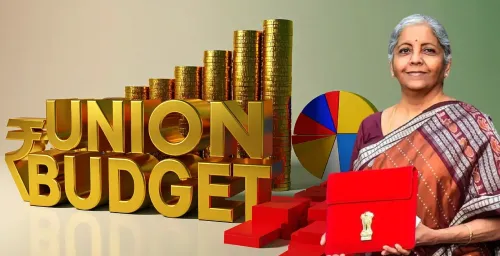
New Delhi, Jan 28 (NationPress) The government's capital expenditure (capex) is anticipated to exceed Rs 12 lakh crore in the upcoming Union Budget for 2026-27, reflecting an approximate 10% increase compared to the previous financial year, as indicated by a recent SBI report released on Wednesday.
This increase will facilitate enhanced investments in major infrastructure projects across highways, railways, ports, and power sectors, aimed at stimulating growth and job creation within the economy.
The FY27 budget is being prepared amidst a global economic landscape fraught with uncertainty and fragmentation, making it crucial for India to adhere to fiscal prudence as global debt looms. Notably, the recovery trajectory for India post-pandemic is outpacing that of the post-global financial crisis, as per the report.
It predicts a modest increase in tax revenues alongside stable non-tax revenue for FY27. The nominal GDP growth essential for budget calculations is projected to be around 10.5% to 11%, influenced by rising international commodity prices, potentially impacting WPI inflation. Consequently, the fiscal deficit is expected to hover around 4.2% of GDP for FY27, although adjustments may arise from the new GDP series, the report elaborates.
Borrowing projections may yield a positive surprise, with net Central borrowing for FY27 estimated at Rs 11.7 trillion and repayments at Rs 4.87 trillion. State gross borrowings might reach Rs 12.6 trillion with repayments of Rs 4.2 trillion. The Reserve Bank of India will likely need to enhance open market operations to meet these borrowing needs, according to the SBI report.
The report also advocates for the Budget to incorporate strategies that enhance financial savings in the economy. Suggestions include aligning tax treatment for interest on deposits with long-term capital gains (LTCG) and short-term capital gains (STCG), reducing the lock-in period for tax-saving fixed deposits to three years, and raising the interest threshold for TDS on bank deposits.
In terms of indirect taxes, it proposes clarifying the definition of input service distributor to mitigate litigation and suggests that GST on TDS should not apply to banking services.
Additionally, the necessity for extensive reforms in the insurance and pensions sector to bolster penetration is emphasized.
The report underscores that, given the significant share of general government debt held by states, state budgets should explicitly outline medium-term, scenario-based debt-to-GSDP trajectories that align with realistic growth assumptions and developmental requirements, rather than depending solely on annual deficit targets. This recommendation may feature prominently in the Union Budget, the report concludes.
Point of View
It is imperative to view the anticipated budgetary measures as a step towards strengthening India's economic resilience. The focus on infrastructure investment and fiscal prudence aligns with the nation's long-term development goals.
NationPress
20 Sept 2026
Frequently Asked Questions
What is the projected capex for the 2026-27 budget?
The projected capital expenditure (capex) for the 2026-27 budget is expected to exceed Rs 12 lakh crore, representing a 10% increase from the previous year.
How will the budget impact infrastructure projects?
The increased capex is aimed at boosting investments in major infrastructure sectors such as highways, railways, ports, and power, which are crucial for driving economic growth and job creation.
What are the expected challenges for the budget?
The budget will be framed amidst global economic uncertainties, necessitating a focus on fiscal prudence and effective management of the fiscal deficit.
What recommendations does the SBI report make?
The SBI report suggests measures to enhance financial savings, improve clarity in indirect taxes, and implement reforms in the insurance and pensions sector.
How does the report view India's post-pandemic recovery?
The report indicates that India's recovery following the pandemic is more robust compared to the recovery post the global financial crisis.