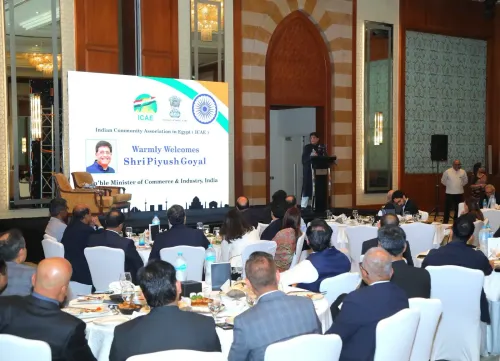
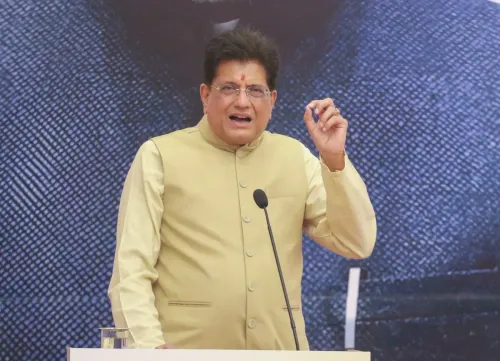
Piyush Goyal Addresses India-Egypt Joint Business Council

Synopsis
Commerce Minister Piyush Goyal and Egypt's investment minister Dr. Mohamed Farid Saleh co-addressed the India-Egypt Joint Business Council on November 15, 2026, spotlighting 700-plus Indian firms in Egypt and calling for deeper collaboration in manufacturing, pharma, engineering, and textiles.
Key Takeaways
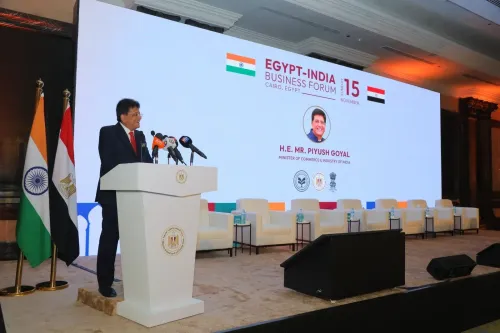
Union Commerce Minister Piyush Goyal addressed the India-Egypt Joint Business Council Meeting on November 15, 2026 .
He was joined by Dr.
Mohamed Farid Saleh , Egypt's Minister of Investment and Foreign Trade .
Over 700 registered Indian companies are currently operating in Egypt, cited as evidence of growing bilateral business depth.
Priority sectors identified for deeper collaboration: manufacturing, pharmaceuticals, engineering, textiles .
India and Egypt have maintained diplomatic relations since 1947 , with trade historically anchored in pharmaceuticals, engineering goods, and textiles.
Both ministers called on private sectors from both countries to strengthen existing partnerships and explore new investment avenues.
Two economies with complementary strengths and a diplomatic relationship stretching back to 1947 sat across the table on Sunday, November 15, 2026 — and Union Commerce and Industry Minister Piyush Goyal used the moment to make a pointed pitch for deeper private-sector engagement between India and Egypt.
What Goyal told the Joint Business Council
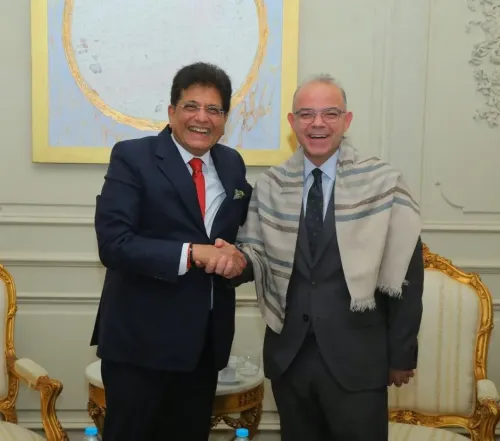
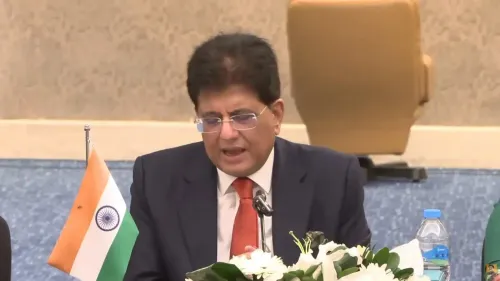
Speaking at the India-Egypt Joint Business Council Meeting alongside Egypt's Minister of Investment and Foreign Trade, Dr. Mohamed Farid Saleh, Goyal underscored what he called 'strong complementarities' between the two economies. He called on companies from both sides to 'strengthen existing partnerships and explore new avenues of collaboration' — naming manufacturing, pharmaceuticals, engineering, and textiles as priority sectors. The two ministers presenting a united front at a formal bilateral forum signals that this push has political weight behind it, not just commercial intent.
700-plus Indian firms already on the ground in Egypt
The most telling number in the room: over 700 registered Indian companies currently operating in Egypt. That figure, cited by Goyal, is not a promise — it is a baseline. It reflects decades of gradual commercial deepening in sectors where the two countries have long traded: generics and APIs from India's pharmaceutical giants, engineering goods, and textiles. India has historically pursued expanded economic engagement across North Africa through sector-specific cooperation, and Egypt — sitting at the crossroads of the Mediterranean and the Suez corridor — is a natural anchor for that strategy.
Why this bilateral forum matters now
The India-Egypt Joint Business Council serves as the principal private-sector dialogue platform between the two countries. Its activation, particularly at the ministerial level with both commerce and investment portfolios represented, suggests both governments want to move from legacy trade flows toward structured investment pipelines. The sectors Goyal highlighted — pharmaceuticals, engineering, textiles, manufacturing — are precisely where Indian firms have demonstrated global competitiveness and where Egypt, managing its own industrial development agenda, has appetite for inbound expertise and capital.
The next pressure point will be whether this ministerial momentum translates into concrete announcements: investment commitments, fast-track regulatory frameworks, or joint manufacturing ventures. The Joint Business Council now has a mandate on the table — the question is how fast the two private sectors can move to meet it.
Point of View
Private-sector-led frameworks rather than government-to-government deals alone. Egypt's geographic position — straddling North Africa and the Suez corridor — makes it a strategic node for Indian firms seeking a manufacturing and distribution foothold in the region. Citing 700-plus Indian companies already on the ground reframes the conversation from 'why invest' to 'how to scale' — a subtle but significant shift in negotiating posture. If the Joint Business Council converts this ministerial signal into concrete investment pipelines, it could serve as a template for India's engagement with other African and Middle Eastern partners.
NationPress
15 Nov 2026
Frequently Asked Questions
What is the India-Egypt Joint Business Council?
The India-Egypt Joint Business Council is a bilateral platform that facilitates private-sector dialogue and commercial collaboration between Indian and Egyptian businesses, operating under the broader framework of diplomatic relations established between the two countries in 1947.
How many Indian companies are registered in Egypt?
Commerce Minister Piyush Goyal cited over 700 registered Indian companies operating in Egypt at the November 2026 Joint Business Council meeting, reflecting decades of growing commercial ties.
Which sectors did Piyush Goyal highlight for India-Egypt cooperation?
Goyal specifically named manufacturing, pharmaceuticals, engineering, and textiles as key sectors where businesses from both countries should strengthen partnerships and explore new collaboration.
Who represented Egypt at the India-Egypt Joint Business Council meeting in November 2026?
Dr. Mohamed Farid Saleh, Egypt's Minister of Investment and Foreign Trade, co-addressed the Joint Business Council meeting alongside India's Commerce Minister Piyush Goyal.
When did India and Egypt establish diplomatic relations?
India and Egypt formally established diplomatic relations in 1947, making it one of India's longest-standing bilateral relationships in the African and Arab world.