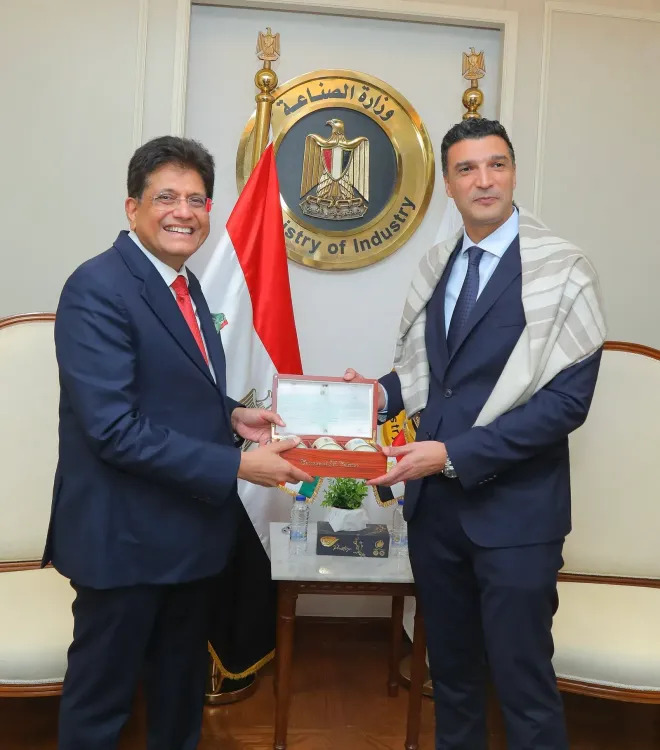
Piyush Goyal meets Egypt's Industry Minister on trade ties
Synopsis
Commerce Minister Piyush Goyal met Egypt's Industry Minister on 15 November 2026 to explore joint manufacturing, MSME technology-sharing, and aligning Egyptian industrial policy with Make in India — positioning Egypt as India's gateway to Africa, Europe, and the Arab world.
Key Takeaways
Piyush Goyal held talks with Egypt's Industry Minister Khaled Hasham Ali Maher on 15 November 2026 on strengthening bilateral industrial ties.
Egypt's location was highlighted as a strategic gateway to Africa, Europe, and the Arab world for Indian manufacturers.
Discussions covered joint manufacturing , technology tie-ups, and building resilient supply chains .
Egypt's industrial policy was explored as a potential complement to India's Make in India initiative, launched in September 2014 .
Both sides discussed strengthening MSMEs through joint training in automation and advanced manufacturing and technology sharing.
Indian businesses already in Egypt are contributing to investment, jobs, exports, and innovation , providing a base for expanded cooperation.
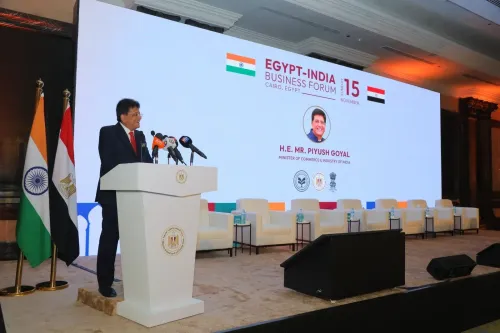
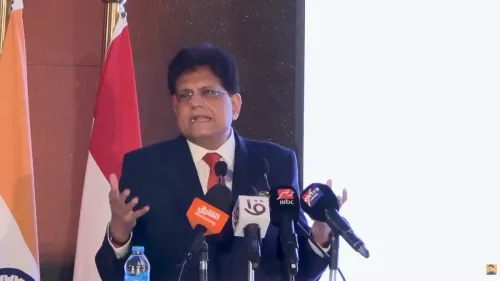
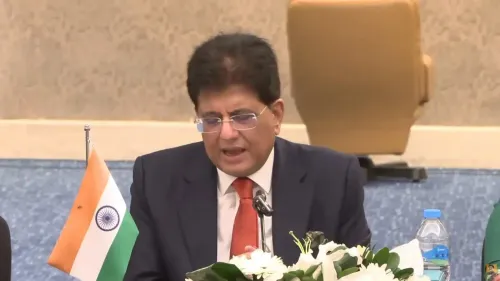
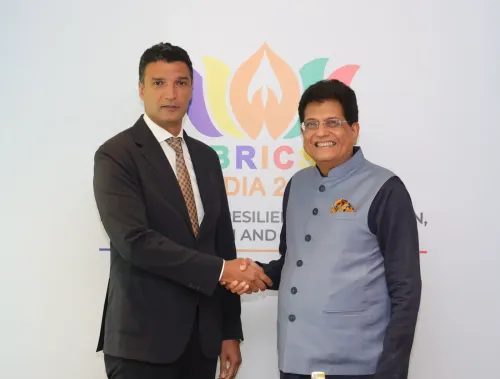
A meeting between two ministers — and a continent on the table. Union Commerce and Industry Minister Piyush Goyal held talks with Egypt's Minister of Industry, Khaled Hasham Ali Maher, on 15 November 2026, focusing on deepening industrial and trade linkages between India and Egypt — a country whose geography alone makes it one of the most strategically positioned partners India could cultivate.
Egypt as the crossroads: Africa, Europe, and the Arab world in one frame
Goyal framed Egypt's value with striking directness: its location makes it 'a gateway to Africa, Europe, and the Arab world.' That is not diplomatic flattery — it is a supply-chain argument. For Indian manufacturers hunting resilient, diversified export corridors beyond Southeast Asia, a production or technology footprint in Egypt is a footprint in three major markets simultaneously.
The two ministers discussed joint manufacturing, technology tie-ups, and building supply chains that can absorb disruption — themes that have defined India's industrial diplomacy across Africa and the Middle East over the past several years as New Delhi has worked to reduce over-reliance on any single trade corridor.
Make in India meets Egypt's industrial policy
One of the more substantive threads in the conversation was how Egypt's domestic industrial policy could be designed to complement Make in India — the flagship manufacturing initiative Prime Minister Narendra Modi launched in September 2014 to attract global investment and build domestic production capacity. The logic is a natural one: if Indian companies manufacture in India and use Egypt as an assembly, packaging, or last-mile hub for regional markets, both economies capture value.
Goyal noted that Indian businesses already operating in Egypt are contributing to investment, job creation, exports, and innovation — a foundation to build on rather than a relationship starting from scratch.
MSMEs, automation training, and technology sharing
Perhaps the most granular commitment discussed was strengthening micro, small, and medium enterprises (MSMEs) through joint training in automation and advanced manufacturing, alongside technology sharing. This is significant. MSME linkages between two developing economies rarely get headline treatment, but they carry the bulk of actual employment and industrial diversity. A structured training and technology-transfer programme between Indian and Egyptian MSMEs could translate bilateral goodwill into ground-level industrial capability on both sides.
Goyal closed his post with visible optimism — 'Excited about the future of this partnership!' — a signal that follow-up steps are expected rather than merely hoped for.
India's strategic bet is clear: plant roots in Egypt's industrial ecosystem now, and harvest access to three adjoining regions for decades to come.
Point of View
Not just breadth, in this partnership. Egypt, for its part, offers India something rare: a single node that connects three distinct high-value markets. If the MSME training commitments and technology-sharing frameworks materialise into formal agreements, this meeting could mark a meaningful step in India's Africa-and-Middle-East industrial strategy.
NationPress
15 Nov 2026
Frequently Asked Questions
What did Piyush Goyal discuss with Egypt's Industry Minister?
Goyal discussed strengthening India-Egypt industrial ties, including joint manufacturing, technology tie-ups, resilient supply chains, MSME training in automation, and aligning Egypt's industrial policy with Make in India.
Why is Egypt important for India's trade and manufacturing strategy?
Egypt's geographic position makes it a gateway to Africa, Europe, and the Arab world simultaneously, making it a strategic hub for Indian manufacturers seeking diversified export corridors.
What is Make in India and how does it relate to India-Egypt cooperation?
Make in India is India's flagship manufacturing initiative launched in September 2014 to boost domestic production and attract investment. The ministers discussed how Egypt's industrial policy could complement and extend its reach into regional markets.
How do Indian businesses currently contribute in Egypt?
According to Goyal's post, Indian businesses already operating in Egypt are contributing to investment, job creation, exports, and innovation, providing a foundation for deeper cooperation.
What MSME initiatives were discussed between India and Egypt?
Both sides explored joint training programmes for MSMEs in automation and advanced manufacturing, as well as technology sharing to build industrial capacity in both countries.