Goyal Hands Over Keys to 106 Families in Mumbai's Malvani
Synopsis
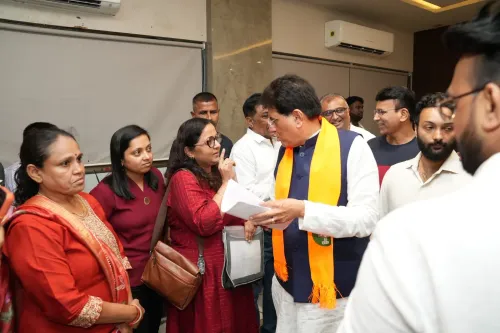
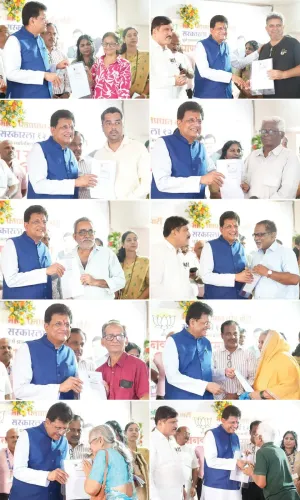
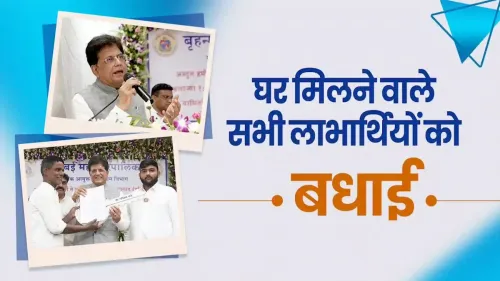
Union Minister Piyush Goyal handed keys to 106 families in Mumbai's Malvani on June 7, 2026, calling the moment deeply satisfying and underlining that a permanent home is the foundation for security, education, and aspirations for low-income urban households.
Key Takeaways
106 families in Malvani, Mumbai received keys to new permanent homes on June 7, 2026 .
Union Minister Piyush Goyal personally presided over the key-handover ceremony.
Goyal described the joy on beneficiaries' faces as 'deeply satisfying' and called a pucca home the foundation for security, education, and aspirations.
The event fits within the broader framework of Pradhan Mantri Awas Yojana (Urban) , launched in 2015 to replace informal urban settlements with permanent housing.
Malvani in Mumbai's western suburbs has been a focus area for urban redevelopment and housing allocation programmes.
Further phases of urban housing delivery in Mumbai's suburbs are anticipated, with pending beneficiary lists expected to draw scrutiny.
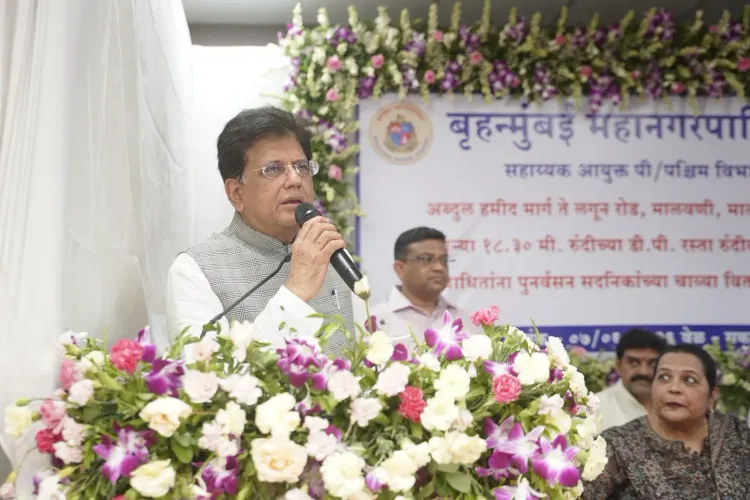
Union Commerce and Industry Minister Piyush Goyal on Sunday, June 7, 2026, handed over keys to 106 families in Malvani, a locality in Mumbai's western suburbs, marking a fresh milestone in urban housing delivery under ongoing government welfare programmes.
Sharing the moment on social media, Goyal wrote: 'Aaj Malvani mein 106 parivaron ko naye gharon ki chabiyan saunpte hue unke cheehron par khushi dekhna atyant santoshjanak raha' — 'Handing over keys to 106 families in Malvani today and seeing the joy on their faces was deeply satisfying.'
The minister added that a pucca (permanent) house forms the foundation for a family's security, children's better education, a clean life, and new aspirations, expressing confidence that this step would pave the way for a brighter future for these households.
Context
Malvani is a densely populated locality in Mumbai's Malad area, long associated with informal settlements and urban redevelopment efforts. Housing allocation events in the area draw attention to the persistent challenge of providing permanent dwellings to economically weaker urban households in one of India's most expensive cities.
Piyush Goyal, a senior BJP leader and Leader of the House in the Rajya Sabha, holds a Union Cabinet portfolio focused on commerce and industry but has remained an active participant in Maharashtra's political and welfare landscape. Key-handover ceremonies are a visible form of welfare delivery that senior leaders across parties have consistently leveraged to highlight government performance on the ground.
Policy Backdrop
The Pradhan Mantri Awas Yojana (Urban), launched in 2015, has been the central government's flagship scheme to provide pucca housing to eligible urban households, targeting the replacement of informal settlements with permanent, serviceable dwellings. The programme has seen successive phases of implementation across Mumbai's suburban belt, with municipal bodies and state agencies coordinating beneficiary selection and construction.
Urban housing shortfalls in cities like Mumbai remain significant, with large sections of the population residing in structures that lack structural stability, sanitation, or legal tenure. Permanent housing is widely recognised by policymakers as a multiplier — improving health outcomes, school attendance among children, and economic participation among women in low-income households.
Stakeholders and Impact
The 106 families who received keys in Malvani on June 7 join a growing list of urban beneficiaries who have transitioned from informal to formal housing. For households in localities such as Malvani, a pucca home typically represents the single largest asset transfer in a family's lifetime, with downstream effects on creditworthiness, children's study environments, and women's safety.
Local civic bodies, the Maharashtra state government, and central agencies all play roles in urban housing delivery, and events like this one reflect the layered coordination required to move beneficiaries from eligibility lists to actual possession of homes. BJP leaders' participation in such handovers also signals the party's continued emphasis on visible welfare delivery ahead of electoral cycles in the state.
What's Next
Further phases of urban housing schemes in Mumbai's suburban localities are expected, with attention likely to focus on the pace of construction, the resolution of pending beneficiary lists, and any fresh budgetary allocations at the municipal or state level. The Malvani handover may also prompt scrutiny of how many households in the locality remain on waiting lists and the timeline for their inclusion in future phases.
As urban redevelopment pressures intensify across Mumbai, the pace at which governments can convert informal settlements into formal housing colonies will remain a key metric for both policy evaluation and political messaging in Maharashtra.
Point of View
Ground-level welfare delivery in Maharashtra — a state where urban housing grievances run deep and electoral stakes remain high. The event reinforces the central government's narrative that flagship schemes like PMAY-Urban are producing tangible outcomes, not just policy intent. However, with large waiting lists still unresolved across Mumbai's informal settlements, the optics of individual handovers will continue to invite questions about the overall pace and scale of delivery. For Goyal specifically, the appearance underlines his dual role as a national economic minister and a politically active presence in Maharashtra's BJP ecosystem.
NationPress
23 Sept 2026
Frequently Asked Questions
Who handed over keys to families in Malvani on June 7 2026?
Union Commerce and Industry Minister Piyush Goyal handed over keys to 106 families in Malvani, Mumbai on June 7, 2026 .
Where is Malvani located?
Malvani is a locality in the Malad area of Mumbai's western suburbs, Maharashtra , known for dense informal settlements and ongoing urban redevelopment activity.
What is Pradhan Mantri Awas Yojana Urban?
Pradhan Mantri Awas Yojana (Urban) is a central government scheme launched in 2015 to provide permanent, pucca housing to eligible urban households, particularly those living in informal or slum settlements.
Why is Piyush Goyal attending housing events in Mumbai?
Piyush Goyal is a senior BJP leader and remains politically active in Maharashtra ; his participation in welfare delivery events like housing key-handovers reflects the party's emphasis on visible ground-level governance in the state.
What does a pucca house mean for low-income families?
A pucca (permanent, structurally sound) house provides security of tenure, better living conditions, improved environments for children's education, and is often the single largest asset a low-income urban family acquires, with wide-ranging social and economic benefits.