Piyush Goyal Pays Tribute to Indian Soldiers at Cairo War Cemetery
Synopsis
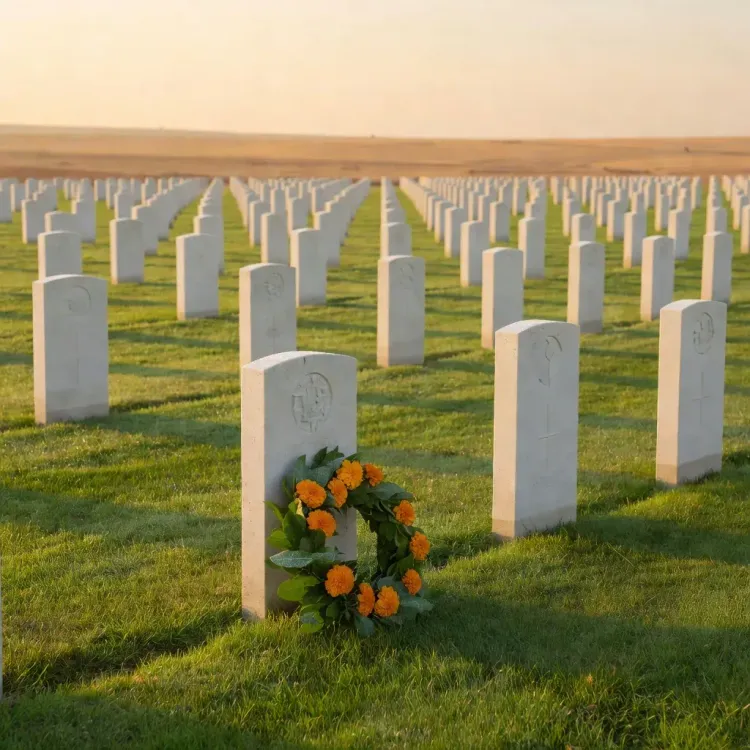
Commerce Minister Piyush Goyal paid tributes to Indian soldiers at Heliopolis War Cemetery in Cairo on November 15, honouring those who died in the World Wars. The cemetery, maintained by the Commonwealth War Graves Commission, holds thousands of Indian graves from the North Africa and Middle East theatres.
Key Takeaways
Union Commerce Minister Piyush Goyal visited Heliopolis War Cemetery in Cairo, Egypt on November 15, 2026 .
He paid tribute to Indian soldiers who 'laid down their lives during the World Wars.' Heliopolis War Cemetery is maintained by the Commonwealth War Graves Commission and contains graves from both World Wars, including thousands of Indian troops.
Egypt served as a critical Allied staging ground, making Cairo one of the most significant Commonwealth burial sites outside Europe.
More than 1.5 million Indians served in the First World War, with a comparable mobilisation in the Second — contributions central to India's pre-independence military heritage.
Indian ministers periodically honour war dead at overseas Commonwealth cemeteries as part of established diplomatic and commemorative practice.
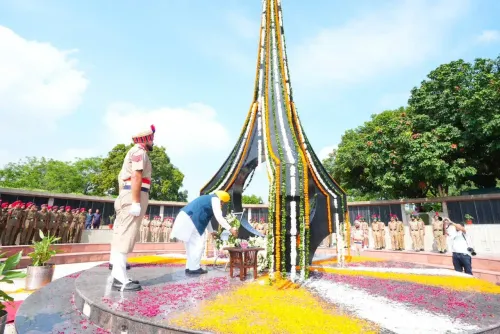
Thousands of miles from home, in the Egyptian capital, Union Commerce and Industry Minister Piyush Goyal paused on Sunday, November 15 to bow before a debt that history rarely settles — the sacrifice of Indian soldiers buried at the Heliopolis War Cemetery in Cairo.
Goyal posted his tribute on X, writing: 'My heartfelt tributes to the brave Indian soldiers who laid down their lives during the World Wars,' tagging the location as Heliopolis War Cemetery, Cairo. The gesture, brief in words, carries the weight of two world wars and an enormous, often unsung contribution from the Indian subcontinent.
Who Lies at Heliopolis
The Heliopolis War Cemetery, maintained by the Commonwealth War Graves Commission, holds the graves of soldiers from both the First and Second World Wars who served and died in the North Africa and Middle East theatres. Among them are thousands of Indian troops — sepoys, non-commissioned officers, and others who crossed oceans to fight in campaigns far removed from their own villages and families. Egypt was a critical staging ground for Allied operations, making Cairo one of the most significant Commonwealth burial sites outside Europe.
India's Tradition of Honouring War Dead Abroad
Indian ministers and officials periodically offer tributes at overseas Commonwealth war cemeteries during international travel — a practice that sits at the quiet intersection of diplomacy and historical remembrance. These are not ceremonial photo-ops so much as a formal acknowledgement that pre-independence India's military contributions to both World Wars remain part of the nation's heritage. More than 1.5 million Indians served in the First World War alone, and a comparable mobilisation followed in the Second — contributions that shaped the post-war global order yet rarely dominate public memory at home.
Goyal's Cairo Visit
The stop at Heliopolis came during what appears to be an official visit to Egypt by the Minister. Any parallel bilateral engagements with Egyptian counterparts — a natural companion to such a trip for a Commerce and Industry minister — have not yet been detailed publicly. What the visit signals, at minimum, is a continued Indian commitment to acknowledging the wartime service of its soldiers wherever their sacrifices are recorded in stone.
Tens of thousands of names are etched into war cemeteries from Flanders to Cairo to Singapore. Each tribute at a site like Heliopolis is a quiet insistence that those names are not forgotten — by the country, and by its representatives standing far from home.
Point of View
Whose pre-independence soldiers are buried across the globe yet underrepresented in popular national memory, these tributes serve a dual purpose: affirming historical depth to international partners and asserting a continuity of honour across the colonial-to-republic transition. Goyal's Cairo stop fits a pattern of Indian officials quietly but persistently reclaiming the World War narrative — one wreath at a time. Whether Egypt visit yields broader trade or diplomatic outcomes will determine how this moment is ultimately contextualised.
NationPress
15 Nov 2026
Frequently Asked Questions
What is the Heliopolis War Cemetery in Cairo?
The Heliopolis War Cemetery in Cairo, Egypt is a Commonwealth War Graves Commission cemetery containing graves of soldiers from both the First and Second World Wars, including thousands of Indian troops who served in the North Africa and Middle East theatres.
Why did Piyush Goyal visit Cairo?
Piyush Goyal visited the Heliopolis War Cemetery in Cairo on November 15, 2026 , paying tributes to Indian soldiers who died during the World Wars. The visit appears to be part of an official trip to Egypt; further details of any bilateral engagements have not been publicly confirmed.
How many Indians served in the World Wars?
More than 1.5 million Indians served in the First World War alone, with a comparable scale of mobilisation in the Second World War — one of the largest volunteer military contributions in history.
Do Indian ministers regularly pay tribute at overseas war cemeteries?
Yes. Indian ministers and officials periodically offer tributes at Commonwealth war cemeteries abroad during international travel, as part of an established practice of honouring pre-independence Indian military contributions to the World Wars.
Who maintains the Commonwealth War Graves Commission cemeteries?
The Commonwealth War Graves Commission (CWGC) maintains war cemeteries and memorials at sites across the world, including Heliopolis War Cemetery in Cairo, ensuring the graves of Commonwealth soldiers — including Indian troops — are permanently commemorated.