Goyal hails Mohan Bhagwat's Vijayadashami address in Nagpur
Synopsis
Union Commerce Minister Piyush Goyal lauded Dr. Mohan Bhagwat's address at the RSS centenary Vijayadashami Utsav in Nagpur, praising its themes of Dharma, unity, self-reliance, and the Panch Parivartan framework.
Key Takeaways
Union Minister Piyush Goyal praised Dr.
Mohan Bhagwat's address at the Shatabdi Varsh Vijayadashami Utsav in Nagpur on 20 October 2026 .
The event marks the RSS centenary year — 100 years since the organisation's founding in Nagpur in 1925 .
Bhagwat spoke of a Bharat rooted in the 'wisdom of Dharma' offering the world 'a path to happiness and peace.' Goyal highlighted themes of unity, self-reliance, strong character , and the Panch Parivartan framework in his response.
Senior BJP leaders publicly acknowledging the Vijayadashami address is an established annual tradition reflecting organisational and ideological proximity between the RSS and BJP.
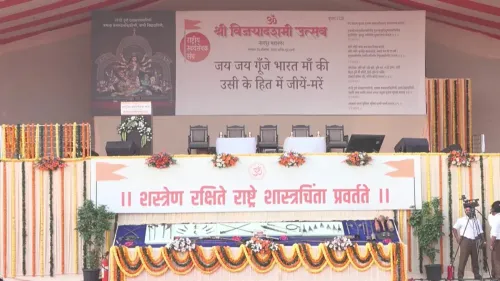
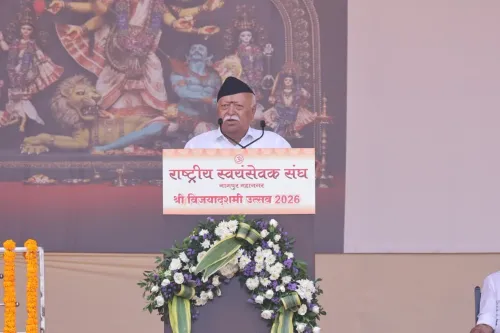
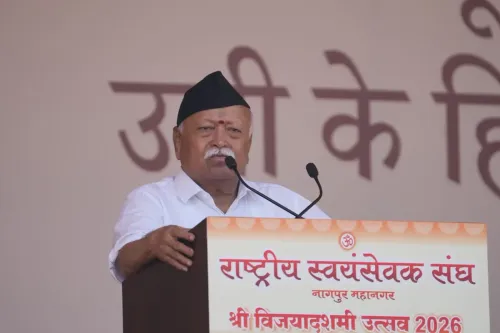
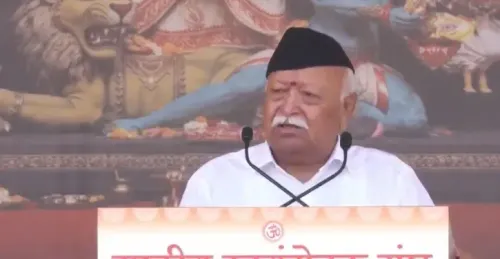
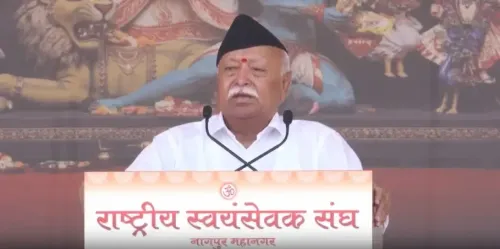
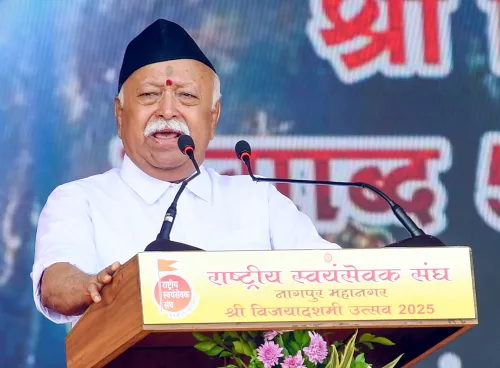
A centenary Vijayadashami — and the Rashtriya Swayamsevak Sangh's Sarsanghchalak used it to place Bharat at the centre of the world's search for peace. Union Commerce and Industry Minister Piyush Goyal on Tuesday, 20 October 2026, publicly praised the address delivered by Dr. Mohan Bhagwat at the Shatabdi Varsh Shri Vijayadashami Utsav in Nagpur, calling it 'truly inspiring.'
A centenary stage in Nagpur
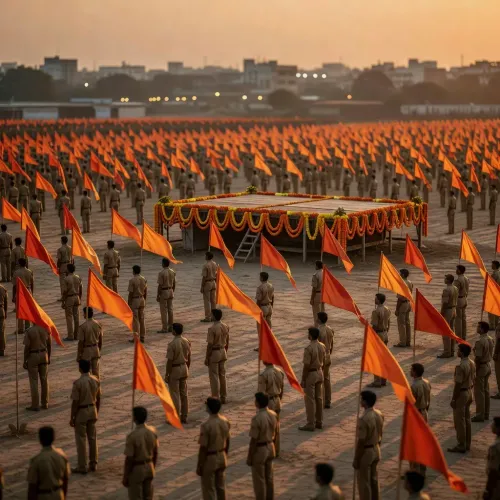
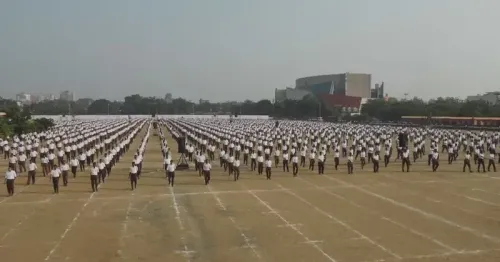
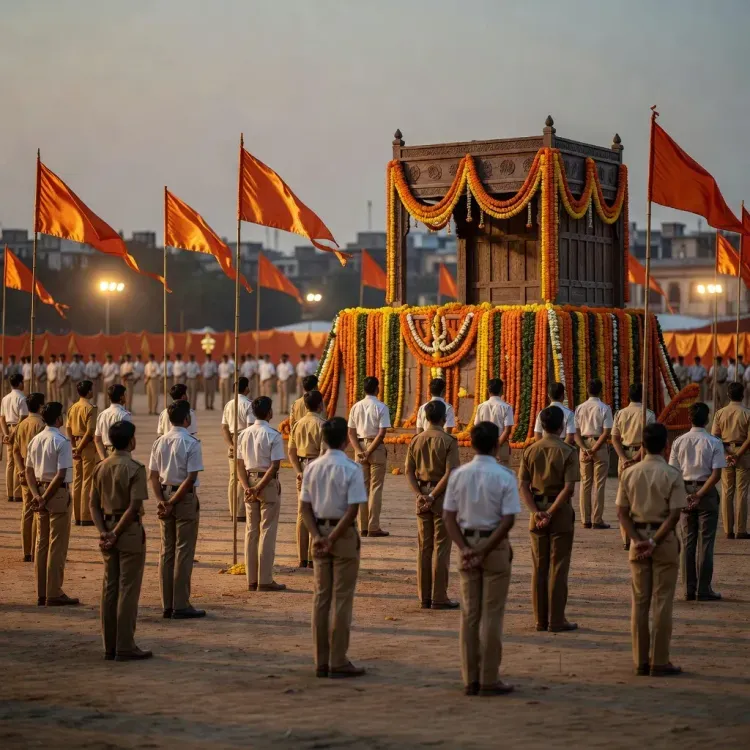
The Vijayadashami Utsav is the RSS's flagship annual gathering, held every year at its headquarters in Nagpur, Maharashtra — the city where the organisation was founded in 1925. This year's edition carried special weight: it marked the Shatabdi Varsh, the RSS's centenary year, making it one of the most symbolically significant Vijayadashami addresses in the organisation's history. Dr. Mohan Bhagwat, who has led the RSS as its Sarsanghchalak since 2009, used the occasion to speak of a Bharat built on the 'wisdom of Dharma' and to frame India as a civilisation capable of offering the world 'a path to happiness and peace.'
Unity, self-reliance, and the Panch Parivartan
Minister Goyal highlighted three pillars from Bhagwat's address: a call for unity, a commitment to self-reliance, and an emphasis on strong individual character. He also pointed to the concept of Panch Parivartan — the RSS framework of five transformations centred on collective effort — as evidence that organised civic volunteerism can build what he described as 'a stronger, more harmonious Bharat.' The spirit of Seva (selfless service) that defines every Swayamsevak, he noted, is central to that vision.
BJP leaders and the Vijayadashami tradition
Senior BJP figures acknowledging the RSS's Vijayadashami address is a well-established annual pattern, reflecting the ideological and organisational proximity between the two bodies. Union ministers and state leaders routinely mark the occasion publicly, treating the Sarsanghchalak's address as a statement of shared civilisational priorities rather than a purely internal RSS communication. Goyal's post, tagging @RSSOrg and linking the address video, fits squarely within that tradition — and amplifies its reach to a national political audience.
As the RSS steps into its second century, the themes sounded in Nagpur — self-reliance, dharmic governance, and collective service — are likely to echo through BJP policy messaging in the months ahead. The centenary year raises the stakes on every word.
Point of View
Particularly on Vijayadashami. The RSS's centenary year elevates the symbolic weight of this year's address considerably — making Goyal's amplification a signal that the themes of self-reliance and dharmic governance will likely inform the government's political messaging into the next electoral cycle. The Panch Parivartan framing also gives the BJP a grassroots vocabulary to connect its policy agenda to RSS-trained civic networks. Senior ministers functioning as ideological amplifiers for the RSS demonstrates how tightly the two organisations remain aligned at the messaging layer.
NationPress
20 Oct 2026
Frequently Asked Questions
What is the RSS Vijayadashami Utsav?
The Vijayadashami Utsav is the Rashtriya Swayamsevak Sangh's flagship annual gathering held every year in Nagpur, featuring a public address by the Sarsanghchalak that sets out the organisation's priorities for the year ahead.
Who is Dr. Mohan Bhagwat?
Dr. Mohan Bhagwat is the Sarsanghchalak, or chief, of the RSS — India's largest Hindu nationalist volunteer organisation — a position he has held since 2009.
What is Shatabdi Varsh in the context of the RSS?
Shatabdi Varsh refers to the RSS's centenary year, marking 100 years since the organisation was founded in Nagpur in 1925, making the 2026 Vijayadashami Utsav especially significant.
What is Panch Parivartan?
Panch Parivartan is an RSS framework built around five transformations focused on collective civic effort, character-building, and social harmony, which Piyush Goyal cited as a model for building a stronger Bharat.
Why do BJP leaders routinely comment on the RSS Vijayadashami address?
The RSS and the BJP share deep ideological and organisational ties; senior BJP leaders publicly acknowledging the Sarsanghchalak's annual address is a well-established tradition that signals alignment on civilisational and policy priorities.