Goyal Meets Ex-Chile President Frei, Eyes Deeper LAC Ties
Synopsis
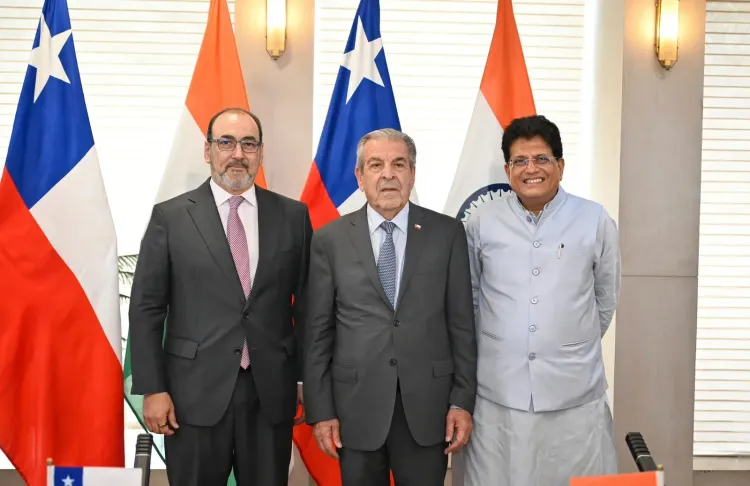
Union Commerce Minister Piyush Goyal met former Chilean President Eduardo Frei and delegates from Chile and CAF on October 21, discussing ways to deepen India-Chile trade, attract investment, and expand India's economic engagement across Latin America and the Caribbean.
Key Takeaways
Commerce Minister Piyush Goyal held a bilateral meeting with former Chilean President Eduardo Frei Ruiz-Tagle , now serving as Ambassador on a Special Mission, on October 21, 2026 .
Delegates from Chile and the Development Bank of Latin America and the Caribbean (CAF) participated, adding a development-finance dimension to the talks.
Discussions covered strengthening India-Chile economic ties and exploring new trade, investment, and business collaboration opportunities.
India and Chile signed a Preferential Trade Agreement in 2006 ; the existing framework has not been substantially revised since.
India's engagement with the Latin America and Caribbean region has focused on commodities, pharmaceuticals, and technology, with copper-rich Chile at the strategic centre.
CAF's presence at the table signals potential movement toward co-financed projects beyond standard bilateral diplomacy.
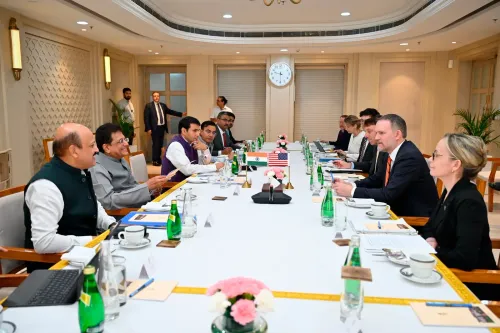
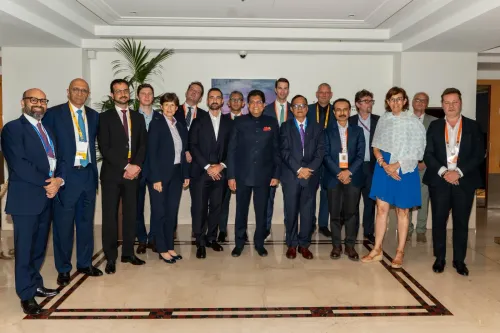
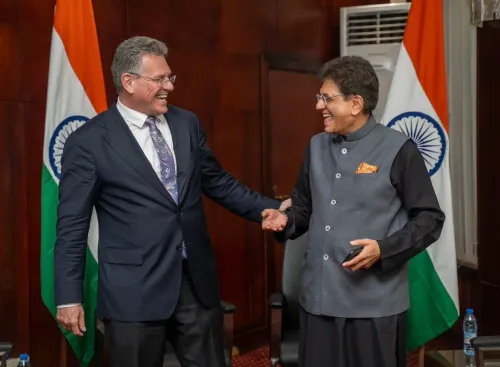
India's push to diversify its trade partnerships deep into Latin America took a concrete step forward on Wednesday, October 21, 2026, when Union Commerce and Industry Minister Piyush Goyal held a bilateral meeting in New Delhi with Eduardo Frei Ruiz-Tagle, former President of Chile and current Ambassador on a Special Mission, alongside delegates from Chile and the Development Bank of Latin America and the Caribbean (CAF).
Frei's Mission and What Brought Him to New Delhi
Eduardo Frei Ruiz-Tagle served as President of Chile from 1994 to 2000 and has since taken on high-level diplomatic roles for his government. His presence in New Delhi alongside CAF delegates signals something beyond a courtesy call — the multilateral development bank backs infrastructure, trade finance, and regional integration projects across Latin America and the Caribbean, giving any joint conversation an investment-ready dimension that bilateral diplomacy alone rarely carries.
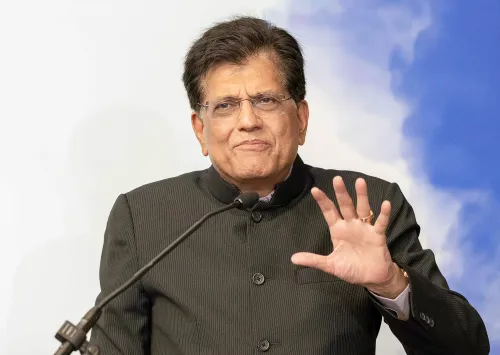
Minister Goyal described the meeting as productive, saying the two sides 'exchanged views on strengthening India-Chile economic ties and exploring new avenues for trade, investment, and business collaboration, while deepening our engagement with the Latin American and Caribbean region.'
A Relationship Built on Two Decades of Trade Architecture
The India-Chile relationship already rests on a structural foundation. The two countries signed a Preferential Trade Agreement in 2006, extending tariff concessions on hundreds of products and giving Indian exporters — particularly in pharmaceuticals, textiles, and engineering goods — a cost advantage in the Chilean market. India also inked a Preferential Trade Agreement with Mercosur in 2005, knitting together a broader web of South American market access.
Yet the full potential of that architecture has long been seen as underutilised. India's trade with the Latin America and Caribbean region has grown gradually, concentrated largely in commodities and pharma. Chile, as one of the world's largest producers of copper — a resource critical to India's green energy and electronics ambitions — sits at the strategic heart of that calculation.
Why CAF's Presence at the Table Changes the Conversation
The inclusion of CAF (Development Bank of Latin America and the Caribbean) in the delegation is the detail that sharpens this meeting's significance. CAF is not a trade ministry; it finances deals. When a multilateral development lender sits alongside a bilateral special envoy and India's commerce minister, the subtext is straightforward: both sides are looking at bankable projects, not just talking points.
India has been quietly building engagement with regional financial institutions in the Global South as part of its broader economic diplomacy, and a conversation anchored by CAF opens doors to co-financing frameworks for infrastructure, green energy, and technology cooperation that neither country could anchor alone.
What Comes Next for India-LAC Economic Diplomacy
The immediate question is whether this meeting seeds a concrete follow-up — an expanded PTA negotiation, a sector-specific investment proposal, or Indian participation in a CAF-backed regional forum. Indian exporters and businesses eyeing the Latin American market will watch for any announcement on a review or upgrade of the 2006 India-Chile PTA, which has not been substantially revised since signing.
India's outreach to the Latin American and Caribbean region is an incremental play — patient, relationship-first, institution-building. But meetings at this level, with this combination of participants, rarely stay in the talking stage forever.
Point of View
Which is where India's South-South engagement often stalls. If the talks catalyse a review of the two-decade-old India-Chile PTA or unlock CAF co-financing for joint infrastructure or green-energy projects, this meeting will be seen as a meaningful inflection point. For now, it is the clearest signal yet that New Delhi views Santiago not merely as a commodity partner but as a strategic gateway into the broader LAC region.
NationPress
21 Oct 2026
Frequently Asked Questions
Who is Eduardo Frei and why did he meet Piyush Goyal?
Eduardo Frei Ruiz-Tagle served as President of Chile from 1994 to 2000 and currently serves as Chile's Ambassador on a Special Mission. He met Commerce Minister Piyush Goyal on October 21, 2026, to discuss strengthening India-Chile economic ties and exploring new trade and investment opportunities.
What is India's trade agreement with Chile?
India and Chile signed a Preferential Trade Agreement in 2006 that extended tariff concessions on hundreds of products, giving Indian exporters — especially in pharmaceuticals and engineering goods — improved access to the Chilean market.
What is CAF and why was it part of the India-Chile meeting?
CAF is the Development Bank of Latin America and the Caribbean, a multilateral lender that finances infrastructure, trade, and integration projects across the region. Its participation alongside Chilean diplomats signals interest in investment and co-financing frameworks, not just bilateral trade talks.
Why is Chile strategically important for India?
Chile is one of the world's largest producers of copper, a resource critical to India's green energy transition and electronics manufacturing. Beyond copper, Chile also serves as a gateway for India's broader engagement with the Latin American and Caribbean market.
What could come out of India and Chile's renewed trade discussions?
Possible outcomes include a review or expansion of the 2006 India-Chile Preferential Trade Agreement, sector-specific investment proposals in areas like pharmaceuticals and technology, or Indian participation in CAF-backed regional infrastructure projects.