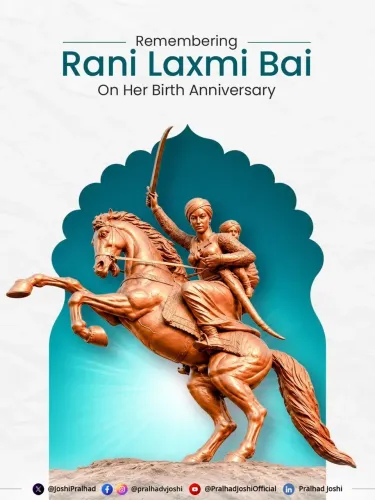
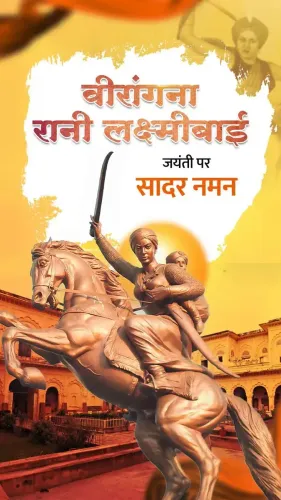
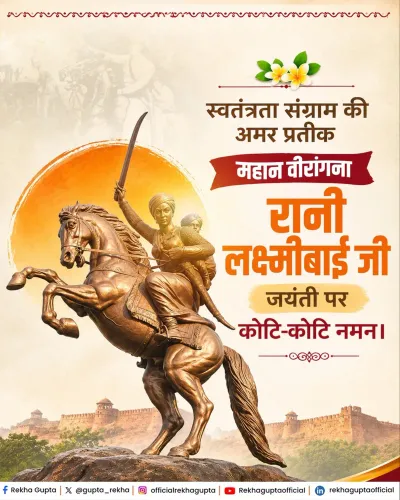
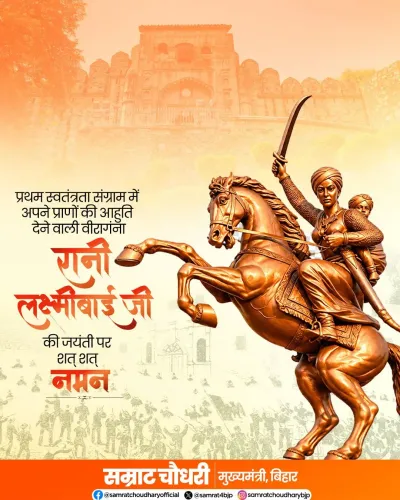
Piyush Goyal pays tribute to Rani Lakshmibai on her Jayanti
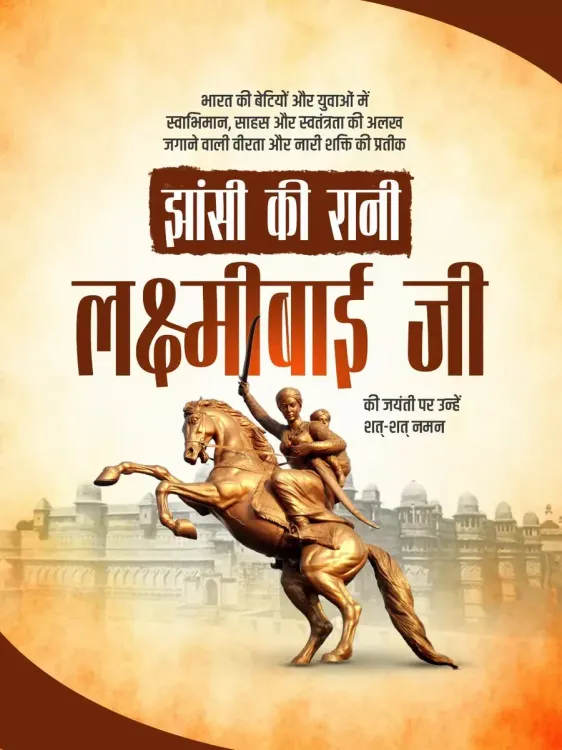
Synopsis
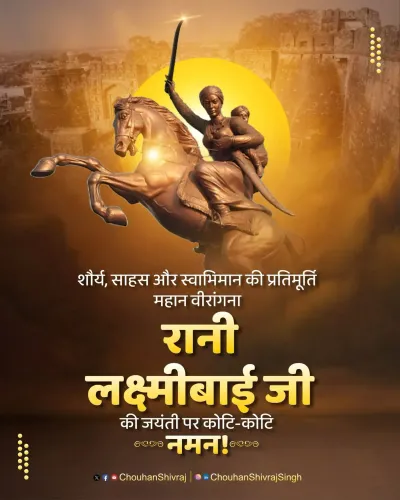
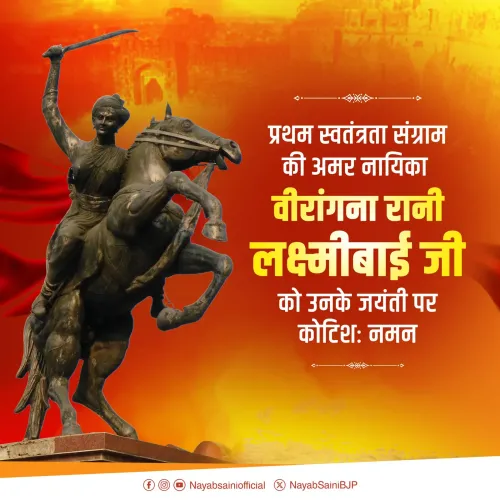
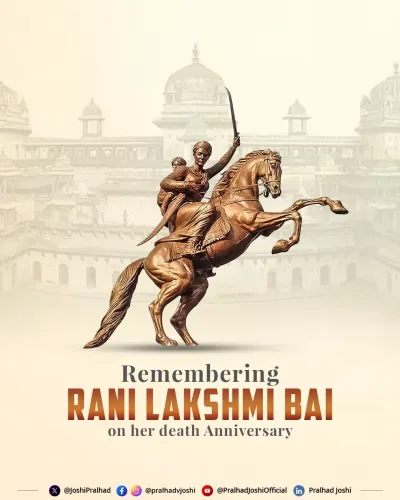
Union Commerce Minister Piyush Goyal marked Rani Lakshmibai's birth anniversary on November 19 with a Hindi tribute on X, calling the Rani of Jhansi's story of valor and self-respect a golden chapter of Indian history and a testament to the transformative power of women's resolve.
Key Takeaways
Union Commerce Minister Piyush Goyal posted a Hindi tribute to Rani Lakshmibai on November 19, 2026 , her birth anniversary.
He described her saga of bravery and self-respect as a 'golden chapter' of Indian history to be remembered 'for ages to come.' Rani Lakshmibai commanded troops during the 1857 Indian Rebellion against British rule and is a central symbol of Indian resistance.
Her birth anniversary is commemorated annually on November 19 , with particular observances in Jhansi, Uttar Pradesh .
Goyal's tribute emphasised women's agency, noting that 'when women's power takes a resolve, it changes the course of history.'
On the birth anniversary of one of India's most celebrated warrior-queens, Union Commerce and Industry Minister Piyush Goyal on Thursday, November 19, 2026, paid his respects to Rani Lakshmibai of Jhansi, calling her story of valor and self-respect a 'golden chapter' in Indian history.
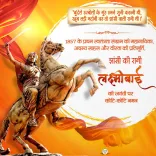
Posting in Hindi on X, Minister Goyal wrote: 'रानी लक्ष्मीबाई की वीरता और स्वाभिमान की गाथा भारत के इतिहास का वह स्वर्णिम अध्याय है, जिसे युगों-युगों तक याद किया जाएगा।' — 'The saga of Rani Lakshmibai's bravery and self-respect is that golden chapter of India's history which will be remembered for ages to come.' He added that the Rani of Jhansi, who descended onto the battlefield with indomitable courage to defend the motherland, proved through her valor that 'when women's power takes a resolve, it changes the course of history.'
Who was the Rani of Jhansi?
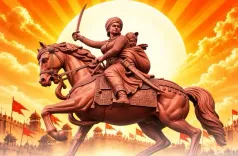
Rani Lakshmibai commanded troops during the 1857 Indian Rebellion against British colonial rule, making Jhansi one of the most fiercely contested theatres of that uprising. She remains among the most potent symbols of armed resistance and martial courage in Indian historical memory — invoked as much for her defiance of colonial power as for her role as a female commander at a time when such a figure was unprecedented.
Her birth anniversary falls on November 19 each year, and Jhansi — the city in present-day Uttar Pradesh whose fort she defended — typically marks the day with commemorations, processions, and cultural events. The date resonates especially in the Bundelkhand region, where her legacy is woven into local identity.
Why senior leaders make this tribute a fixture
Senior ministers and political leaders across the spectrum issue tributes on November 19 as a matter of annual public record. For BJP leaders in particular, figures from the 1857 rebellion form a recurring touchstone — their sacrifices framed as the original assertion of national sovereignty. Goyal's post threads together two consistent themes of such tributes: the universality of the historical debt owed to freedom fighters, and the specific invocation of women's agency and strength.
The phrasing 'shatashat naman' — a hundredfold salute — is a standard honorific in such commemorative posts, signalling deep reverence. The kicker of his tribute is pointed: a woman's resolve, he wrote, can 'change the direction of history.' That framing aligns Rani Lakshmibai's legacy with contemporary conversations about women's empowerment without stepping into direct policy territory.
Point of View
But their consistency is itself politically meaningful — they reinforce a nationalist historical narrative that places armed resistance to colonialism at the core of India's founding identity. Goyal's specific emphasis on women's resolve connecting to history-changing power subtly links a 19th-century warrior-queen to contemporary BJP messaging on 'Nari Shakti,' or women's empowerment. The tribute carries no direct policy content, but it signals the party's ongoing effort to position female historical figures as proof-points of a civilisational rather than purely colonial legacy. In an era where symbolic politics carries real electoral weight, November 19 commemorations for Rani Lakshmibai function as low-cost, high-resonance moments of identity affirmation.
NationPress
19 Nov 2026
Frequently Asked Questions
When is Rani Lakshmibai's Jayanti celebrated?
Rani Lakshmibai's Jayanti is celebrated on November 19 every year, marking the birth anniversary of the Rani of Jhansi.
Why is Rani Lakshmibai remembered in Indian history?
Rani Lakshmibai commanded the defence of Jhansi during the 1857 Indian Rebellion against British colonial rule and is celebrated as one of India's most iconic symbols of resistance, courage, and women's empowerment.
What did Piyush Goyal say about Rani Lakshmibai?
On her 2026 Jayanti, Piyush Goyal called her story of bravery and self-respect a 'golden chapter' of Indian history, and said she proved that 'when women's power takes a resolve, it changes the course of history.'
Where are Rani Lakshmibai Jayanti events held?
Major commemorations are held in Jhansi, Uttar Pradesh — the city whose fort she defended in 1857 — along with events across India, particularly in the Bundelkhand region.
What is the significance of November 19 in India?
November 19 is observed as the birth anniversary of Rani Lakshmibai , the Rani of Jhansi, and is marked by tributes from political leaders, cultural events, and local commemorations, especially in Jhansi.