Piyush Goyal Tours Rotterdam Port, Eyes India-Netherlands Maritime Tie-Up
Synopsis
Commerce Minister Piyush Goyal toured the Port of Rotterdam with CEO Boudewijn Siemons on October 25, discussing port-led growth, logistics efficiency, and supply chain connectivity as India seeks to modernise its maritime infrastructure and deepen India-Netherlands cooperation.
Key Takeaways
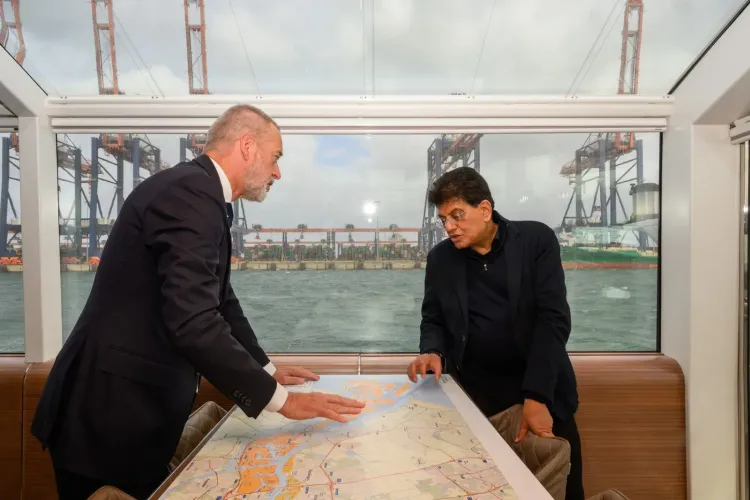
Commerce Minister Piyush Goyal toured the Port of Rotterdam on October 25, 2026 , travelling aboard a port vessel with CEO Boudewijn Siemons .
Discussions covered port-led growth, logistics efficiency, supply chain connectivity, and trade and investment opportunities.
India's Sagarmala project (launched 2015 ) and National Logistics Policy (2022) form the domestic policy backdrop for seeking international maritime partnerships.
The Port of Rotterdam is one of Europe's largest ports and has an established track record of advising port modernisation projects globally.
The Netherlands is a major Indian trade gateway into the EU, making any port-level collaboration strategically significant for exporters and logistics firms.
Possible follow-up MoUs or technical exchange programmes between Indian ports and Rotterdam are being watched as a next step.
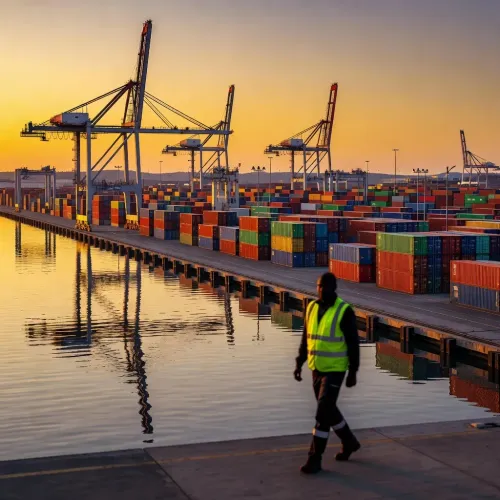
Aboard a port vessel cutting through one of Europe's busiest harbours, Union Commerce and Industry Minister Piyush Goyal got an operational close-up of the Port of Rotterdam on Sunday, October 25, 2026 — and came away talking about what India could borrow from it.
Goyal toured the port alongside its CEO, Mr. Boudewijn Siemons, exchanging views on 'port-led growth, logistics efficiency, supply chain connectivity, and new opportunities for trade and investment,' as he put it. The tour was not ceremonial — it was a working look at infrastructure that moves roughly 15 million containers a year and anchors Northwest Europe's trade arteries.
Why Rotterdam's Playbook Matters to India Right Now
India is in the middle of a generational push to remake its ports. The Sagarmala project, launched in 2015, set the framework for port-led development — connecting industrial clusters to coastlines and unlocking hinterland logistics. The National Logistics Policy of 2022 sharpened the ambition further, targeting lower logistics costs and tighter supply chain integration. Rotterdam, with its deep integration between port operations, rail, inland waterways, and digital cargo tracking, is precisely the kind of benchmark Indian planners study.
Goyal framed the visit in terms of potential: 'As India modernises its existing ports and develops state-of-the-art maritime infrastructure, there is immense potential to collaborate with the Port of Rotterdam, draw on its expertise, and strengthen India-Netherlands cooperation.' The flags — 🇮🇳🇳🇱 — at the end of his post said the quiet part aloud: this is bilateral diplomacy with a port as the venue.
Rotterdam's Standing and What India Could Draw From It
The Port of Rotterdam is routinely ranked among Europe's largest ports by cargo volume, and its authority has built a global reputation for consultancy and technology transfer — advising port projects across Asia, Africa, and the Americas. For India, the specific appeal lies in Rotterdam's model of seamless multimodal connectivity: containers moving from ship to barge to rail with minimal friction. That is precisely the bottleneck Indian exporters flag most often.
Boudewijn Siemons, who took over as CEO of the Port of Rotterdam Authority, has prioritised the port's role as a logistics and energy-transition hub — angles that align with India's own infrastructure priorities as it scales up green-hydrogen and LNG terminal capacity.
The India-Netherlands Trade Equation
The Netherlands is consistently one of India's top trading partners within the European Union, serving as a critical entry point for Indian goods into the European market. Rotterdam is the physical gateway for much of that trade. A structured collaboration — whether through technical exchanges, MoUs between port authorities, or joint training programmes — would embed that commercial relationship into the infrastructure layer, making it stickier and more durable.
The visit lands as India and the EU continue broader free-trade agreement negotiations, giving any bilateral maritime partnership a potentially larger economic frame to grow into.
The real question now is whether the conversations on the vessel translate into signed agreements on paper — and how quickly Indian ports can operationalise the lessons Rotterdam has spent decades learning.
Point of View
Not just bilateral goodwill. Rotterdam's multimodal model — ships, barges, rail, digital cargo systems all stitched together — is the template Indian logistics planners have long cited, and a formal collaboration would give the Sagarmala programme a credible international anchor. The timing, against the backdrop of ongoing India-EU trade negotiations, suggests New Delhi is layering infrastructure diplomacy onto the trade diplomacy to create more durable economic linkages. Whether this visit produces actionable MoUs or remains a study tour will determine its lasting significance.
NationPress
25 Oct 2026
Frequently Asked Questions
Why did Piyush Goyal visit the Port of Rotterdam?
Goyal visited the Port of Rotterdam to explore collaboration on port-led growth, logistics efficiency, and supply chain connectivity as India modernises its maritime infrastructure under programmes like the Sagarmala project.
Who is the CEO of the Port of Rotterdam?
Boudewijn Siemons is the CEO of the Port of Rotterdam Authority. He accompanied Minister Goyal during the tour aboard a port vessel on October 25, 2026 .
What is India's Sagarmala project?
The Sagarmala project was launched in 2015 to promote port-led development in India — connecting industrial clusters to coastlines, modernising existing ports, and improving hinterland logistics connectivity.
What is the trade relationship between India and the Netherlands?
The Netherlands is one of India's top trading partners within the EU, and the Port of Rotterdam serves as a primary entry point for Indian goods into the European market.
What could come next after Goyal's Rotterdam visit?
Possible outcomes include MoUs between Indian port authorities and the Port of Rotterdam, technical exchange programmes, and consultancy arrangements to support India's port modernisation agenda.