Bhavnagar farmer grows avocados at ₹800–₹1,500/kg, draws curious cultivators
Synopsis
A self-taught farmer in Gujarat's Bhavnagar district is turning avocados — a crop virtually unheard of in traditional village agriculture — into a high-value enterprise fetching up to ₹1,500 per kg, while quietly training his neighbours and drawing farm visitors from across the region. His orchard is becoming a blueprint for what Gujarat's horticulture push could look like at the ground level.
Key Takeaways
Danubhai Solanki of Kodhiya village , Bhavnagar, planted 50 avocado trees three to four years ago; 15 are now fruiting at 60 kg per plant this season.
Avocados currently sell at ₹800 to ₹1,500 per kg depending on variety, quality, and market, according to agriculture officials.
Solanki uses modern techniques including net houses , greenhouses , and drip irrigation to sustain the crop.
Agriculture officials note avocados have high nutritional value — rich in protein and fat, low in sugar — making them suitable even for diabetic consumers.
The Gujarat government is actively promoting horticulture diversification, covering crops such as avocado, dragon fruit, asparagus, and figs, with support from the Horticulture Department.
A farmer from Kodhiya village in Talaja taluka of Bhavnagar district, Gujarat, is demonstrating the commercial promise of avocado cultivation, with 15 of his trees now bearing fruit and each plant yielding approximately 60 kg this season. The crop fetches between ₹800 and ₹1,500 per kg in the market, offering a significant income boost over conventional crops.
From 50 Saplings to a Thriving Orchard
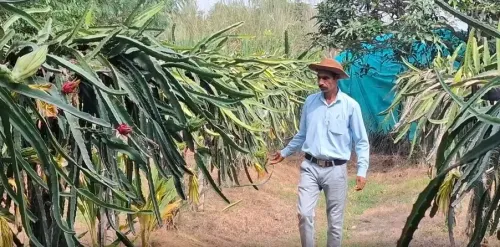
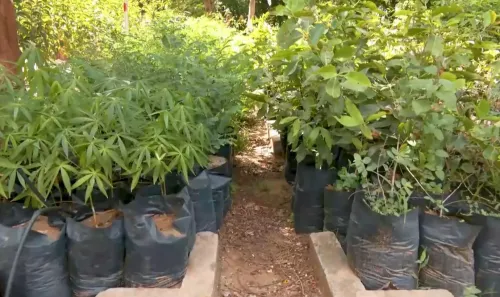
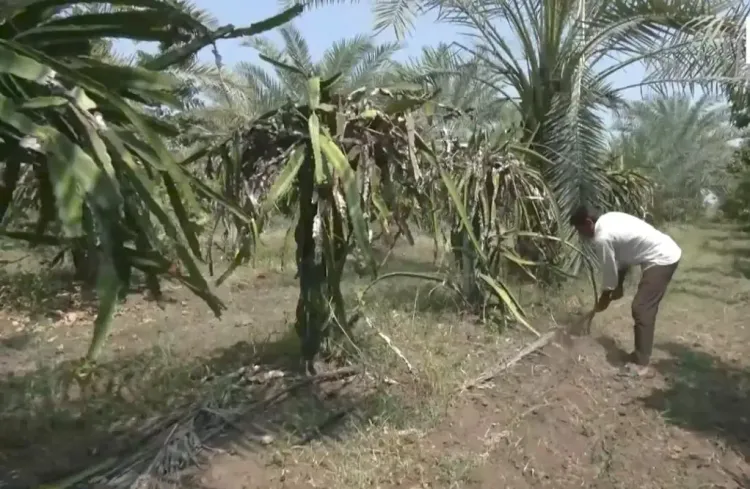
Danubhai Solanki, the farmer behind the experiment, planted his first batch of 50 avocado trees three to four years ago. He has since layered in scientific farming practices — including net houses, greenhouses, and drip irrigation — to coax consistent yields from a fruit not traditionally grown in this part of Gujarat.
'Three to four years ago, we planted avocado trees. Initially, we started with 50 plants. This year, 15 plants have started bearing fruit, with each plant yielding around 60 kg,' Solanki said.
He noted, however, that not every variety of avocado finds ready buyers. 'There are other varieties that do not sell well in the market. Some avocado fruits are difficult to sell,' he cautioned, flagging marketing as a challenge that aspiring growers must factor in alongside cultivation technique.
A Village Learning From One Farmer
Solanki's orchard has quietly become a knowledge hub for farmers across Kodhiya and beyond. He is actively training neighbours in avocado cultivation, and visitors from other villages now regularly make their way to his farm to study his methods.
Ajabhai Bhadraka, a fellow farmer from the village, said the initiative had become a point of local pride. 'People come from outside to see the farming practised by Danubhai and ask how he has reached this position despite having limited formal education. They are delighted to see the different varieties grown on his farm,' Bhadraka said.
Nutritional Value and Market Demand
Agriculture officials in Bhavnagar underscored why avocados command a premium. M.B. Baghamasi, Deputy Regulatory Officer in the Agriculture Department, Bhavnagar, described the fruit as nutritionally distinctive. 'Avocado is considered one of the best fruits because it contains a good amount of protein and fat. It has a low sugar content, so even people with diabetes can eat it,' Baghamasi said.
He put the prevailing wholesale price at ₹800 to ₹1,500 per kg, varying by variety, quality, and market, and noted that international demand for the fruit remains strong.
State Push for Crop Diversification
Solanki's effort aligns with a broader Gujarat government drive to wean farmers away from dependence on a narrow set of traditional crops. The state's horticulture push covers avocados, dragon fruit, asparagus, and figs, among others, with the stated aim of expanding farming options and lifting agricultural incomes.
B.G. Rathod, Joint Director of Agriculture in Gandhinagar, confirmed institutional support for this shift. 'The Horticulture Department offered assistance for adopting intensive farming practices, introducing new crops and producing value-added products,' Rathod said.
As awareness grows around high-value horticulture, the question is whether supply chains and price-discovery mechanisms in rural Gujarat can keep pace with the cultivation ambition that pioneers like Solanki are quietly building.
Point of View
A pattern that has undone previous high-value crop experiments in rural Gujarat. Solanki himself flags the marketing challenge candidly: not all varieties find buyers. That honest caveat is more useful to the next farmer than any official promotion.
NationPress
26 Oct 2026
Frequently Asked Questions
How much can avocado farming earn a farmer in Gujarat?
Avocados currently fetch between ₹800 and ₹1,500 per kg in the market, according to agriculture officials in Bhavnagar. With each mature tree yielding around 60 kg per season, the crop offers considerably higher returns than many conventional crops, though prices vary by variety and quality.
How long does it take for an avocado tree to bear fruit in Gujarat?
Based on Danubhai Solanki's experience in Bhavnagar, avocado trees began bearing fruit after approximately three to four years of cultivation. He started with 50 plants, and 15 of them fruited in their first productive season.
Is avocado cultivation suitable for Gujarat's climate?
Agriculture officials in Bhavnagar indicate that two or three avocado varieties can be grown in Gujarat. Solanki uses scientific farming methods including drip irrigation, net houses, and greenhouses to manage the crop, suggesting it requires careful water and environment management to thrive in the region.
What support does the Gujarat government offer for avocado farming?
The state's Horticulture Department provides assistance for adopting intensive farming practices, introducing new crops, and producing value-added products, according to B.G. Rathod, Joint Director of Agriculture in Gandhinagar. Avocado is among several alternative crops — alongside dragon fruit, asparagus, and figs — being promoted under Gujarat's crop diversification drive.
Why is avocado considered a health-friendly crop?
According to M.B. Baghamasi, Deputy Regulatory Officer in Bhavnagar's Agriculture Department, avocados contain a good amount of protein and fat while having a low sugar content, making them suitable for people with diabetes. These nutritional properties contribute to the fruit's strong domestic and international market demand.