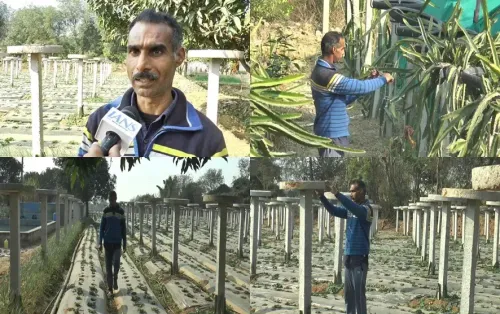
Dragon fruit farming blooms in J&K's Samba, farmers diversify beyond traditional crops
Synopsis
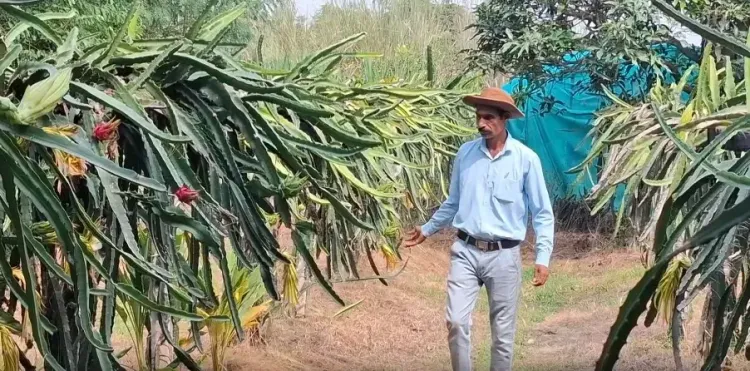
A single Vijaypur farmer's dragon fruit harvest — recognised by J&K's Lt Governor — is quietly rewriting what's possible for smallholder agriculture in Samba district. With government subsidies, direct field support from the horticulture department, and a growing community of converts, the crop is emerging as a credible income diversifier in a region long dependent on wheat and paddy.
Key Takeaways
Baldev Raj of Vijaypur, Samba has been cultivating dragon fruit and strawberries for several years and was honoured by the Lt Governor for promoting the crop in J&K.
Fellow farmer Ramesh Lal began dragon fruit cultivation 4–5 years ago after witnessing Raj's success, and has since expanded his plantation.
Chief Horticulture Officer Anil Gorkha confirmed initial farmer interest was low but has risen sharply after seeing real yields on local farms.
The Department of Horticulture provides on-farm technical guidance and the government offers financial assistance and subsidies for growers.
Dragon fruit cultivation is being positioned as a key route to agricultural diversification and higher farm incomes across Samba district .
Farmers in Jammu and Kashmir's Samba district are steadily moving away from conventional agriculture, turning to cash crops and horticulture — particularly dragon fruit — to boost household incomes. The shift, driven largely by the success of a pioneering local grower, is drawing growing interest from farming communities across the region.
The Farmer Who Started It All
Baldev Raj, a farmer from the Vijaypur area of Samba, has become the face of this agricultural transformation. For several years, he has cultivated dragon fruit and strawberries alongside traditional crops, earning a substantial income in the process. His efforts have been formally recognised — he has been honoured by the Lt Governor for promoting dragon fruit farming in Jammu and Kashmir.
'I hope to help farmers improve their earnings and create additional sources of income,' Raj said. 'I believe that farmers should not remain limited to traditional agricultural practices but should also explore other crops with the potential to increase their income.'
Farmers from neighbouring areas regularly visit Raj's fields to observe cultivation methods first-hand and acquire the technical knowledge needed to grow the crop successfully. He actively shares his experience and techniques with those who express interest.
Peer-to-Peer Inspiration on the Ground
The ripple effect of Raj's success is already visible. Ramesh Lal, another local farmer, said he began cultivating dragon fruit and strawberries 4–5 years ago after witnessing Raj's yields.
'I saw Baldev Raj's yield and was encouraged to do this. There is a lot of profit in this. Initially, I planted only a few saplings, but I have gradually expanded the cultivation,' Lal said. He also noted that financial assistance from the government has helped him scale up operations.
Government and Horticulture Department's Role
Chief Horticulture Officer Anil Gorkha acknowledged that initial attempts to introduce dragon fruit cultivation had met with limited enthusiasm from farmers. 'While farmers were initially informed about dragon fruit cultivation, they did not show much interest at the time. Later, after witnessing a successful yield of this crop on Baldev Raj's farm, other farmers began to get involved as well,' Gorkha said.
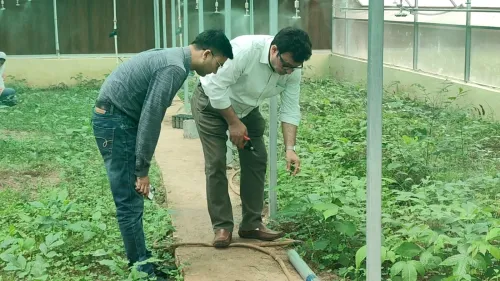
He expressed confidence that the number of farmers taking up dragon fruit cultivation in Samba district would grow in coming years, pointing to new subsidy schemes introduced for the purpose. The Department of Horticulture provides technical guidance directly in the field — Raj noted that the department's team visits farms whenever challenges arise.
Why Agricultural Diversification Matters for Samba
Samba, a district in the Jammu division, has traditionally been dominated by wheat and paddy cultivation. The move toward horticulture and high-value cash crops represents a meaningful structural shift. Dragon fruit, with its relatively low water requirements and rising domestic demand, is increasingly seen as a viable alternative income stream for smallholder farmers in the region.
This comes amid broader efforts by the Jammu and Kashmir administration to promote horticulture as an economic driver, building on the Union Territory's established apple and cherry belts. With government subsidies, departmental support, and proven local examples now in place, dragon fruit cultivation in Samba appears set to expand further in the seasons ahead.
Point of View
Peer demonstration — one farmer's visible success — did what departmental outreach alone could not. That said, the coverage is still largely anecdotal; there are no district-level acreage figures, income data, or yield comparisons to assess scale. For dragon fruit to be a genuine income diversifier rather than a headline crop, the horticulture department will need to publish measurable targets and track adoption systematically. The broader policy question is whether J&K's subsidy architecture can sustain momentum once early-adopter enthusiasm plateaus.
NationPress
19 Oct 2026
Frequently Asked Questions
What is dragon fruit farming in J&K's Samba district?
Dragon fruit farming in Samba district refers to the cultivation of the tropical cactus fruit alongside traditional crops like wheat and paddy, primarily promoted by local farmer Baldev Raj of Vijaypur. It is being encouraged as a high-value cash crop to diversify agricultural income in the Jammu division.
Who is Baldev Raj and why is he significant?
Baldev Raj is a farmer from the Vijaypur area of Samba district who has been cultivating dragon fruit and strawberries for several years. He has been honoured by the Lt Governor for his role in promoting dragon fruit farming in Jammu and Kashmir, and his success has inspired several neighbouring farmers to adopt the crop.
What government support is available for dragon fruit farmers in J&K?
The Department of Horticulture provides on-farm technical guidance and visits farmers' fields to address challenges. New subsidy schemes have also been introduced to offer financial assistance for dragon fruit cultivation, according to Chief Horticulture Officer Anil Gorkha.
Why is agricultural diversification important for Samba district?
Samba has traditionally relied on wheat and paddy farming, which limits income potential for smallholder farmers. Diversifying into crops like dragon fruit, which have rising domestic demand and lower water requirements, can provide additional income streams and reduce dependence on weather-sensitive staple crops.
Is dragon fruit cultivation expected to grow further in Samba?
Yes. Chief Horticulture Officer Anil Gorkha has expressed confidence that the number of farmers adopting dragon fruit cultivation will increase in the coming years, supported by new government subsidy schemes and growing awareness from local success stories.