Rajouri youth earns ₹50,000/month from govt-backed poultry farm, employs 5
Synopsis
A young man from Rajouri's Tandwal-Mubarakpura area had no income before his family enrolled in a Central government animal husbandry scheme. Today, his poultry farm earns ₹50,000–₹60,000 a month and employs five people — a small but concrete proof that DAHD's grassroots outreach is moving beyond paperwork in Jammu and Kashmir.
Key Takeaways
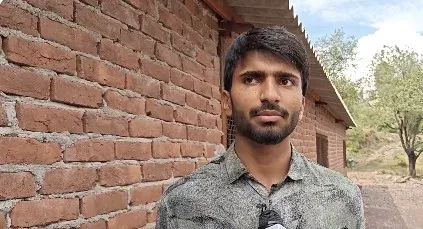
Ehtesham of Tandwal-Mubarakpura, Rajouri earns ₹50,000–₹60,000 per month from a government-backed poultry farm.
The venture was set up with support from the Department of Animal Husbandry and Dairying (DAHD) , which provided chicks, training, and a loan.
The farm has generated employment for 5 local residents .
Khalid , Chief Animal Husbandry Officer of Rajouri, confirmed that dozens of poultry units are now operational across the district under various government schemes.
The scheme primarily targets educated, unemployed youth seeking self-employment close to home in Jammu and Kashmir .
A young resident of Rajouri district in Jammu and Kashmir has built a self-sustaining poultry enterprise under the Central government's Department of Animal Husbandry and Dairying (DAHD) scheme, earning between ₹50,000 and ₹60,000 per month and creating jobs for five local residents. The success story, emerging from the Tandwal-Mubarakpura area, is being cited as a model for government-backed rural self-employment in the region.
How the venture began
Ehtesham, the beneficiary, said his family had no stable income before his father learned about the animal husbandry scheme and applied for support. The Animal Husbandry Department provided chicks to start the unit, along with training and a loan to get the operation running. 'Before starting this venture, life was very difficult, and we had to take on debt to manage household expenses,' he said.
The farm now raises chickens and sells eggs as its primary revenue stream. Ehtesham credited the scheme's structured support — covering starter stock, technical training, and financial assistance — as the turning point for his family.
What the government scheme offers
Under the DAHD framework, beneficiaries receive subsidies, monetary assistance, and technical guidance. Dr. Khalid, the Chief Animal Husbandry Officer of Rajouri, confirmed that dozens of poultry units are now operating successfully across the district under various government schemes.
He noted that the department prioritises proper guidance, training, and ongoing support to help beneficiaries establish and scale their ventures. According to Dr. Khalid, the schemes are particularly aimed at educated, unemployed youth seeking self-employment close to home.
Wider impact in Rajouri
Ehtesham's case is not isolated. Many unemployed youth and farmers in Rajouri are turning to poultry farming as a dependable livelihood option, according to district officials. The trend reflects a broader shift in how Central schemes are being absorbed at the grassroots level in Jammu and Kashmir.
The venture's ability to generate local employment — beyond just the primary beneficiary — is being highlighted as evidence that the model has multiplier effects at the community level.
What this signals for rural J&K
Rajouri, a district with historically limited formal employment opportunities, is seeing a gradual uptick in self-employment activity linked to animal husbandry support. Officials say the pipeline of applicants for such schemes has grown, driven in part by visible success stories like Ehtesham's.
As the DAHD continues to expand its reach in Jammu and Kashmir, district-level officers are expected to intensify outreach to ensure more eligible youth can access subsidies and training in the coming months.
Point of View
But the harder question is scale: how many of Rajouri's unemployed youth are actually accessing these schemes versus how many are eligible? District-level officers reporting 'dozens of units' is encouraging, but without published beneficiary data and income-verification audits, it is difficult to assess whether the DAHD framework is achieving systemic impact or producing isolated showcases. Jammu and Kashmir's rural unemployment problem is structural — poultry farming can be part of the answer, but only if the subsidy pipeline is wide, consistent, and free of intermediary leakage.
NationPress
27 Sept 2026
Frequently Asked Questions
What is the Central government poultry farming scheme in Rajouri?
It is a livelihood support programme run by the Department of Animal Husbandry and Dairying (DAHD) that provides eligible beneficiaries with starter chicks, subsidies, loans, and technical training to establish poultry units. In Rajouri district, dozens of such units are reportedly operational under various government schemes.
How much is Ehtesham earning from his poultry farm in Rajouri?
Ehtesham is currently earning between ₹50,000 and ₹60,000 per month from his poultry farm in the Tandwal-Mubarakpura area of Rajouri. He described this as the initial phase, suggesting earnings could grow as the operation scales.
Who is eligible for the animal husbandry scheme in Jammu and Kashmir?
According to Dr. Khalid, Chief Animal Husbandry Officer of Rajouri, the schemes are particularly aimed at educated, unemployed youth seeking self-employment opportunities close to their homes. Applicants receive guidance, training, and financial support from the department.
How many jobs has Ehtesham's poultry farm created?
The farm has provided employment to five local residents, in addition to supporting Ehtesham's own family. District officials are highlighting this multiplier effect as a key benefit of government-backed poultry ventures.
Where can interested youth in Rajouri apply for the poultry farming scheme?
Interested applicants can approach the District Animal Husbandry Department in Rajouri, which handles scheme applications, provides technical guidance, and facilitates loan processing under the DAHD framework.