CM Dhami Announces 80% Subsidy for Apple, Kiwi, Dragon Fruit
Synopsis
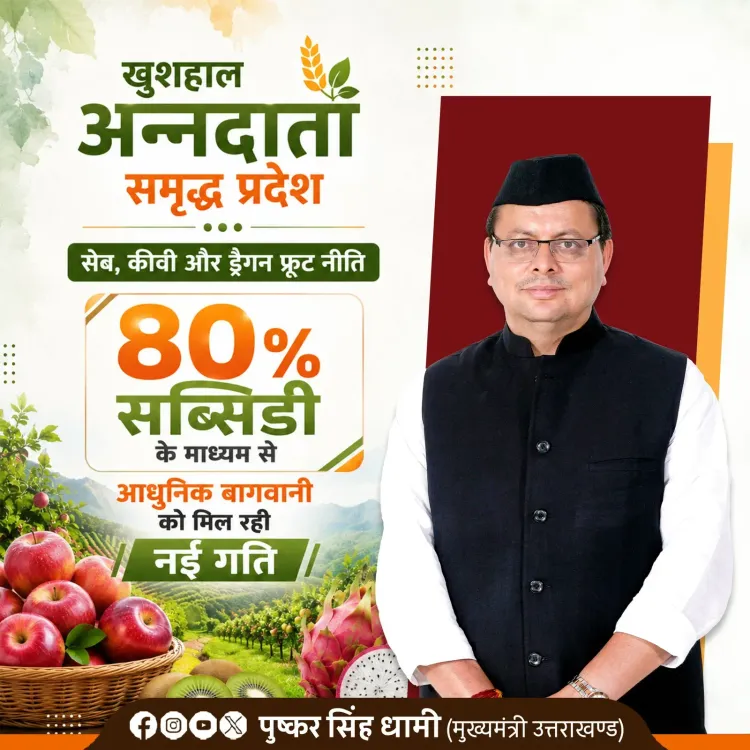
Uttarakhand CM Pushkar Singh Dhami announced subsidies of up to 80% for apple, kiwi, and dragon fruit growers, aiming to modernise commercial horticulture, raise farmer incomes, and position the Himalayan state as a leading fruit-producing state in India.
Key Takeaways
Uttarakhand Chief Minister Pushkar Singh Dhami announced subsidies of up to 80 per cent for farmers cultivating apple, kiwi, and dragon fruit.
The scheme is designed to accelerate modern and commercial horticulture in the state's diverse agro-climatic zones.
The government's stated goals are to raise farmer incomes , generate local employment, and make Uttarakhand a leading fruit-producing state.
The initiative aligns with the Central government's framework under the Mission for Integrated Development of Horticulture (MIDH) and the 2016 farmer income-doubling target.
District-level uptake and production data over the next two agricultural seasons will be critical indicators of the programme's real-world impact.
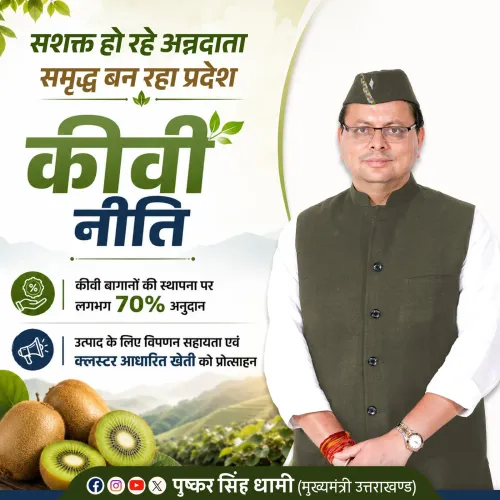
Uttarakhand Chief Minister Pushkar Singh Dhami on Monday, 13 July 2026, announced that the state government is providing subsidies of up to 80 per cent to farmers cultivating apple, kiwi, and dragon fruit, framing the move as part of a broader push to make Uttarakhand a leading fruit-producing state in India.
Context
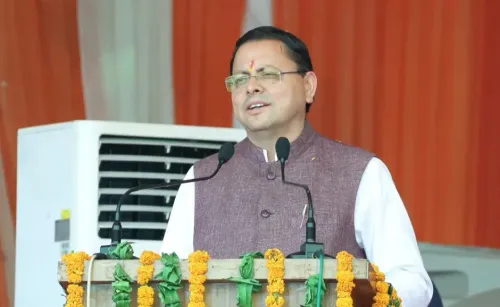
Posting on X, Chief Minister Dhami wrote — 'हमारी सरकार की किसान हितैषी नीतियों से प्रदेश में आधुनिक एवं व्यावसायिक बागवानी को नई गति मिल रही है' ['Our government's farmer-friendly policies are giving new momentum to modern and commercial horticulture in the state']. He added that the government's resolve is to increase farmers' incomes, create new employment opportunities at the local level, and establish Uttarakhand as a front-ranking state in fruit production.
The announcement centres on three high-value crops: apple, kiwi, and dragon fruit — each suited to different agro-climatic pockets within the Himalayan state. The subsidy of up to 80 per cent, as stated by the Chief Minister, is aimed at lowering the financial barrier for farmers looking to shift away from traditional cereal cultivation.
Policy Backdrop
The push aligns with the Central government's 2016 initiative to double farmers' income, which identified horticulture as a priority sector for higher returns and crop diversification. The Mission for Integrated Development of Horticulture (MIDH), a Central scheme, has provided a framework and funding channel for state-level horticulture subsidies for over two decades.
Uttarakhand's diverse agro-climatic zones — from the temperate upper hills to the subtropical foothills — make it naturally suited for a range of fruit crops. Apple cultivation has historically been concentrated in the higher elevations, while crops such as kiwi and dragon fruit represent a newer diversification push into mid-hill and lower-altitude zones. Indian hill states have increasingly used targeted subsidies to shift farmers toward high-value fruits that command better market prices and reduce dependence on rain-fed cereals.
Stakeholders and Impact
The primary beneficiaries are hill farmers and horticulture growers across Uttarakhand, many of whom face thin margins on traditional crops and are affected by rural out-migration. A subsidy at the scale announced — up to 80 per cent — could substantially reduce the capital expenditure required for orchard establishment, including saplings, irrigation, and protective infrastructure.
Beyond individual farm incomes, the initiative is framed as a local employment driver. Commercial horticulture generates on-farm and ancillary jobs in picking, grading, packaging, and cold-chain logistics — activities that can create livelihoods in villages and slow migration to urban centres. Neighbouring hill states have pursued similar models, with mixed but broadly positive outcomes where market linkages were established alongside subsidy support.
What's Next
Observers will watch for district-level rollout details, including how the subsidy is disbursed, which crops receive the highest support rates, and how many farmers are enrolled in the first agricultural season. Any supplementary budget allocations or cluster development plans tabled in the Uttarakhand state assembly will indicate the depth of the government's financial commitment. Production figures for the three promoted crops over the next two seasons will be a key measure of on-ground impact.
If the horticulture subsidy programme achieves meaningful scale, it could position Uttarakhand as a model for other hill states seeking to raise rural incomes through high-value agriculture — and reinforce the state government's farmer-welfare credentials ahead of future electoral cycles.
Point of View
Farmer-facing benefits while addressing the structural problem of rural out-migration. The choice of apple, kiwi, and dragon fruit signals a deliberate move up the value chain beyond traditional Himalayan agriculture. However, the gap between subsidy announcements and on-ground uptake has historically been wide in the sector; the credibility of this initiative will depend on transparent beneficiary enrolment and robust market linkages rather than the subsidy rate alone. Framed ahead of the state's ongoing development narrative, the move also reinforces the BJP government's farmer-welfare positioning at the state level.
NationPress
12 Oct 2026
Frequently Asked Questions
What subsidy is Uttarakhand giving for apple, kiwi and dragon fruit farming?
Uttarakhand Chief Minister Pushkar Singh Dhami has announced that farmers cultivating apple, kiwi, and dragon fruit will receive subsidies of up to 80 per cent under the state government's horticulture promotion policy.
Why is Uttarakhand promoting kiwi and dragon fruit farming?
The state government aims to diversify agriculture beyond traditional cereals, raise farmer incomes, and create local employment by encouraging cultivation of high-value fruits suited to Uttarakhand's varied agro-climatic zones.
What is CM Dhami's plan for making Uttarakhand a fruit-producing state?
CM Dhami has outlined a plan centred on farmer-friendly subsidies of up to 80%, promotion of commercial horticulture in apple, kiwi, and dragon fruit, and the broader goal of establishing Uttarakhand as a leading fruit-producing state in India.
Which central scheme supports Uttarakhand's horticulture subsidies?
The Mission for Integrated Development of Horticulture (MIDH) is the Central government's primary framework that provides funding and policy support for state-level horticulture subsidies, including those in Uttarakhand.
How will Uttarakhand's horticulture subsidy help reduce rural migration?
By making high-value fruit farming financially accessible through large subsidies, the government hopes to create on-farm and ancillary employment in picking, grading, and logistics — giving hill-area residents viable livelihoods without needing to migrate to cities.