Piyush Goyal Visits Grasse, Eyes India-France Fragrance Tie-Up
Synopsis
Commerce Minister Piyush Goyal visited the historic Fragonard Factory in Grasse on 16 June 2026, meeting French fragrance industry leaders to explore India-France collaboration in luxury manufacturing, premium fragrances and high-value trade, combining French expertise with India's traditional knowledge and skilled workforce.
Key Takeaways
Minister Piyush Goyal visited the Fragonard Factory in Grasse, France on 16 June 2026 .
Fragonard , founded in 1926 , is approaching its centenary in 2026 ; PRODAROM completed 300 years in 2024 .
Discussions covered collaboration in luxury manufacturing, design and high-value trade between India and France.
The visit aligns with Make in India goals targeting premium cosmetics and fragrance sectors.
India aims to leverage its traditional botanical knowledge and skilled workforce alongside French technical expertise.
Possible follow-ups include a joint working group or MoU ahead of the next India-France CEO Forum .
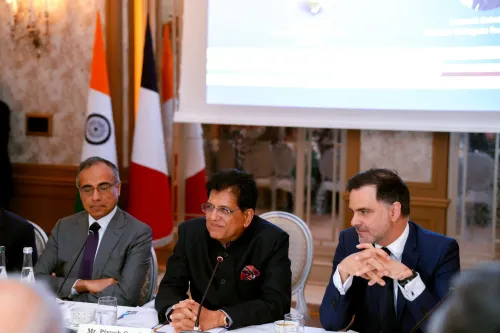
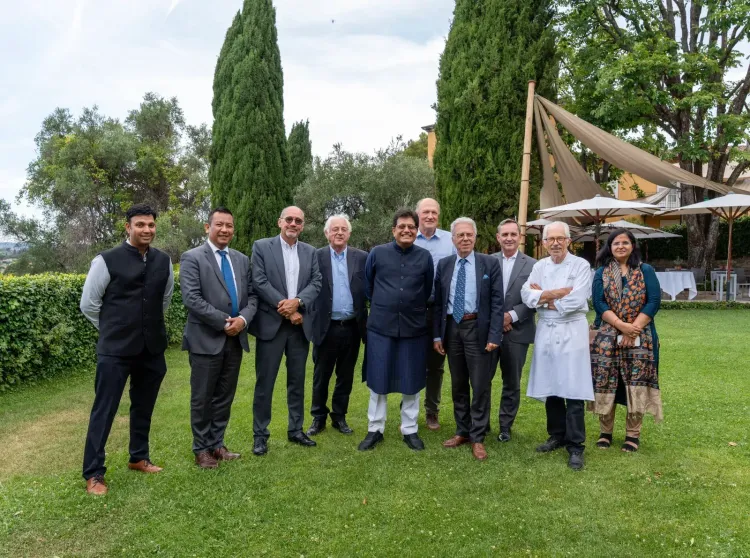
Union Commerce and Industry Minister Piyush Goyal on Tuesday, 16 June 2026 visited the Fragonard Factory in Grasse, France, engaging with leaders from the French fragrance industry to explore deeper bilateral collaboration in luxury manufacturing and high-value trade.
Context
Grasse, a Provence town that has anchored the global fragrance industry since the 18th century, is home to some of the world's most storied perfume houses and research institutions. Minister Goyal's visit to the Fragonard Factory — founded in 1926 and one of the oldest surviving fragrance manufacturing sites in the region — offered what he described as 'an inspiring glimpse into its historic legacy that has shaped the global fragrance industry for generations.'
During the visit, Goyal interacted with leaders from the Grasse Institute of Perfumery and representatives of the broader French fragrance sector. He extended congratulations to Fragonard as it approaches its centenary celebrations in 2026, and acknowledged PRODAROM — the French industry association representing perfume, aroma and raw-material producers — for completing 300 years in 2024.
Policy Backdrop
The visit fits within a wider diplomatic and commercial architecture between India and France, whose Strategic Partnership, launched in 1998, has progressively expanded beyond defence and civil nuclear cooperation into creative industries and high-value manufacturing. Negotiations for the India-EU Broad-based Trade and Investment Agreement, relaunched in 2022, have identified luxury and creative-industry market access as a priority, with France serving as a key interlocutor.
New Delhi's Make in India initiative, announced in 2014, explicitly targets high-value manufacturing sectors including cosmetics, fragrances and luxury goods. Minister Goyal's engagement in Grasse signals an effort to operationalise that ambition by linking Indian raw materials, artisanal skills and scale with French technical expertise.
Stakeholders and Impact
India's fragrance and aroma sector — which draws on deep reserves of traditional botanical knowledge, skilled artisans and an established base of raw-material suppliers — stands to gain from closer integration with the Grasse cluster's research, training and brand infrastructure. The Grasse Institute of Perfumery offers specialised education and research capabilities that could support Indian producers seeking to move up the value chain toward finished, premium products.
Goyal articulated the bilateral proposition directly, stating that 'by combining France's expertise with India's rich heritage, deep traditional knowledge, and skilled workforce, we can unlock new avenues of innovation and position India as a leading force in the premium fragrance and luxury sectors.' Indian fragrance exporters, luxury manufacturers and traditional knowledge holders are the primary stakeholders who would benefit from any formalised cooperation framework.
What's Next
Observers will watch for concrete follow-through, including the possible formation of a joint working group or a memorandum of understanding on fragrance-sector collaboration ahead of the next India-France CEO Forum. Inclusion of perfumery raw materials and finished products in revised Indian export incentive schemes is another potential policy lever. The broader arc points toward India positioning itself not merely as a supplier of raw botanical inputs but as a full-spectrum participant in the global luxury fragrance value chain.
Point of View
Premium participation in the global luxury value chain. By engaging both an iconic manufacturer like Fragonard and a trade body as venerable as PRODAROM, the minister is cultivating institutional relationships that could underpin a more durable industrial partnership. The outreach also reinforces India's broader European strategy: using bilateral sectoral diplomacy to build leverage and goodwill ahead of the stalled India-EU trade agreement. Whether this translates into concrete MoUs or joint training programmes will be the real test of the visit's commercial intent.
NationPress
26 Sept 2026
Frequently Asked Questions
Why did Piyush Goyal visit Grasse in France?
Minister Piyush Goyal visited Grasse on 16 June 2026 to engage with leaders of the French fragrance industry, including the Fragonard Factory and the Grasse Institute of Perfumery, with the aim of exploring bilateral collaboration in luxury manufacturing and high-value trade.
What is the Fragonard Factory in Grasse?
The Fragonard Factory is a historic perfume house founded in Grasse in 1926, one of the oldest surviving fragrance manufacturing and visitor sites in the region, and a symbol of France's centuries-old perfumery heritage.
What is PRODAROM and why is it significant?
PRODAROM is a French industry association representing perfume, aroma and raw-material producers. It completed 300 years in 2024, making it one of the oldest trade bodies in the global fragrance sector.
How does this visit relate to Make in India?
The Make in India initiative, launched in 2014, targets high-value manufacturing including cosmetics and fragrances. Goyal's engagement in Grasse is aimed at linking Indian raw materials and artisanal skills with French expertise to build a premium fragrance manufacturing base in India.
What could come out of India-France fragrance collaboration?
Potential outcomes include a joint working group or memorandum of understanding on fragrance-sector cooperation, new export incentive schemes for perfumery products, and partnerships between Indian producers and the Grasse Institute of Perfumery for training and research.