Piyush Goyal Visits Kandivali Skill Centre, Hails Youth Talent
Synopsis
Union Minister Piyush Goyal visited the Kandivali Skill Centre in North Mumbai on June 6, 2026, engaging with youth trainees across vocational courses. He said their talent and confidence reflect a developing India, calling skill, innovation and self-reliance the greatest strengths of the new India.
Key Takeaways
Union Commerce and Industry Minister Piyush Goyal visited the Kandivali Skill Centre in North Mumbai on June 6, 2026 .
He interacted with youth enrolled in various vocational skill training programmes and praised their energy and confidence.
Goyal described skill, innovation and self-reliance as 'the greatest strengths of the new India.' The visit aligns with the Skill India Mission and PMKVY , both launched in 2015 to build a vocationally qualified workforce.
The National Education Policy 2020 extended vocational integration to school education from Class 6 onwards.
Rollout of PMKVY 4.0 and placement outcomes from NSDC -affiliated centres remain key benchmarks for the mission's impact.
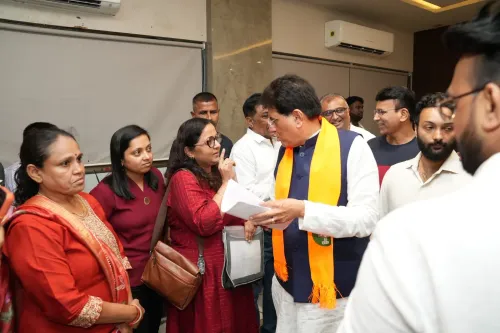
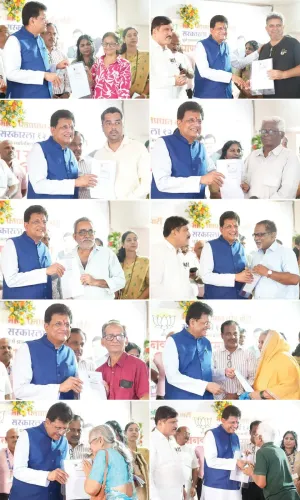
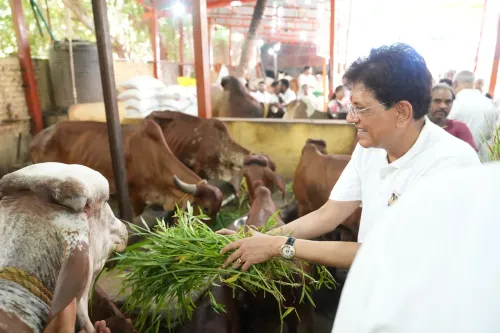
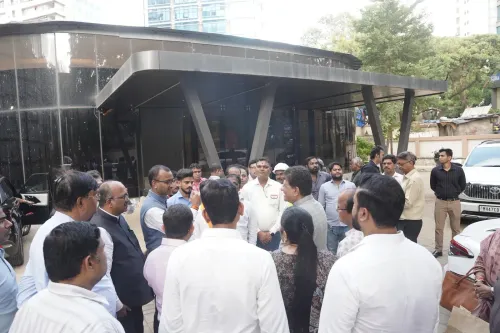
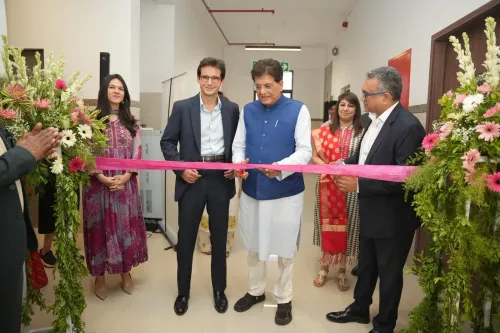
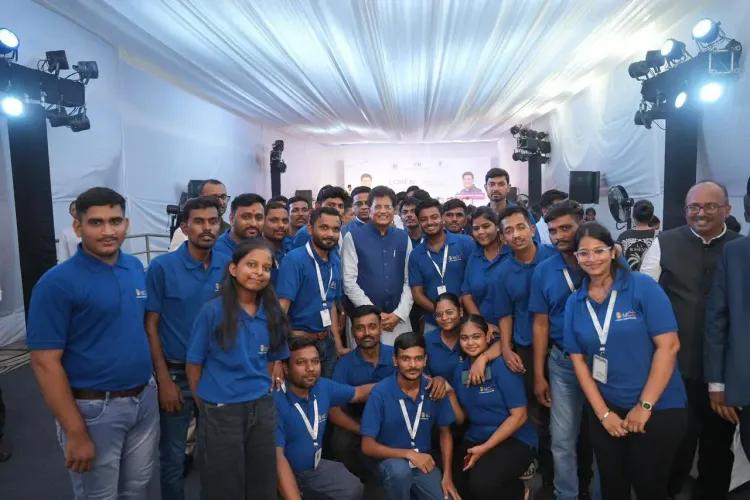
Union Commerce and Industry Minister Piyush Goyal on Saturday, June 6, 2026, visited a skill development centre in Kandivali, North Mumbai, where he interacted with young trainees enrolled in various vocational courses, praising their energy, confidence and drive to achieve.
Posting on X, the minister wrote: 'Uttar Mumbai ke Kandivali Skill Centre mein aaj vibhinn kaushal prashikshan pathyakramon se jude oorjavaan yuvaon se sanvaad karne ka avsar mila.' ['Today I had the opportunity to interact with energetic youth enrolled in various skill training courses at the Kandivali Skill Centre in North Mumbai.'] He added that their talent, self-confidence and zeal to accomplish something new 'tells the story of a developing India', and asserted that 'skill, innovation and self-reliance are the greatest strengths of the new India.'
Context
The Kandivali visit is part of a broader pattern of ministerial outreach to vocational training facilities under centrally sponsored skilling schemes. Such engagements are designed to assess on-ground implementation and motivate trainees directly. North Mumbai hosts a dense network of skill development infrastructure catering to aspirants from across the Mumbai Metropolitan Region.
Goyal, who is also Leader of the House in the Rajya Sabha and a senior BJP leader, has consistently championed the government's skilling agenda as an extension of its broader economic self-reliance push.
Policy Backdrop
The visit draws on a decade-long policy arc that began with the Skill India Mission, launched in 2015 with the stated goal of training hundreds of millions of Indians in vocational skills. The flagship Pradhan Mantri Kaushal Vikas Yojana (PMKVY), also rolled out in 2015, provides short-term training and industry-recognised certification to youth across sectors.
The National Education Policy 2020 deepened this commitment by mandating integration of vocational education from Class 6 onwards, while the Atmanirbhar Bharat package announced in May 2020 explicitly linked skilling to domestic manufacturing revival and reduced external dependence. The current iteration, PMKVY 4.0, focuses on emerging technologies and demand-driven training aligned with industry requirements.
Stakeholders and Impact
The primary beneficiaries of skill centres such as the one in Kandivali are young job-seekers and aspiring entrepreneurs seeking industry-recognised qualifications outside the formal degree pathway. Vocational training institutes affiliated with the National Skill Development Corporation (NSDC) serve as implementation partners, channelling central funding into on-ground training infrastructure.
Employers in manufacturing, services and the gig economy increasingly look to NSDC-certified trainees to fill entry-level roles, making placement data from such centres a key metric for the mission's success. The minister's emphasis on 'innovation and self-reliance' also signals alignment with the government's push to build a domestically capable workforce for sunrise sectors.
What's Next
Attention will now turn to the rollout progress of PMKVY 4.0 and state-level expansions of skill centre capacity, particularly in urban clusters such as Mumbai where demand for certified vocational talent is high. Employment placement figures from NSDC-affiliated centres in the coming fiscal quarters will be a critical indicator of whether the mission is translating ministerial enthusiasm into measurable livelihood outcomes for India's youth.
Point of View
Innovation and self-reliance' as the 'greatest strengths of new India' consciously echoes the Atmanirbhar Bharat vocabulary, reinforcing continuity between the 2020 economic package and current workforce policy. For the BJP, such outreach in a competitive urban constituency like North Mumbai carries both policy and political valence. The real test, however, remains the gap between ministerial optics and verifiable placement outcomes — a metric the government has faced persistent pressure to improve.
NationPress
21 Oct 2026
Frequently Asked Questions
Why did Piyush Goyal visit the Kandivali Skill Centre?
Piyush Goyal visited the Kandivali Skill Centre in North Mumbai on June 6, 2026, to interact with youth enrolled in vocational training courses and assess the on-ground progress of skilling initiatives under centrally sponsored schemes.
What is the Skill India Mission?
The Skill India Mission is a national initiative launched in 2015 to provide vocational training and industry-recognised certification to millions of Indian youth, with the aim of improving employability and supporting domestic economic growth.
What is PMKVY and how does it work?
The Pradhan Mantri Kaushal Vikas Yojana (PMKVY), launched in 2015, offers short-term skill training and certification to youth across sectors through NSDC-affiliated training partners, with the government covering the cost of training for eligible candidates.
What did Piyush Goyal say about India's youth at the skill centre?
Goyal said the talent, self-confidence and zeal of the trainees he met 'tells the story of a developing India,' and called skill, innovation and self-reliance the greatest strengths of the new India.