GRSE installs 20-metre warship model at Kolkata airport to showcase India's defence might
Synopsis
A 20-metre scale model of India's most advanced guided-missile frigate now greets travellers at Kolkata's international airport — a public-facing symbol of GRSE's record-breaking run: 808 ships built, 80 warships delivered to the Navy, and two Project 17A frigates already in service. With the third frigate nearing completion and 13 platforms under construction for export, the display signals that India's defence shipbuilding ambitions are no longer confined to naval dockyards.
Key Takeaways
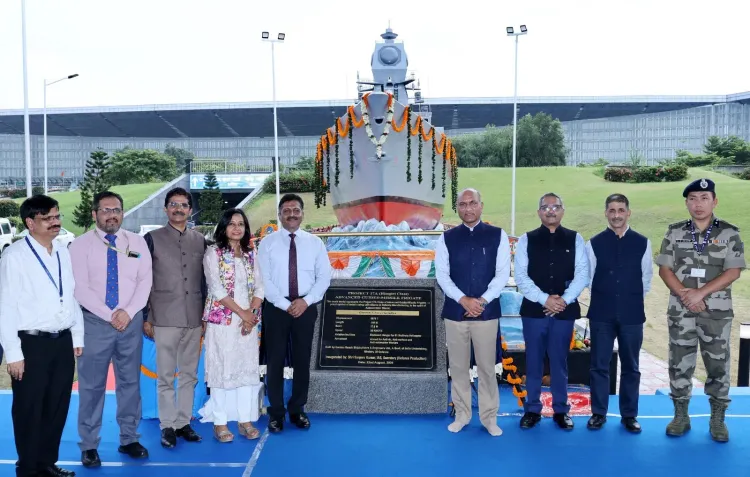
GRSE unveiled a 20-metre scale model of the Project 17A (Himgiri Class) frigate at NSCBI Airport, Kolkata on 25 August .
The model was inaugurated by Sanjeev Kumar , Secretary (Defence Production), Ministry of Defence.
INS Himgiri was delivered on 31 July 2025 ; INS Dunagiri was delivered on 30 March 2026 and commissioned by PM Modi on 21 June 2026 .
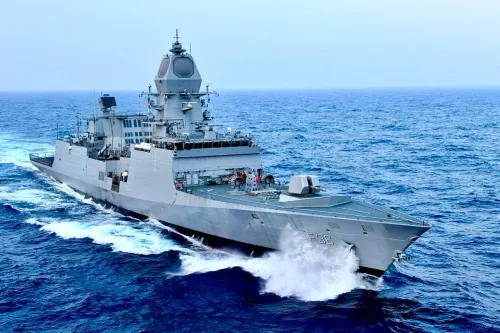
The Project 17A frigates are 149 metres long, displace 6,670 tonnes , and are the largest frigates ever built in India.
GRSE has built 808 ships since 1960, including a record 80 warships delivered to the Indian Navy.
GRSE currently has 13 platforms under construction for export, alongside multiple advanced domestic programmes.
Garden Reach Shipbuilders and Engineers (GRSE) Limited has unveiled a 20-metre-long weatherproof scale model of the Project 17A (Himgiri Class) Advanced Guided-Missile Frigate at the Netaji Subhas Chandra Bose International (NSCBI) Airport in Kolkata, giving millions of arriving passengers an immediate introduction to one of India's most ambitious indigenous warship programmes. The installation, placed on the city side of the terminal, was inaugurated on 25 August by Sanjeev Kumar, Secretary (Defence Production) at the Ministry of Defence.
The Installation and What It Represents
The scale model is fully designed, installed, and maintained by GRSE and occupies open-air space outside the terminal building. It is a non-commercial public display, positioned at what GRSE describes as one of Eastern India's busiest international gateways. The Navratna Defence Public Sector Undertaking (DPSU) said the exhibit is intended to bring 'indigenous naval technology prowess of the country closer to the public eye' and symbolises a collaboration between the Airports Authority of India (AAI) and GRSE.
The inauguration was attended by Commodore PR Hari, Indian Navy (Retd) and GRSE Chairman and Managing Director; Captain P. Sunilkumar, Indian Navy (Retd) and GRSE Director (Corporate Planning and Personnel); and Vikram Singh, NSCBI Airport Director.
About the Project 17A Frigate
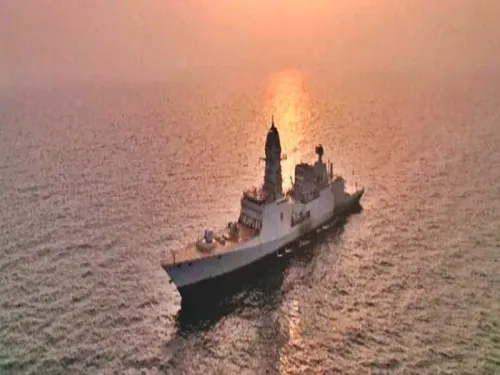
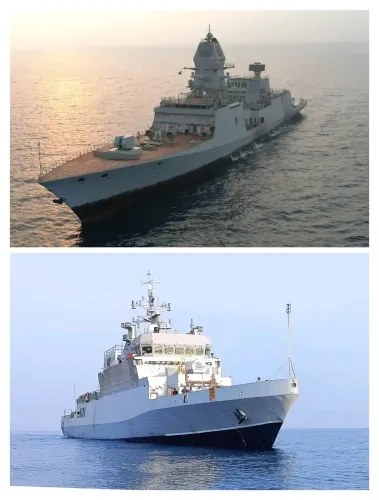
The Project 17A (Himgiri Class) frigates are the largest frigates ever built and operated by the Indian Navy. Each vessel measures 149 metres in length and displaces approximately 6,670 tonnes. Powered by a Combined Diesel or Gas (CODOG) propulsion system, they are designed for multi-mission operations — covering anti-air, anti-surface, and anti-submarine warfare — and incorporate advanced stealth features, weapons systems, sensors, and automation.
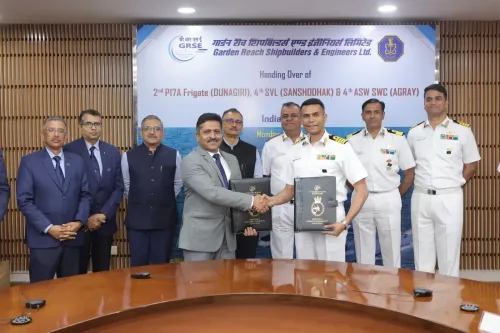
GRSE has been a central player in this programme. Its first Project 17A frigate, INS Himgiri, was delivered to the Indian Navy on 31 July 2025. The second, INS Dunagiri, was delivered on 30 March 2026 and subsequently commissioned into service by Prime Minister Narendra Modi on 21 June 2026. The third and final GRSE-built frigate of the class, Vindhyagiri, is currently at an advanced stage of construction.
GRSE's Record in Indian Shipbuilding
Established as a DPSU in 1960, GRSE has built 808 ships of various classes to date. Of these, 118 were delivered to the Indian Navy and Indian Coast Guard — a record for any Indian shipyard. The company has delivered 80 warships to the Navy alone, an unmatched figure in the country's shipbuilding history.
GRSE also holds the distinction of building MCGS Barracuda, the first warship exported by India, now operated by the Mauritius Coast Guard, and PS Zoroaster, exported to Seychelles. The shipyard is currently constructing multiple advanced platforms, including four Anti-Submarine Warfare Shallow Water Crafts (ASWSWCs), four Next Generation Offshore Patrol Vessels (NGOPVs), and 30 other platforms — including 13 earmarked for export.
Strategic Branding and Atmanirbharta Messaging
GRSE — described as the largest heavy industry in West Bengal — has framed the airport installation as a major public-engagement and strategic branding initiative. The company said it reflects Prime Minister Modi's vision of 'Viksit Bharat @2047' and underscores the country's self-reliance in defence manufacturing. The display is expected to reach domestic and international travellers alike, projecting India's growing capabilities on a global stage.
With Vindhyagiri nearing completion and GRSE's export order book expanding, the airport exhibit marks a broader push to build public awareness around India's indigenous defence industrial base.
Point of View
But it is a calculated one. GRSE is the largest heavy industry in West Bengal and has long operated in relative public obscurity despite a defence record that rivals any shipyard in Asia. The Atmanirbharta branding ties neatly to the government's narrative, but the underlying numbers — 808 ships, 80 Navy warships, two export deliveries — are substantive enough to stand without political framing. The more consequential story is the export pipeline: with 13 platforms being built for foreign clients, India's defence shipbuilding is transitioning from a captive domestic supplier to a credible global player, and that shift deserves more scrutiny than a model at an airport can convey.
NationPress
9 Oct 2026
Frequently Asked Questions
What has GRSE installed at Kolkata's NSCBI Airport?
GRSE has installed a 20-metre-long, fully weatherproof scale model of the Project 17A (Himgiri Class) Advanced Guided-Missile Frigate on the city side of Netaji Subhas Chandra Bose International Airport. The non-commercial display is designed to showcase India's indigenous warship-building capability to domestic and international travellers.
What is the Project 17A Himgiri Class frigate?
The Project 17A (Himgiri Class) frigates are the largest frigates ever built and operated by the Indian Navy, measuring 149 metres in length and displacing around 6,670 tonnes. They are next-generation stealth warships designed for anti-air, anti-surface, and anti-submarine warfare, powered by a Combined Diesel or Gas (CODOG) propulsion system.
How many Project 17A frigates has GRSE delivered?
GRSE has delivered two Project 17A frigates: INS Himgiri on 31 July 2025 and INS Dunagiri on 30 March 2026, the latter commissioned by PM Modi on 21 June 2026. A third frigate, Vindhyagiri, is currently at an advanced stage of construction.
What is GRSE's overall shipbuilding record?
GRSE has built 808 ships of various classes since becoming a Defence Public Sector Undertaking in 1960, including a record 80 warships delivered to the Indian Navy — the highest by any Indian shipyard. It also exported India's first warship, MCGS Barracuda, to the Mauritius Coast Guard.
Why was the model placed at Kolkata airport specifically?
GRSE chose NSCBI Airport because it is one of Eastern India's busiest international gateways, giving the exhibit maximum visibility among both domestic and global travellers. The company described it as a public-engagement and strategic branding initiative aligned with the government's Atmanirbharta (self-reliance) and Viksit Bharat @2047 goals.