GST 2.0 cushioned India from West Asia crisis, says Maruti Suzuki chairman RC Bhargava
Synopsis
Maruti Suzuki's chairman used the company's AGM to make a pointed case for deeper reform: GST 2.0, he argued, was the buffer that kept India's economy — and its car market — growing through the West Asia crisis. Backed by a ₹77,500 crore capex plan and a 6.3 million unit industry forecast for 2031, the message is that reform pays, and the pace needs to quicken.
Key Takeaways
RC Bhargava , chairman of Maruti Suzuki India , credited GST 2.0 with sustaining economic growth during the West Asia crisis at the company's AGM on 31 August .
India's car industry is projected to reach 6.1–6.3 million units by 2031 , driven partly by GST rate cuts announced in September last year .
Maruti Suzuki has committed ₹77,500 crore in capex between FY2026-27 and FY2030-31 , with a 40% single-year jump planned for FY2026-27.
Installed capacity is set to hit 2.9 million units by FY2026-27 and 3.65 million units by FY2030-31 .
A new plant at Sanand, Gujarat will add 1 million units of capacity at an investment of approximately ₹35,000 crore .
The Hansalpur, Gujarat plant — now at 1 million units capacity — is described as Suzuki's largest plant in the world .
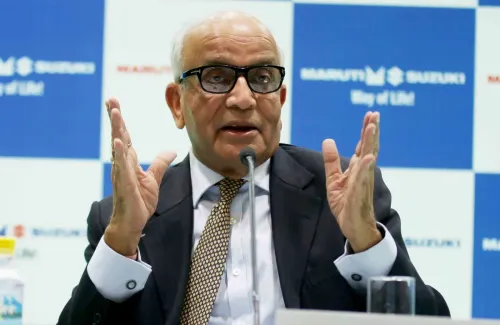
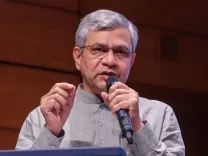
Maruti Suzuki India chairman RC Bhargava on Monday, 31 August credited GST 2.0 reforms with giving the Indian economy the resilience to sustain growth despite the adverse fallout of the West Asia crisis. Speaking at the company's annual general meeting in New Delhi, Bhargava said the reforms had delivered 'a new impetus not only to the automobile industry but to several sectors of the economy.'
GST 2.0 as an Economic Buffer
Bhargava argued that without the GST reforms, India's economic performance during the turbulent months of the West Asia conflict would have been materially weaker. He noted that GST collections have remained at record highs even as global headwinds intensified. 'I do believe that without GST reforms, we may not have done so well in the difficult months that have elapsed,' he said.
He specifically credited the GST rate cuts announced in September last year with accelerating demand in the small car segment, and called the broader reform package a 'historical reform.' Bhargava urged both state governments and the Centre to push reform faster, ease the business environment, and deploy more technology — which he said demonstrably reduces corruption and delays.
India's Car Market: A 6.3 Million Unit Horizon
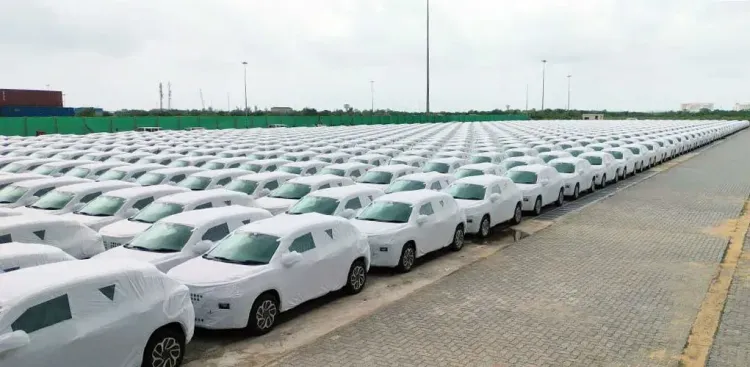
Maruti Suzuki projects that India's passenger car industry will grow to between 6.1 million and 6.3 million units by 2031, with the small car segment expanding significantly faster than it did in the preceding five years. The company is scaling capacity to capture that growth: its installed capacity is expected to reach 2.9 million units by end of FY2026-27 and 3.65 million units by end of FY2030-31.
Capex Surge: ₹77,500 Crore Over Five Years
Managing Director and CEO Hisashi Takeuchi told shareholders that Maruti Suzuki has planned a 40 per cent jump in capital expenditure in FY2026-27 alone — rising from approximately ₹10,000 crore last year to ₹14,000 crore this year. Cumulatively, the company has committed ₹77,500 crore in capex between FY2026-27 and FY2030-31.
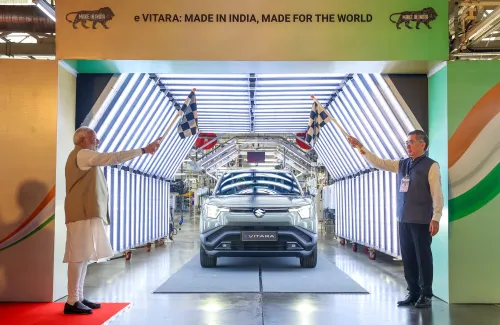
Two production lines at the Kharkhoda plant in Haryana have already been commissioned, with a third under construction. A fourth line of 2.5 lakh units capacity was commissioned at Hansalpur in Gujarat, taking total capacity there to 1 million units — which Bhargava described as Suzuki's largest plant anywhere in the world.
Sanand Expansion and the Road Ahead
Work has also commenced at a new facility in Sanand, Gujarat, with a planned total capacity of 1 million units and a proposed investment of approximately ₹35,000 crore. Bhargava attributed the scale of the expansion directly to India's growth potential, saying: 'We are doing all this expansion because our economy has a huge potential for growth.'
He also called for continued reform momentum, arguing that faster wealth creation would accelerate government revenue growth and produce more equitable outcomes across the country. With the Sanand site now under development and the Kharkhoda third line progressing, Maruti Suzuki's next capacity milestones will be closely watched as a barometer of domestic demand confidence.
Point of View
And India's relatively stable GST collections during that period do lend credibility to the argument. But the more significant signal here is the scale of Maruti's capital commitment — ₹77,500 crore is not a hedge, it is a directional bet on India's consumption story through 2031. The risk is that the small car segment's revival, which Bhargava attributes to GST rate cuts, could stall if rural income growth or fuel prices move adversely. A company forecasting 6.3 million units by 2031 needs the reform momentum it is publicly championing to actually materialise.
NationPress
31 Aug 2026
Frequently Asked Questions
What did Maruti Suzuki chairman RC Bhargava say about GST 2.0?
RC Bhargava said GST 2.0 reforms gave 'a new impetus not only to the automobile industry but to several sectors of the economy,' and that without them, India may not have sustained growth during the difficult months of the West Asia crisis. He called the reform a 'historical' achievement and urged the Centre and state governments to push reform faster.
What is Maruti Suzuki's capex plan through FY31?
Maruti Suzuki has committed ₹77,500 crore in cumulative capital expenditure between FY2026-27 and FY2030-31. For FY2026-27 alone, the company has planned a 40 per cent jump in capex — from around ₹10,000 crore last year to ₹14,000 crore this year.
How large does Maruti Suzuki expect India's car market to grow by 2031?
Maruti Suzuki estimates India's passenger car industry will reach 6.1 to 6.3 million units by 2031. The small car segment is expected to grow significantly faster than it did in the previous five years, supported by GST rate cuts announced in September last year.
What is the new Maruti Suzuki plant in Sanand, Gujarat?
Maruti Suzuki has commenced work on a new manufacturing site in Sanand, Gujarat, with a planned total capacity of 1 million units and a proposed investment of approximately ₹35,000 crore. The site is part of the company's broader capacity expansion to meet projected demand through 2031.
Which Maruti Suzuki plant is the largest Suzuki facility in the world?
The Hansalpur plant in Gujarat, where a fourth production line of 2.5 lakh units capacity was recently commissioned, now has a total capacity of 1 million units. RC Bhargava described it as Suzuki's largest plant anywhere in the world.