Semicon 2.0: India notifies ₹1.27 lakh crore chip scheme, high-level panel announced

Synopsis
India's Semicon 2.0 is not just an industrial subsidy — it is a national security statement. With ₹1.27 lakh crore committed and a panel jointly chaired by the Principal Scientific Adviser and the National Security Adviser, the government is signalling that chips are as strategic as missiles. The goal of meeting 100% domestic sensor demand captures the ambition at stake.
Key Takeaways
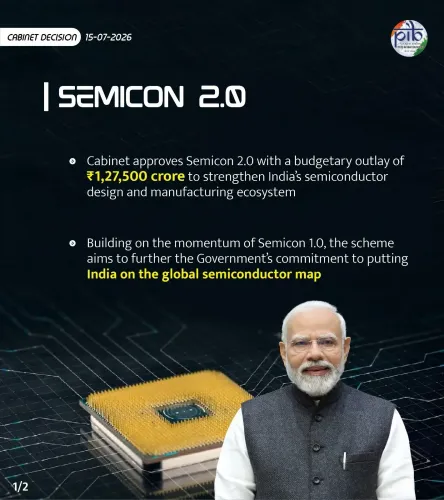
The government notified Semicon 2.0 on 31 August with an outlay of ₹1.27 lakh crore to build India's semiconductor ecosystem.
The scheme is structured into six segments covering chip design, capital equipment, fabrication, assembly, packaging, and testing.
A high-level expert panel, jointly chaired by the PSA and NSA , will identify strategic chips qualifying for incentives.
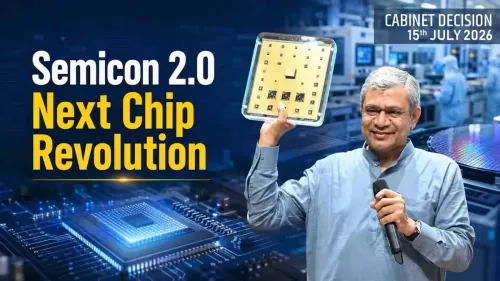
Minister Ashwini Vaishnaw said the scheme aims to help India meet up to 100% of domestic demand for products such as sensors.
The initiative targets the full semiconductor value chain, from design by Indian companies to specialised equipment manufacturing.
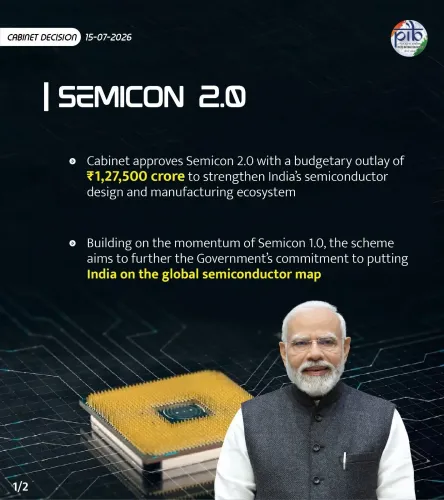
The Indian government on Monday, 31 August formally notified Semicon 2.0, a ₹1.27 lakh crore scheme designed to strengthen and expand the country's semiconductor manufacturing and design ecosystem. The initiative extends fiscal support across the chip industry's entire value chain, from design to fabrication to packaging and testing.
What Semicon 2.0 Covers
The scheme has been structured into six segments, spanning semiconductor design by Indian companies, manufacturing of capital equipment for chip production, semiconductor fabrication units, and chip assembly, packaging, and testing. According to the government notification, the scheme aims to provide sustained policy support to the sector and accelerate the development of a comprehensive domestic ecosystem.
The government's focus is not limited to building manufacturing capacity. It also seeks to develop capabilities across the full semiconductor value chain, encouraging domestic companies to participate at every stage — from chip design through to specialised equipment production.
High-Level Expert Panel to Identify Strategic Chips
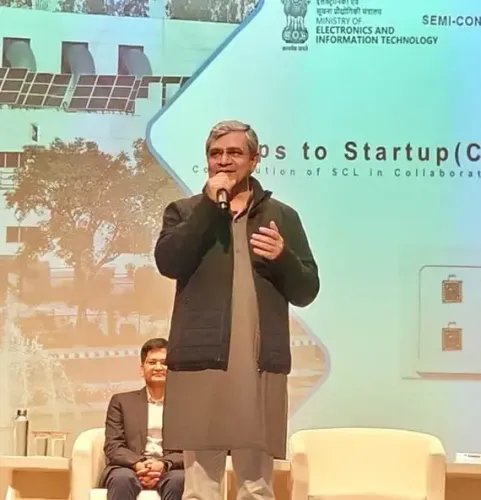
Union Minister for Electronics and Information Technology Ashwini Vaishnaw announced that the government will constitute a high-level expert panel to identify strategic semiconductor chips that will qualify for incentives under the scheme. The committee will be jointly chaired by the Principal Scientific Adviser (PSA) and the National Security Adviser (NSA), reflecting the dual civilian and strategic importance of the initiative.
Speaking to reporters, Vaishnaw said the panel will identify semiconductor products based on their national importance and strategic priorities. This structure signals that Semicon 2.0 is as much a national security initiative as it is an industrial policy.
Reducing Import Dependence
Vaishnaw indicated that the scheme is expected to help India reduce its dependence on overseas semiconductor supplies for a range of critical products. When asked about specific areas where India could eventually meet domestic demand, he said the initiative aims to enable products such as sensors to meet up to 100 per cent of domestic requirements.
This comes amid growing global concern over semiconductor supply chain vulnerabilities, a lesson reinforced by the chip shortages of 2021–22 that disrupted automobile, electronics, and consumer goods production worldwide.
Strategic Importance and Sectoral Impact
Semiconductors are considered critical inputs for electronics, automobiles, telecommunications, defence, and other strategic industries. India's move to formalise Semicon 2.0 follows earlier efforts under the original Semicon India programme, and positions the country as a serious contender in a global race that has seen the United States, the European Union, Japan, and China each commit hundreds of billions of dollars to domestic chip capacity.
Notably, the involvement of the National Security Adviser in the new expert panel marks a significant escalation in the strategic framing of India's semiconductor ambitions — moving the conversation beyond economics into the realm of national security and technological sovereignty.
What Comes Next
With the scheme now formally notified, industry stakeholders and domestic chipmakers are expected to engage with the government on eligibility and incentive structures. The identification of strategic chips by the PSA-NSA panel will be a key milestone that determines which segments attract the most significant fiscal support under the ₹1.27 lakh crore outlay.
Point of View
Not merely an industrial one. The ₹1.27 lakh crore outlay is substantial, but the real test will be execution speed: earlier semiconductor commitments attracted announcements faster than ground was broken. With the US CHIPS Act and the EU Chips Act already disbursing funds, India's window to attract anchor fab investments is narrowing, not widening.
NationPress
31 Aug 2026
Frequently Asked Questions
What is the Semicon 2.0 scheme notified by the Indian government?
Semicon 2.0 is a ₹1.27 lakh crore government scheme formally notified on 31 August to strengthen India's semiconductor manufacturing and design ecosystem. It provides fiscal support across six segments of the chip value chain, from design and fabrication to packaging, testing, and capital equipment manufacturing.
Who will chair the high-level semiconductor expert panel under Semicon 2.0?
The expert panel will be jointly chaired by India's Principal Scientific Adviser (PSA) and the National Security Adviser (NSA). The committee will identify semiconductor products of national importance and strategic priority that qualify for incentives under the scheme.
Which sectors will benefit from Semicon 2.0?
The scheme targets the broader semiconductor-dependent economy, including electronics, automobiles, telecommunications, and defence. Domestically, it aims to boost Indian companies in chip design, fabrication, assembly, packaging, testing, and capital equipment production.
How does Semicon 2.0 aim to reduce India's import dependence?
According to Minister Ashwini Vaishnaw, the scheme is designed to help India reduce reliance on overseas semiconductor supplies. He specifically cited sensors as a category where India could eventually meet up to 100 per cent of domestic demand through indigenous production.
How does Semicon 2.0 differ from earlier semiconductor initiatives?
Semicon 2.0 expands on the original Semicon India programme by covering the full value chain across six structured segments and introducing a PSA-NSA-chaired strategic panel — a move that frames semiconductor policy explicitly as a national security priority, not just an industrial one.