Is ₹63,184 Crore Allocated to Education in Gujarat Budget Focusing on Students and Infrastructure?

Synopsis
The Gujarat government has made a landmark move by allocating ₹63,184 crore for education in the 2026-27 budget. This initiative focuses on enhancing infrastructure, promoting student welfare, and expanding educational opportunities in higher and technical fields, setting a strong foundation for future generations.
Key Takeaways
₹63,184 crore allocated for education.
Focus on enhancing school infrastructure.
Support for girl students via the Namo Lakshmi Yojana .
Investment in higher education through Mukhyamantri Yuva Swavalamban Yojana .
Funding for student welfare initiatives including meals and scholarships.
Gandhinagar, Feb 18 (NationPress) The Gujarat government has allocated ₹63,184 crore for the education sector in the 2026–27 State Budget. This budget emphasizes enhancing school infrastructure, fostering student welfare, and expanding higher and technical education throughout the state.
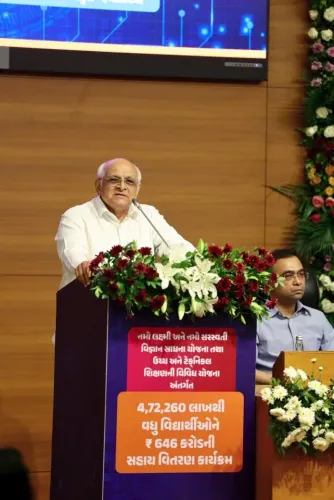
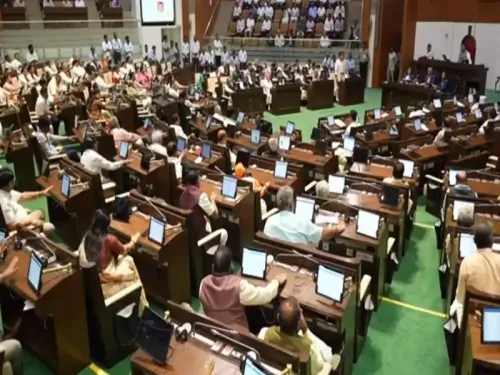
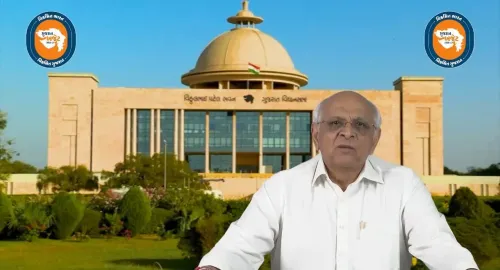
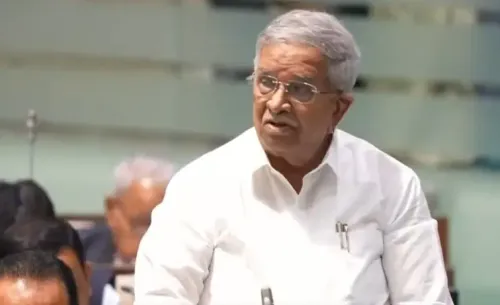
During his fifth consecutive budget presentation at the Gujarat Legislative Assembly, Finance Minister Kanu Desai stated that the government seeks to make education globally competitive through policy reforms, digital infrastructure, and student-centric schemes that align with national educational objectives and future workforce needs.
“Our government is committed to making education globally competitive by implementing policy reforms, enhancing digital infrastructure, and focusing on student-centered initiatives as per the principle of 'Sa Vidya Ya Vimuktaye',” he remarked.
Under the Mission Schools of Excellence, ₹3,055 crore has been allocated for upgrading the infrastructure of primary and secondary schools, aimed at enhancing the learning environment, bolstering facilities, and ensuring quality education delivery in government institutions.
The Namo Lakshmi Yojana has received ₹1,250 crore to support girl students and encourage continued education, while ₹827 crore has been reserved for students enrolled in private schools under the Right to Education Act, ensuring educational access for children from economically disadvantaged backgrounds.
The Mukhyamantri Poshtik Alpahar Yojana will be allocated ₹598 crore to provide nutritious supplementary meals to students, and the construction of modern centralized kitchens in 74 talukas is underway under the PM Poshan Yojana, funded with ₹552 crore to enhance school meal infrastructure and delivery systems.
Additionally, ₹342 crore has been set aside for construction, repair, and renovation of government secondary and higher secondary schools, including those under the Rashtriya Madhyamik Shiksha Abhiyan (RMSA), Model Schools, and Model Day Schools, to improve physical infrastructure and learning facilities.
As part of other allocations, ₹250 crore has been earmarked for the Namo Saraswati Vigyan Sadhana Yojana to assist approximately 2.5 lakh students pursuing science education, while ₹223 crore has been allocated for Gyan Shakti Residential Schools of Excellence to enhance residential academic facilities.
Another ₹223 crore has been allocated for bus pass fee concessions for nearly 13 lakh students utilizing State Transport buses, aimed at improving accessibility to educational institutions and reducing financial burdens on families.
The sanitation assistance for 31,790 schools has doubled with an allocation of ₹135 crore, targeting improved hygiene standards to ensure a safe and healthy environment for students.
The budget also includes ₹120 crore for integrated school campuses offering education from Balvatika to Class 10, ₹119 crore for free textbooks for over 52 lakh primary students, and ₹114 crore for enhancing 926 schools under the PM Shri Yojana, which focuses on developing model schools in line with National Education Policy objectives.
Allocations comprise ₹100 crore for the Mukhyamantri Gyan Sadhana Merit Scholarship Scheme to support top-performing students, ₹91 crore for transport and sensory facilities for Divyang students to ensure inclusive education, and ₹47 crore for providing sanitary napkins to 9.72 lakh girls in Classes 6 to 12 in government schools to promote menstrual hygiene and reduce dropout rates.
For higher and technical education, ₹400 crore has been assigned under the Mukhyamantri Yuva Swavalamban Yojana to assist over 90,000 students in pursuing higher education and professional courses.
The budget allocates ₹126 crore to establish 16 new government colleges, finalize construction of 20 colleges, and introduce new academic streams in eight institutions to broaden access to higher education.
Additional allocations include ₹96 crore for sports facilities in colleges and universities to encourage student participation in sports, ₹80 crore for i-Hub Ahmedabad and its regional centers to bolster innovation and entrepreneurship ecosystems, and ₹67 crore for IT and academic infrastructure in technical institutions.
Funds are also set aside for hostels and a research park at L.D. College of Engineering, infrastructure upgrades in 136 government colleges, student start-up and innovation initiatives, internship programs, and the introduction of new academic courses in emerging fields.
A Youth Mental Health Programme has been planned for about 19.84 lakh students in higher and technical institutions, alongside initiatives to strengthen industry connections, enhance employability, and construct a boat house at the Gujarat Naval Unit in Bhavnagar to support student training and related activities.
Point of View
The Gujarat government's substantial investment in education reflects a commitment to improving educational standards and accessibility. It aims to create a more competitive workforce while addressing the diverse needs of students across the state, aligning with national education policies and priorities.
NationPress
2 Oct 2026
Frequently Asked Questions
What is the total budget allocated for education in Gujarat?
The total budget allocated for education in Gujarat is ₹63,184 crore for the 2026-27 fiscal year.
Which schemes are included in the Gujarat education budget?
The budget includes several schemes such as Mission Schools of Excellence, Namo Lakshmi Yojana, and Mukhyamantri Yuva Swavalamban Yojana, among others.
How does this budget impact student welfare?
The budget allocates funds for nutritious meals, scholarships, and infrastructure improvements, directly enhancing student welfare.
What initiatives are focused on higher education?
The budget allocates ₹400 crore under the Mukhyamantri Yuva Swavalamban Yojana to assist students pursuing higher education and professional courses.
Is there a focus on digital education in this budget?
Yes, the budget emphasizes digital infrastructure and policy reforms to enhance the educational experience.