Gujarat, Astrakhan ink pact to boost trade, shipbuilding and INSTC ties
Synopsis
A two-decade-old India-Russia regional partnership is being upgraded. Gujarat and Astrakhan have agreed to expand cooperation into INSTC logistics, maritime education, and special economic zone investment — signalling that sub-national diplomacy between India and Russia is quietly gaining ground even as the broader geopolitical landscape shifts.
Key Takeaways
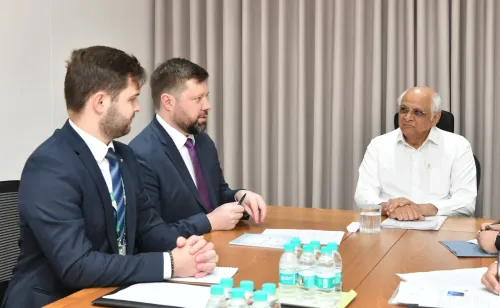
Chief Minister Bhupendra Patel and Astrakhan Governor Igor Babushkin held a virtual meeting on 20 May to deepen bilateral cooperation.
Cooperation agreed across trade, education, shipbuilding, transport, and logistics , building on a protocol signed in 2001 .
Gujarat expressed willingness to collaborate under the International North-South Transport Corridor (INSTC) framework.
MoUs under consideration involve Gujarat's agriculture, energy, and medical universities with Astrakhan counterparts.
Investment in Astrakhan's Special Economic Zone and maritime course exchanges are also on the table.
The existing cooperation protocol expires on 6 November 2026 , making a renewed agreement likely.
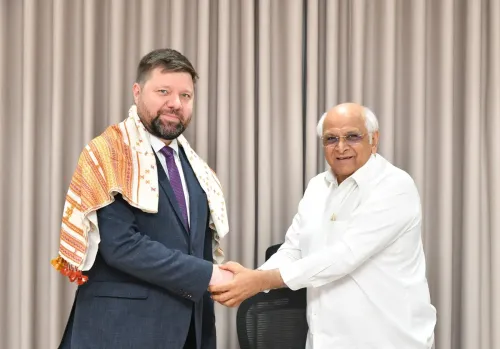
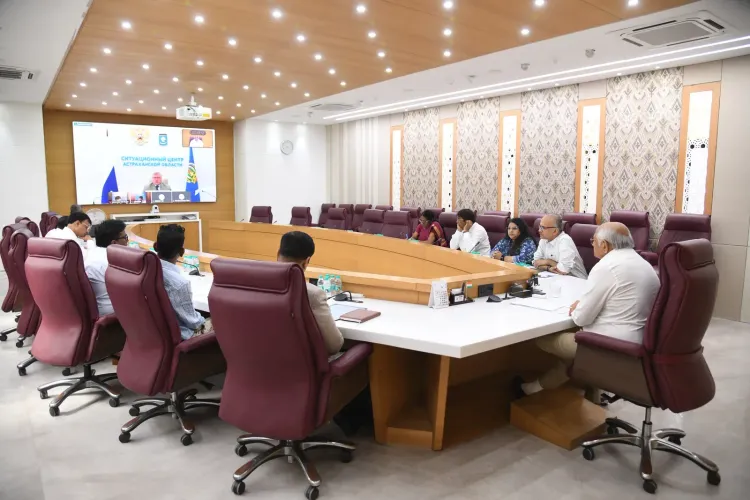
Gujarat and Russia's Astrakhan region have agreed to deepen bilateral cooperation across trade, education, shipbuilding, and transport and logistics, following a virtual meeting on Wednesday, 20 May between Chief Minister Bhupendra Patel and Astrakhan Governor Igor Babushkin. The engagement builds on a protocol cooperation agreement originally signed in 2001, currently valid until 6 November 2026.
Key Areas of Cooperation
According to the state government, both sides agreed to advance collaboration in trade, educational exchanges, and shipbuilding. Chief Minister Patel also flagged Gujarat's readiness to participate in the International North-South Transport Corridor (INSTC) project, highlighting the state's strategic position in transport and logistics networks connecting India to Russia and Central Asia.
Notably, the discussions revisited earlier agreements initiated during Prime Minister Narendra Modi's tenure as Gujarat Chief Minister in 2003, which covered oil and gas, shipbuilding, food industries, fisheries, and pharmaceuticals, as well as education, human resource development, and cultural exchange.
Academic and Institutional Ties
Officials confirmed that the virtual meeting included detailed discussions on strengthening institutional links between universities in Astrakhan and Gujarat. Proposals under consideration include memoranda of understanding involving Gujarat's agriculture, energy, and medical universities, as well as academic collaboration with maritime institutions through the exchange of maritime transport-related courses.
These proposals were reportedly first discussed during a virtual interaction in February with Astrakhan's Minister of Foreign Relations, Vladimir Golovkov.
Investment and Special Economic Zone
The two sides also discussed potential investment in Astrakhan's Special Economic Zone (SEZ), signalling commercial interest beyond the existing framework. This comes amid India's broader push to leverage the INSTC as an alternative trade corridor, particularly as geopolitical shifts have prompted a re-evaluation of east-west supply chains.
Cultural Exchange and Delegations
Cultural ties were also on the agenda, with both regions extending invitations for reciprocal delegations. Senior state government officials were present during the meeting, underscoring the institutional weight attached to the engagement.
With the existing cooperation protocol set to expire in November 2026, both sides are expected to formalise a renewed or expanded agreement in the months ahead.
Point of View
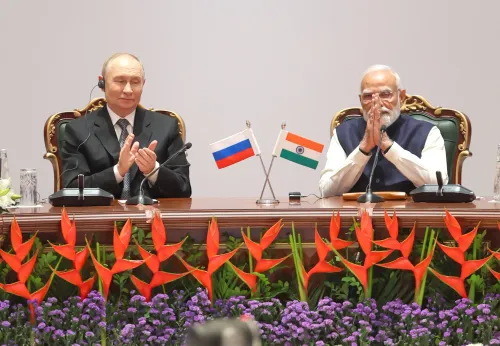
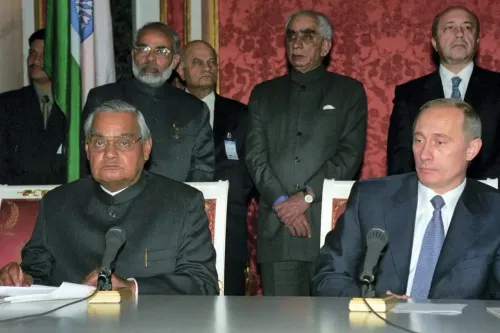
And formalising that role through a state-level agreement creates durable institutional buy-in that survives changes in the bilateral mood at the Centre. The revival of 2003-era agreements also signals continuity of intent, but the real test will be whether the proposed MoUs with universities and the Astrakhan SEZ move beyond letters of intent into funded, staffed programmes — a step that previous rounds of India-Russia subnational cooperation have rarely completed.
NationPress
20 Sept 2026
Frequently Asked Questions
What did Gujarat and Astrakhan agree on in their 20 May meeting?
The two sides agreed to deepen cooperation in trade, education, shipbuilding, transport, and logistics during a virtual meeting between Chief Minister Bhupendra Patel and Astrakhan Governor Igor Babushkin on 20 May. The engagement builds on a protocol cooperation agreement originally signed in 2001.
What is the INSTC and why is Gujarat involved?
The International North-South Transport Corridor (INSTC) is a multimodal trade route linking India to Russia and Europe via Iran and Central Asia. Gujarat, with its major ports, is positioned as a key southern entry point for the corridor, and Chief Minister Patel highlighted the state's interest in participating in transport and logistics under the project.
Which sectors were originally covered under the 2003 agreements?
The 2003 agreements, initiated during Prime Minister Narendra Modi's tenure as Gujarat Chief Minister, covered oil and gas, shipbuilding, food industries, fisheries, pharmaceuticals, education, human resource development, and cultural exchange.
What academic collaborations are being proposed between Gujarat and Astrakhan?
Proposals include MoUs involving Gujarat's agriculture, energy, and medical universities with Astrakhan institutions, as well as collaboration with maritime institutions through the exchange of maritime transport-related courses.
When does the existing Gujarat-Astrakhan cooperation protocol expire?
The current protocol cooperation agreement between Gujarat and Astrakhan is valid until 6 November 2026, making a renewed or expanded agreement likely to be formalised in the coming months.