CM Bhupendra Patel Meets Russian Consul General, Eyes Maritime Ties
Synopsis
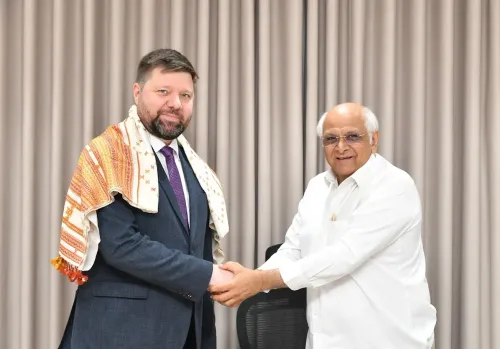
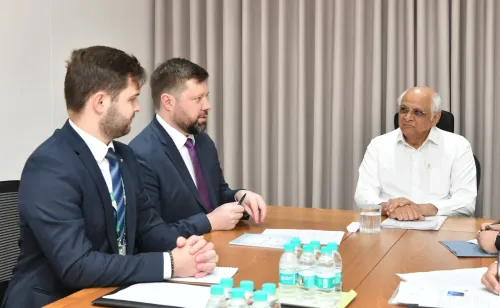
Chief Minister Bhupendra Patel met Russian Consul General Ivan Fetisov in Gandhinagar on 22 May 2026, discussing cooperation in maritime, shipbuilding, and education. Both sides exchanged invitations — to a St. Petersburg business summit and the next Vibrant Gujarat Summit — signalling intent to formalise sub-national economic ties.
Key Takeaways
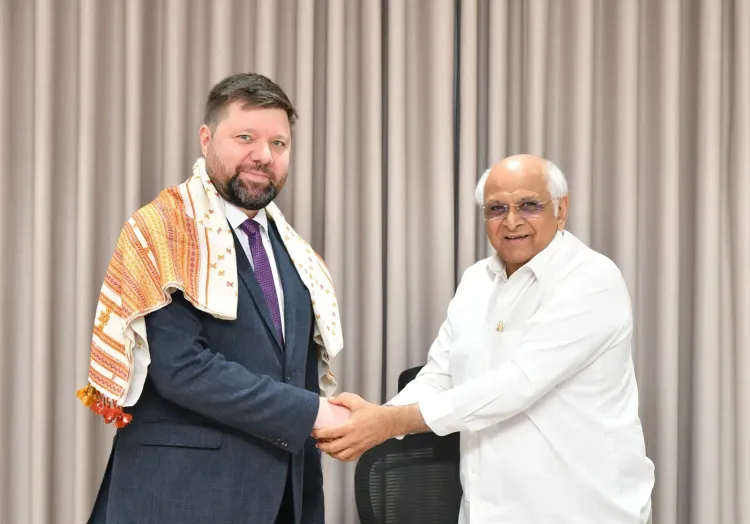
CM Bhupendra Patel held a courtesy meeting with Russian Consul General Ivan Fetisov at Gandhinagar on 22 May 2026 .
Russia expressed readiness to cooperate with Gujarat in maritime, shipbuilding, and education sectors .
CM Patel highlighted Gujarat's leadership in cargo handling, ship recycling, and shipbuilding , citing India's longest coastline.
The Gujarat Maritime University was presented as a centrepiece of the state's push to become a modern education hub.
Consul General Fetisov invited CM Patel to an upcoming business summit in St.
Petersburg , Russia.
CM Patel invited a Russian delegation to participate in the next Vibrant Gujarat Summit .
The Chief Minister's Office of Gujarat announced on 22 May 2026 that Chief Minister Bhupendra Patel received a courtesy call at Gandhinagar from Ivan Fetisov, Consul General of the Russian Federation based in Mumbai, who expressed readiness to deepen cooperation with Gujarat in the maritime, shipbuilding, and education sectors.
Context
The meeting centred on Gujarat's established strengths in port-led development. CM Patel briefed the visiting diplomat on the state's leadership in cargo handling, ship recycling, and shipbuilding, describing how Gujarat — which holds India's longest coastline — has built a new tradition of port-led development under the guidance of Prime Minister Narendra Modi.
The Chief Minister also highlighted Gujarat's growing stature as a modern education hub, pointing specifically to sector-specific institutions including the Gujarat Maritime University, which provides specialised training and research in maritime affairs.
Policy Backdrop
Gujarat's maritime ambitions rest on decades of deliberate policy investment. The Alang shipbreaking yard in Gujarat has grown into one of the world's largest ship-recycling centres, a position consolidated through sustained state support over multiple decades. The Sagarmala project, launched by the central government in 2015, further reinforced port-led development strategies across coastal states, with Gujarat among the primary beneficiaries.
The Vibrant Gujarat Summit, a biennial global investment conclave first organised in 2003 under then Chief Minister Narendra Modi, has been the state's principal vehicle for attracting international partners. It now serves as a platform through which sub-national economic diplomacy — such as this engagement with Russia — is formalised into longer-term partnerships.
Stakeholders and Impact
The maritime industry, shipbuilding firms, and higher education institutions in Gujarat stand to gain directly if the expressed intent translates into formal agreements. Russian expertise in shipbuilding and maritime technology could complement Gujarat's existing infrastructure base, while educational linkages could open pathways for student and faculty exchange at the Gujarat Maritime University and allied institutions.
For Russia, sub-national engagement with a commercially active Indian state like Gujarat offers a channel to expand bilateral economic ties beyond the traditional pillars of defence and energy, into civilian maritime logistics and skill development — areas of growing mutual interest.
What's Next
Consul General Fetisov extended a formal invitation to CM Patel to attend an upcoming business summit in St. Petersburg, Russia. In turn, CM Patel invited a Russian delegation to participate in the next edition of the Vibrant Gujarat Summit.
The reciprocal invitations signal that both sides intend to move the conversation from courtesy diplomacy toward structured economic engagement. Potential memoranda of understanding in shipbuilding, port logistics, or maritime education could follow as the two summits approach, making the outcome of these invitations a key indicator of the relationship's trajectory.
Point of View
Where state governments independently cultivate foreign partnerships to complement national-level ties. Gujarat's pitch — anchored in its coastline, Alang's ship-recycling legacy, and the Maritime University — reflects a mature, asset-backed negotiating position rather than aspirational outreach. The reciprocal summit invitations suggest both sides are keen to institutionalise the relationship, and any Russian presence at the next Vibrant Gujarat Summit would mark a visible expansion of the Russia-India engagement beyond its traditional defence-and-energy axis. For CM Patel, landing a Russian delegation at Vibrant Gujarat would reinforce the summit's global credibility ahead of its next edition.
NationPress
7 Oct 2026
Frequently Asked Questions
Why did the Russian Consul General visit CM Bhupendra Patel in Gandhinagar?
Russian Consul General Ivan Fetisov paid a courtesy call on CM Bhupendra Patel to express Russia's interest in cooperating with Gujarat in the maritime, shipbuilding, and education sectors.
What is Gujarat's role in India's maritime and shipbuilding sector?
Gujarat holds India's longest coastline and is a national leader in cargo handling, ship recycling — anchored by the Alang shipbreaking yard — and shipbuilding, supported by port-led development policies.
What is the Gujarat Maritime University?
Gujarat Maritime University is a state institution that provides specialised education, research, and training in maritime affairs, and was highlighted by CM Patel as a pillar of Gujarat's ambition to become a modern education hub.
What is the Vibrant Gujarat Summit and when is the next one?
The Vibrant Gujarat Summit is a biennial global investment conclave started in 2003 to attract international business partnerships to Gujarat; CM Patel has invited a Russian delegation to participate in its next edition.
Was any agreement signed between Gujarat and Russia during this meeting?
No formal agreement was announced; the meeting resulted in reciprocal invitations — CM Patel to a St. Petersburg business summit and a Russian delegation to the next Vibrant Gujarat Summit — indicating intent to deepen ties.