CM Bhupendra Patel meets Russian Consul General, eyes maritime and education ties
Synopsis
Gujarat Chief Minister Bhupendra Patel met Russian Consul General Ivan Fetisov in Gandhinagar on 22 May 2026, discussing cooperation in maritime, shipbuilding, and education, and pitching the Vibrant Gujarat Global Summit as a platform for deeper Russia-Gujarat business engagement.
Key Takeaways
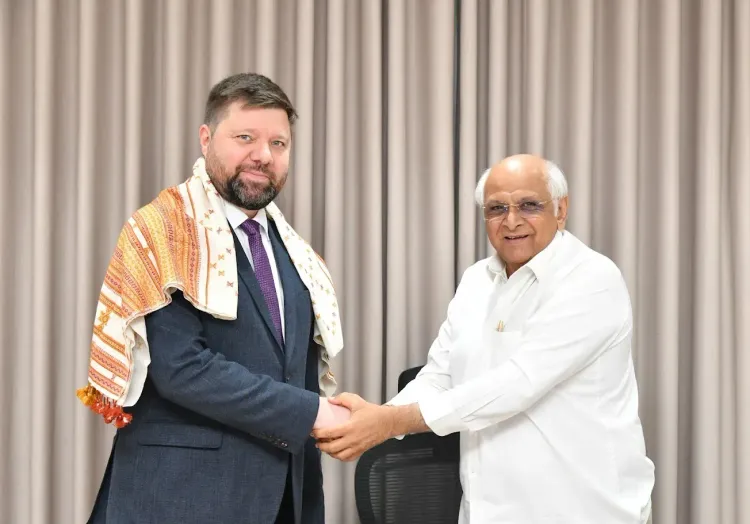
CM Bhupendra Patel met Russian Consul General Ivan Fetisov in Gandhinagar on 22 May 2026 .
Discussions covered cooperation in maritime, shipbuilding, and education sectors.
Gujarat 's strengths in port-led development, cargo handling, ship recycling, and shipbuilding were presented during the meeting.
The Vibrant Gujarat Global Summit , launched in 2003 , was proposed as a key platform for expanding Russia-Gujarat business ties.
The outreach aligns with the central government's Sagarmala project and India's broader multi-alignment foreign-policy approach.
Potential follow-up steps include joint working groups or trade delegations ahead of the next Vibrant Gujarat summit.
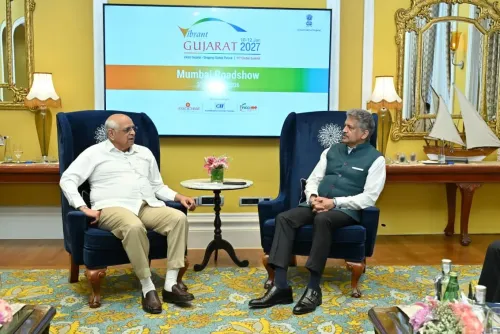
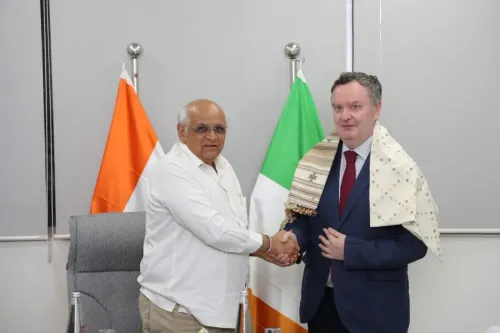
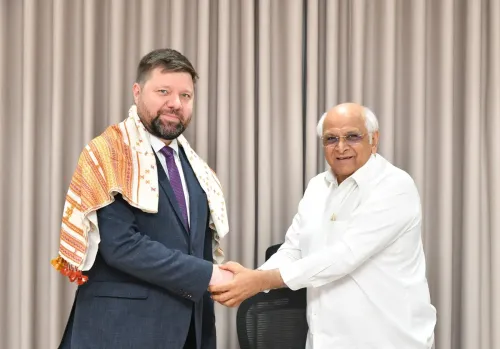
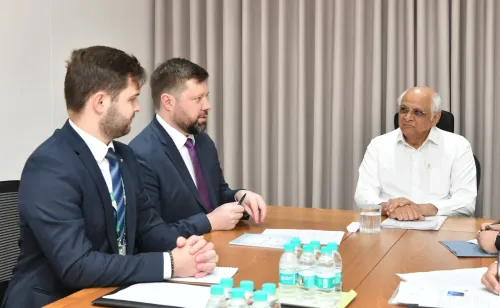
Gujarat Chief Minister Bhupendra Patel met Ivan Fetisov, Consul General of the Russian Federation in Mumbai, in Gandhinagar on Friday, 22 May 2026, to explore avenues for deepening bilateral cooperation between Gujarat and Russia across maritime, shipbuilding, and education sectors.
Context
During the meeting, CM Patel highlighted Gujarat's growing stature as a hub for port-led development, cargo handling, ship recycling, and shipbuilding. He attributed this progress to what he described as the 'visionary leadership' of Prime Minister Narendra Modi, who served as Gujarat's Chief Minister from 2001 to 2014 before taking national office.
The two sides also discussed expanding industrial partnerships and strengthening business engagement through the Vibrant Gujarat Global Summit and other collaborative platforms. The biennial investment promotion event, launched in 2003, has long served as Gujarat's primary vehicle for attracting global capital and forging international commercial relationships.
Policy Backdrop
The meeting sits within a broader national framework of port-led growth. The central government's Sagarmala project, launched in 2015, identified coastal states — Gujarat prominent among them — as anchors for modernising India's maritime infrastructure. Gujarat hosts several of India's busiest ports and is home to the Alang ship-recycling yard, one of the largest such facilities in the world.
India and Russia share a strategic partnership formalised in 2000, with institutionalised annual summits spanning trade, defence, energy, and technology. Indian states have increasingly engaged in sub-national economic diplomacy in recent years, hosting foreign consular officials and positioning themselves directly to overseas investors — a trend that complements New Delhi's broader foreign-policy posture.
Stakeholders and Impact
The sectors flagged in the discussion — maritime logistics, shipbuilding, and education — are considered less exposed to Western sanctions on Russia, making them viable channels for practical cooperation under India's multi-alignment approach. Shipbuilding firms, port operators, and educational institutions on both sides stand to benefit if the dialogue translates into concrete agreements.
Russian investors and companies seeking a foothold in South Asia's manufacturing corridor could find Gujarat's policy environment and infrastructure attractive, particularly given the state's existing industrial clusters and its record of facilitating foreign direct investment through the Vibrant Gujarat platform.
What's Next
Observers will watch for follow-up mechanisms such as joint working groups or trade delegations that could signal movement beyond diplomatic courtesy. The next edition of the Vibrant Gujarat Global Summit is likely to serve as the most visible test of whether Thursday's discussions produce tangible investment announcements or memoranda of understanding involving Russian entities in the maritime or education space.
The meeting signals Gujarat's intent to diversify its international economic partnerships while anchoring outreach within established India-Russia diplomatic channels — a pattern consistent with the state government's long-standing emphasis on global investor engagement.
Point of View
Positioning the state as a direct interlocutor with foreign missions rather than leaving all economic outreach to New Delhi. By channelling the conversation through the Vibrant Gujarat brand, CM Patel is reinforcing a political legacy closely associated with PM Modi's tenure as Chief Minister — a messaging choice as much as a policy one. The focus on sectors less affected by Western sanctions on Russia suggests a pragmatic calibration, keeping the engagement commercially viable within India's multi-alignment framework. If the dialogue produces concrete outcomes at the next summit, it could strengthen Gujarat's case as a model for state-level economic diplomacy.
NationPress
7 Oct 2026
Frequently Asked Questions
Why did Gujarat CM Bhupendra Patel meet the Russian Consul General?
CM Bhupendra Patel met Russian Consul General Ivan Fetisov in Gandhinagar on 22 May 2026 to explore opportunities for cooperation in maritime, shipbuilding, and education sectors, and to discuss enhancing business engagement through the Vibrant Gujarat Global Summit .
What is the Vibrant Gujarat Global Summit?
The Vibrant Gujarat Global Summit is a biennial investment promotion event launched in 2003 that serves as Gujarat 's primary platform for attracting global business partnerships and foreign investment.
What sectors were discussed in the Gujarat-Russia meeting?
The discussions focused on maritime logistics, shipbuilding, ship recycling, port-led development, and education , sectors considered viable for cooperation within India's current foreign-policy framework.
What is the Sagarmala project and how does it relate to Gujarat?
The Sagarmala project , launched by the central government in 2015 , aims to drive port-led development across India's coastal states, with Gujarat — home to major ports and the Alang ship-recycling yard — being one of its key beneficiaries.
What could be the next steps after the Gujarat-Russia diplomatic meeting?
Potential follow-up steps include the formation of joint working groups or trade delegations, with the next edition of the Vibrant Gujarat Global Summit seen as the most likely venue for concrete investment announcements or agreements involving Russian entities.