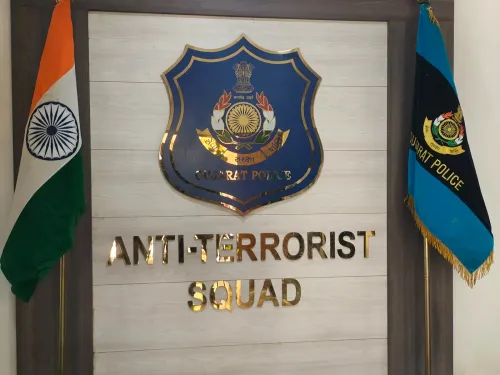
Gujarat ATS takes JeM module accused to Banaskantha village to reconstruct events
Synopsis
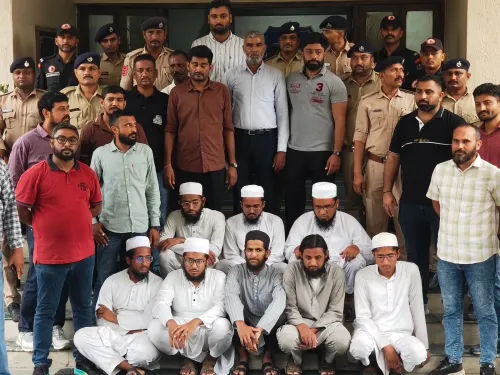
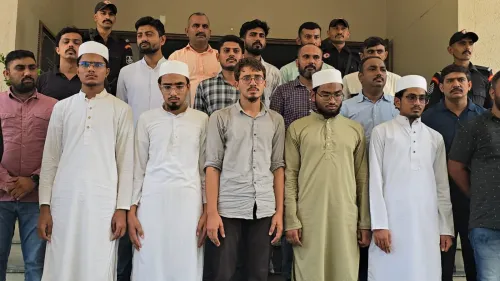
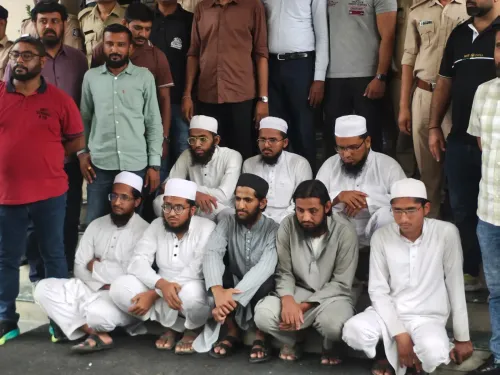
The Gujarat ATS took three accused in the alleged JeM module case — all related by family — to Bhagal village in Banaskantha for a scene reconstruction under police remand. The broader case involves eight arrests across Gujarat and Madhya Pradesh, allegations of Pakistani handler contact, ₹3 lakh in dead-drop funding, and translated extremist literature — with no specific attack target identified so far.
Key Takeaways
The Gujarat ATS conducted a scene reconstruction at Bhagal village, Palanpur, Banaskantha on 6 July with three of the eight accused in the alleged JeM module case .
The three accused — Ibrahim Mohammad Hussain Ghagha , Mudassir Abdullah Ghazivala , and Ahmed Abdullah Ghazivala — are closely related; Ahmed and Mudassir are brothers, Ibrahim their maternal uncle.
All eight accused face charges under the UAPA, 1967 and Bharatiya Nyaya Sanhita, 2023 ; a court granted 14 days' police custody .
Investigators allege the group received approximately ₹3 lakh via a dead-drop method and translated JeM literature into Gujarati .
ATS DIG Sunil Joshi confirmed no specific attack target had been identified at the time of the press conference.
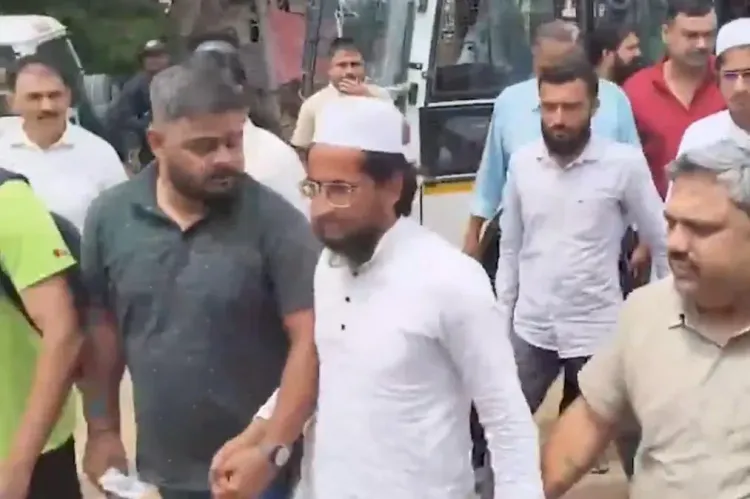
The Gujarat Anti-Terrorism Squad (ATS) on Monday, 6 July took three of the eight accused in the alleged Jaish-e-Mohammed (JeM) module case to Bhagal village in Palanpur, Banaskantha district, as part of a court-sanctioned police remand investigation. The visit was aimed at reconstructing the sequence of alleged events, verifying gathered evidence, and corroborating statements made by the accused after their arrest.
Who Was Taken and Why
The three accused brought to Bhagal village were identified as Ibrahim Mohammad Hussain Ghagha, Mudassir Abdullah Ghazivala, and Ahmed Abdullah Ghazivala. According to investigators, the three are closely related — Ahmed and Mudassir are brothers, and Ibrahim is their maternal uncle. The ATS has alleged that Ahmed and Ibrahim played leading roles in the local module.
Background: The JeM Module Arrests
The scene reconstruction follows the ATS's arrest of eight accused from Gujarat and Madhya Pradesh in the preceding days. Investigators allege the group was associated with the banned Pakistan-based terrorist organisation Jaish-e-Mohammed and had formed a local network named 'Dar-ul-Islam Gujarat Jaish-e-Mohammed'. All eight have been booked under Sections 13, 17, 18, 38 and 39 of the Unlawful Activities (Prevention) Act, 1967, as well as Sections 61 and 148 of the Bharatiya Nyaya Sanhita, 2023. A court subsequently granted 14 days' police custody.
What Investigators Have Alleged
At a press conference following the arrests, ATS DIG Sunil Joshi stated: 'The group had been attempting to establish a trusted network in Gujarat that could provide logistical support to Jaish-e-Mohammed if required in the future. The investigation had not revealed any specific attack target.'
Investigators have further alleged that the accused were in contact with Pakistani handlers identified as Abdullah and Mohammad Umar, had translated JeM literature into Gujarati to propagate the organisation's ideology, and had received approximately ₹3 lakh through a dead-drop method — part of which was allegedly used to purchase a second-hand vehicle. The ATS also claims that Ahmed and Ibrahim met an unidentified intermediary from Kashmir in Vadodara on instructions from a Pakistani handler.
Evidence Recovered
During raids, investigators say they recovered mobile phones, handwritten letters, books, digital files, translated literature, and other materials. Analysis of this evidence is reportedly ongoing. The reconstruction exercise at Bhagal village is intended to verify the accused's alleged movements, establish a chronology of the alleged conspiracy, and cross-check physical evidence against statements recorded during interrogation.
What Comes Next
With 14 days' police remand in effect, the ATS is expected to conduct further site visits and forensic analysis before filing its charge sheet. The case is being closely watched given its alleged cross-border dimensions and the claim of a structured local support network for a banned organisation. Further investigation remains underway.
Point of View
Not just relying on confessions — a necessary step given UAPA trials' historically low conviction rates when evidence is thin. The alleged dead-drop funding and Gujarati translation of JeM literature, if proven, would suggest a deliberate radicalisation infrastructure rather than a spontaneous grouping. Notably, the ATS itself has said no attack target was identified, which raises the question of whether this was an aspirational network or an operational one — a distinction courts will scrutinise closely. The cross-state arrests spanning Gujarat and Madhya Pradesh also hint at a wider support web that may not yet be fully mapped.
NationPress
5 Oct 2026
Frequently Asked Questions
What is the Gujarat ATS JeM module case?
It is a case in which the Gujarat Anti-Terrorism Squad arrested eight individuals from Gujarat and Madhya Pradesh, alleging they formed a local support network called 'Dar-ul-Islam Gujarat Jaish-e-Mohammed' linked to the banned Pakistan-based organisation Jaish-e-Mohammed. All eight have been charged under the UAPA, 1967 and Bharatiya Nyaya Sanhita, 2023.
Why did the ATS take the accused to Bhagal village in Banaskantha?
The ATS conducted a scene reconstruction at Bhagal village in Palanpur, Banaskantha on 6 July to verify the accused's alleged movements, corroborate evidence collected during raids, and establish a chronology of the alleged conspiracy. The visit was part of the ongoing investigation during court-granted police remand.
Who are the three accused taken to Bhagal village?
The three accused are Ibrahim Mohammad Hussain Ghagha, Mudassir Abdullah Ghazivala, and Ahmed Abdullah Ghazivala. They are closely related — Ahmed and Mudassir are brothers, and Ibrahim is their maternal uncle. Investigators allege Ahmed and Ibrahim played leading roles in the module.
What evidence has the ATS reportedly recovered in the JeM module case?
The ATS says it recovered mobile phones, handwritten letters, books, digital files, and literature translated into Gujarati during raids. Investigators also allege the accused received approximately ₹3 lakh through a dead-drop method, part of which was allegedly used to buy a second-hand vehicle.
Has any specific attack target been identified in the JeM module case?
No. ATS DIG Sunil Joshi stated at a press conference following the arrests that the investigation had not revealed any specific attack target. The alleged module was described as an attempt to build a logistical support network for Jaish-e-Mohammed for potential future use.