Gujarat JeM terror module: All 13 accused sent to Sabarmati Central Jail
Synopsis
All 13 men arrested in the Gujarat ATS crackdown on an alleged Jaish-e-Mohammed network are now consolidated at Sabarmati Central Jail — a significant procedural milestone as the case moves from police remand to judicial custody under the stringent UAPA framework. Investigators allege IED procurement and trial explosions, though these claims are yet to face judicial scrutiny.
Key Takeaways
All 13 accused in the alleged Jaish-e-Mohammed terror module case are now lodged at Sabarmati Central Jail , Ahmedabad .
The Kadi court ordered judicial custody for the latest batch of 10 accused after their police remand expired on 25 July .
The case began on 3 July with the arrest of 8 suspects by the Gujarat ATS ; 5 more were arrested subsequently from north Gujarat .
Accused are booked under the UAPA and the Bharatiya Nyaya Sanhita .
Investigators allege IED material procurement and trial explosions — allegations yet to be tested in court.
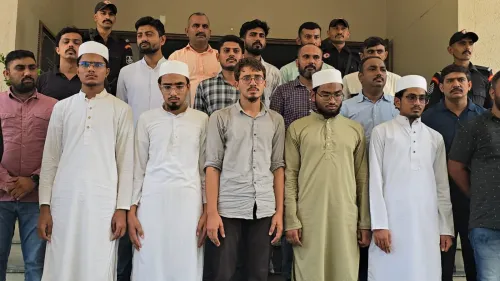
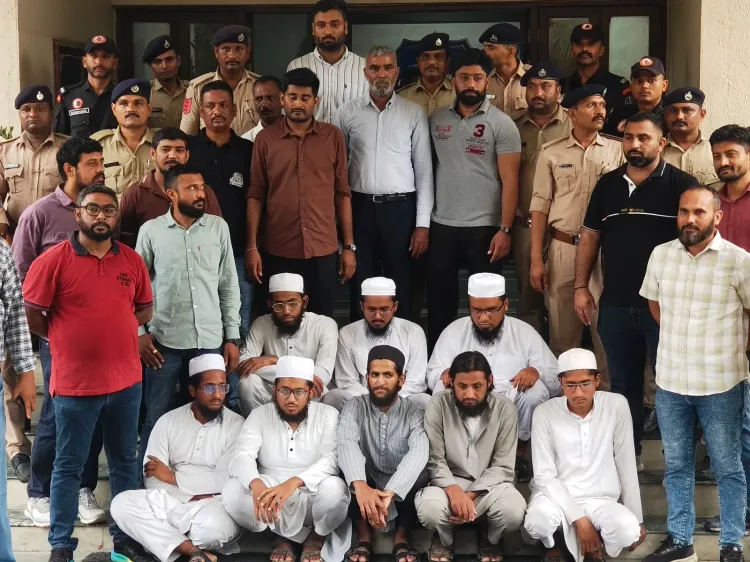
All 13 accused in the Gujarat Anti-Terrorist Squad (ATS) investigation into an alleged Jaish-e-Mohammed (JeM) terror module are now lodged at Sabarmati Central Jail in Ahmedabad, after a court on 25 July directed the latest batch to judicial custody following the expiry of their police remand.
Court Orders Judicial Custody for All 13
Ten accused were produced before the Kadi court on Friday under tight security after their police remand period ended. The court directed all ten to be transferred to Sabarmati Central Jail. The remaining three from the original group, who had earlier been held at a sub-jail, have also been shifted to the same facility — consolidating all 13 accused at the Ahmedabad prison pending further legal proceedings.
How the Case Unfolded
The case originated on 3 July, when the Gujarat ATS arrested eight suspects, alleging they were associated with the Pakistan-based banned organisation Jaish-e-Mohammed and were attempting to establish an active network within Gujarat. The accused were booked under the Unlawful Activities (Prevention) Act (UAPA) and the Bharatiya Nyaya Sanhita.
As interrogation of the first group progressed, fresh leads reportedly prompted the ATS to arrest five additional suspects from north Gujarat, bringing the total number of arrests to 13.
What Investigators Have Alleged
At earlier press briefings, ATS Deputy Inspector General (DIG) Sunil Joshi alleged that the group was involved in spreading the ideology of the banned outfit, recruiting members, and constructing a support network. Investigators further alleged that the accused had procured materials reportedly intended for fabricating improvised explosive devices and had conducted trial explosions at multiple locations as part of the alleged conspiracy.
Notably, all these allegations remain part of the ongoing ATS investigation and are yet to be tested in a court of law.
What Happens Next
With police remand concluded for all accused, the investigation will continue while all 13 remain in judicial custody at Sabarmati Central Jail. The case is expected to proceed under the stringent provisions of the UAPA, which sets a high bar for bail and allows for extended detention during investigation. Legal proceedings are likely to be protracted given the complexity of the alleged module and the number of accused involved.
Point of View
Yet the ATS's core allegations — IED procurement, trial explosions, active recruitment — carry significant evidentiary burden that investigators must now substantiate before a court. Gujarat has seen prior ATS operations against alleged Pakistan-linked networks, and the pattern of arrests expanding during interrogation warrants scrutiny: each new arrest must be grounded in independently verifiable evidence, not merely on the say-so of co-accused. The judiciary's role in testing these allegations will be the real measure of this case.
NationPress
23 Oct 2026
Frequently Asked Questions
Who are the 13 accused in the Gujarat JeM terror module case?
The 13 accused are individuals arrested by the Gujarat ATS between 3 July and mid-July 2025, allegedly for attempting to establish a Jaish-e-Mohammed network in Gujarat. Eight were arrested in the initial sweep and five more were picked up from north Gujarat as the investigation expanded.
Where are the accused currently being held?
All 13 accused are currently lodged at Sabarmati Central Jail in Ahmedabad, following court orders directing judicial custody after the expiry of their police remand.
What charges have been filed against the accused?
The accused have been booked under the Unlawful Activities (Prevention) Act (UAPA) and the Bharatiya Nyaya Sanhita. These allegations — including IED procurement and trial explosions — are part of the ongoing investigation and are yet to be tested in court.
What did the Gujarat ATS allege against the group?
ATS DIG Sunil Joshi alleged at press briefings that the group was involved in spreading JeM ideology, recruiting members, building a support network, procuring materials for improvised explosive devices, and conducting trial explosions at multiple locations.
What happens next in the case?
With police remand concluded, all 13 accused will remain in judicial custody at Sabarmati Central Jail while the ATS investigation continues. The case is expected to proceed under UAPA provisions, which impose a high bar for bail and allow extended investigation periods.