Gujarat CM Bhupendra Patel reviews border security under Quadrilateral Grid
Synopsis
Gujarat has operationalised a four-pillar 'Quadrilateral Security Grid' — originally floated by Home Minister Amit Shah in Bhuj — and CM Bhupendra Patel's 30 September review signals a push to make it the state's permanent border management architecture, covering everything from infiltration to drug trafficking under a single surveillance chain.
Key Takeaways
CM Bhupendra Patel and Deputy CM Harsh Sanghavi reviewed the Gujarat Quadrilateral Security Grid in Gandhinagar on 30 September 2026 .
The Grid rests on four pillars: border guarding forces, Central agencies, state and district administrations, and citizens.
The framework operates on the 'One Border-One Picture-One Chain of Action' principle, introduced by Union Home Minister Amit Shah at a meeting in Bhuj .
Six key areas were reviewed: infiltration, narcotics, population balance, economic offences, illegal encroachments, and inter-agency coordination.
Patel called for a 360-degree surveillance approach ; Sanghavi directed officials to ensure action against encroachments continues without interruption.
Senior officials including Chief Secretary M.K.
Das , the DGP, ADGPs, Range IGs, and border-district Collectors and SPs attended the meeting.
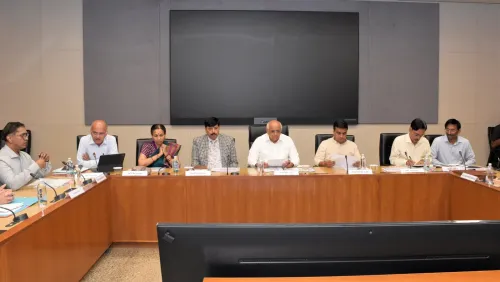
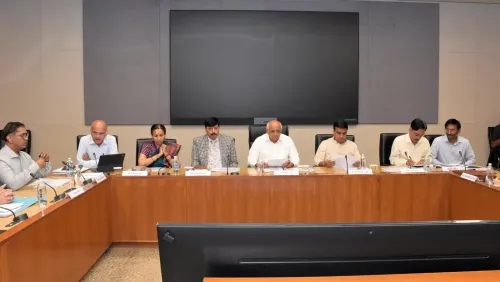
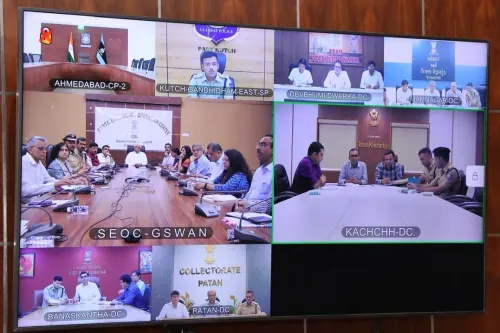
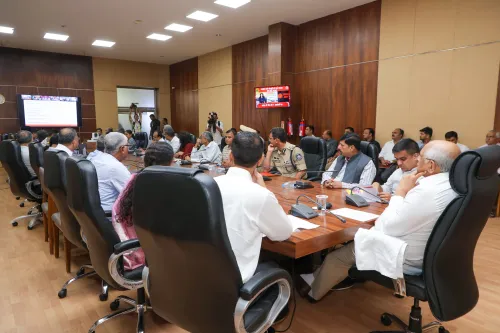
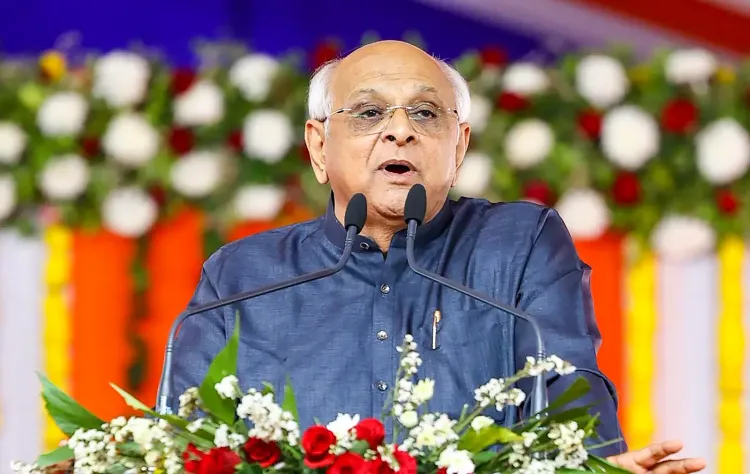
Gujarat Chief Minister Bhupendra Patel and Deputy Chief Minister Harsh Sanghavi on Wednesday, 30 September 2026, chaired a high-level review of the state's border security framework in Gandhinagar, focusing on the Gujarat Quadrilateral Security Grid. The meeting examined strengthening surveillance and coordinated action against infiltration, narcotics trafficking, economic offences, and illegal encroachments along the state's borders.
The Quadrilateral Grid and Its Four Pillars
The Gujarat Quadrilateral Security Grid is structured around four pillars: border guarding forces, Central agencies, state and district administrations, and citizens. The framework operates on the principle of 'One Border-One Picture-One Chain of Action', designed to ensure continuous surveillance and a unified response to security threats across border districts.
The concept was introduced by Union Home Minister Amit Shah at a recent meeting held in the border district of Bhuj, signalling a coordinated push from both the Centre and the Gujarat government to tighten border management.
Six Key Areas Under the Security Lens
Wednesday's meeting zeroed in on six areas of concern: infiltration, narcotics, population balance, economic offences, illegal encroachments, and mechanisms for agency-level coordination. Officials discussed how to maintain continuous surveillance and ensure timely intervention across multiple departments.
Chief Minister Patel acknowledged the existing coordination between Central agencies and the state police and called for a 360-degree surveillance approach across all departments. He said those involved in illegal activities, drug trafficking, or encroachments in border areas should receive a clear message that 'there is no place for such activities or acts anywhere in Gujarat', and that such conduct would not be tolerated.
Sanghavi Calls for Dedicated Border Personnel
Deputy Chief Minister Sanghavi commended the departments involved and underscored that border security responsibilities are fundamentally different from routine administrative duties. He called for dedicated and result-oriented personnel to be deployed at the borders, stressing the need for timely and effective action.
Sanghavi also directed officials to ensure that action against encroachments proceeded without interruption, and urged Central and state agencies to adopt a fully integrated, mutually coordinated approach.
Senior Officials and District-Level Officers in Attendance
The meeting was attended by a wide range of senior officials, including Chief Secretary M.K. Das, additional chief secretaries of the departments concerned, Principal Secretary to the Chief Minister Sanjeev Kumar, and principal secretaries of various departments. Senior state police officers — including the DGP, ADGPs, and Range IG-level officers — were also present, as were Collectors and Superintendents of Police from the border districts.
The review underscores a sustained effort to institutionalise the Quadrilateral Grid before it is rolled out as a replicable model for border security management across Gujarat's frontier districts.
Point of View
But its real test lies in execution at the district level, where coordination between Central agencies and state police has historically been uneven. The 'One Border-One Picture' principle sounds compelling in a conference room in Gandhinagar, yet Gujarat's border districts — stretching across the Rann of Kutch and the Pakistan frontier — present terrain and jurisdictional complexities that no grid design alone can resolve. The emphasis on 'population balance' as a security metric also deserves scrutiny: the term has a charged political valence and, without precise operational definition, risks blurring the line between security policy and demographic targeting. Whether this framework delivers measurable outcomes or remains a well-branded review exercise will depend on what accountability mechanisms, if any, are attached to the Grid's performance.
NationPress
30 Sept 2026
Frequently Asked Questions
What is the Gujarat Quadrilateral Security Grid?
The Gujarat Quadrilateral Security Grid is a border security framework built on four pillars — border guarding forces, Central agencies, state and district administrations, and citizens. It was conceptualised by Union Home Minister Amit Shah at a meeting in Bhuj and is designed to ensure continuous surveillance and coordinated action across border districts.
What was reviewed at the 30 September meeting in Gandhinagar?
Chief Minister Bhupendra Patel and Deputy Chief Minister Harsh Sanghavi reviewed six key areas: infiltration, narcotics, population balance, economic offences, illegal encroachments, and inter-agency coordination mechanisms. The meeting also assessed progress on integrating the 'One Border-One Picture-One Chain of Action' principle across border districts.
Who attended the Gujarat border security meeting?
The meeting was attended by Chief Secretary M.K. Das, additional chief secretaries of the departments concerned, Principal Secretary to the CM Sanjeev Kumar, the DGP, ADGPs, Range IG-level officers, and Collectors and Superintendents of Police from the border districts, along with senior officials of Central agencies.
What did Deputy CM Harsh Sanghavi direct officials to do?
Sanghavi called for dedicated, result-oriented personnel to be deployed on border security duties, directed officials to ensure anti-encroachment action continues without interruption, and urged Central and state agencies to adopt a fully integrated and coordinated approach.
What is the 'One Border-One Picture-One Chain of Action' principle?
It is the operational doctrine underpinning the Gujarat Quadrilateral Security Grid, designed to integrate surveillance and response mechanisms across multiple agencies in border districts so that all relevant authorities share a single real-time picture and act through a unified chain of command.