Chhattisgarh CMO Highlights Aangan Milan Seva Drive
Synopsis
The Chhattisgarh CMO has spotlighted Aangan Milan Seva, a community-level nutrition and child development drive held at Anganwadi centres under the Seva Sankalp Abhiyan, using Poshan Thali, mehndi competitions and toy banks to promote healthy childhoods across the state.
Key Takeaways
Aangan Milan Seva is a community nutrition awareness initiative run at Anganwadi centres across Chhattisgarh .
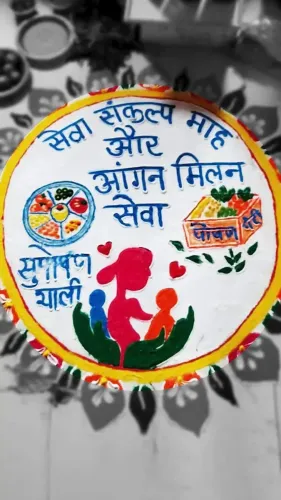
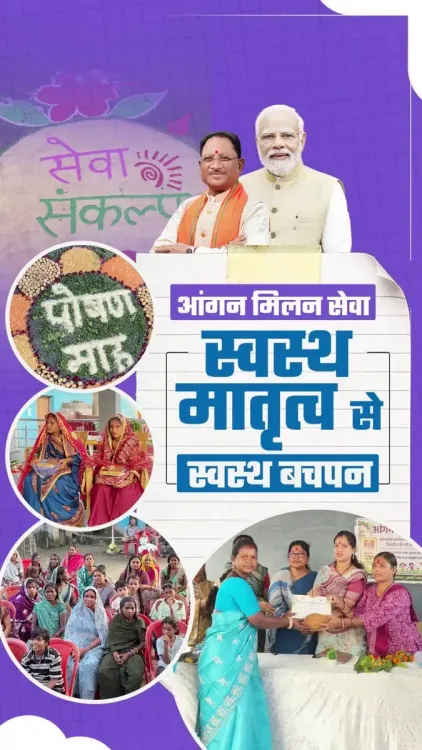
Activities include a Poshan Matka , Poshan Thali , mehndi competitions, and a toy bank targeting children, mothers, and the wider community.
The drive operates under Seva Sankalp Abhiyan , the Chhattisgarh government's broader public service and welfare outreach campaign.
It aligns with the national POSHAN Abhiyan launched in 2018 to reduce stunting, undernutrition, and anaemia under the ICDS framework.
The programme aims to shift nutrition behaviour at the household level by embedding health messaging in familiar cultural activities.
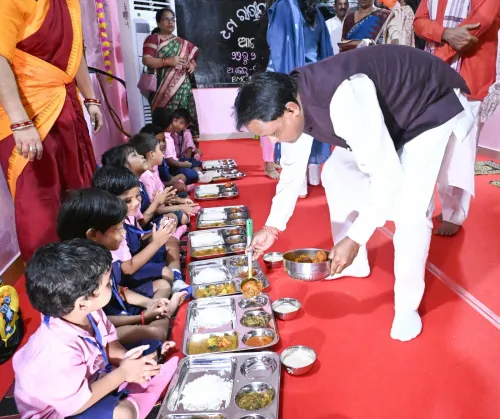
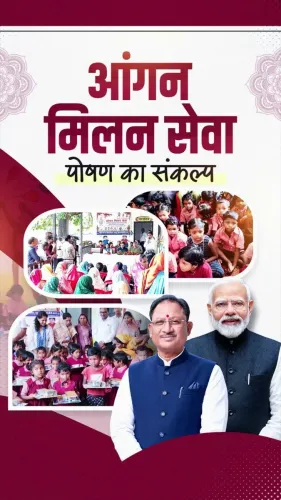
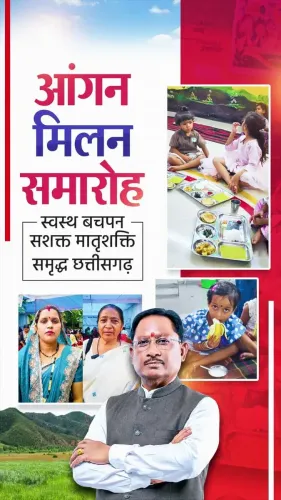
At Anganwadi centres across Chhattisgarh, mothers are decorating their hands with mehndi, children are reaching into toy banks, and nutrition-themed plates are being laid out for communities to examine — all in the name of building a healthier generation. The Chief Minister's Office of Chhattisgarh spotlighted the Aangan Milan Seva initiative on 30 September 2026, showcasing a cluster of ground-level activities designed to weave nutrition awareness into everyday community life.
What Aangan Milan Seva is doing on the ground
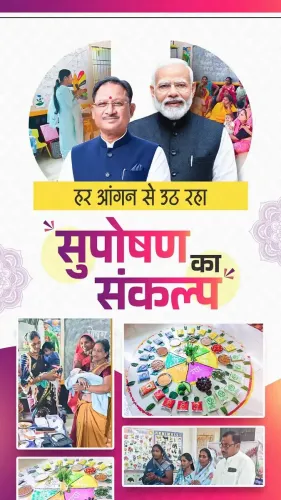
The initiative brings together a set of deliberately accessible activities — a Poshan Matka (nutrition pot), a Poshan Thali (nutrition plate), mehndi competitions, and a toy bank — to reach children, mothers, and the wider community simultaneously. The CMO's post frames these as tools for spreading awareness around nutrition and healthy lifestyles, calling it 'har bachche ke swasth evam surakshit bhavishy ki or ek sarthak kadam' — 'a meaningful step towards every child's healthy and secure future.'
The drive runs under the broader Seva Sankalp Abhiyan, a Chhattisgarh government campaign focused on public service delivery and welfare outreach across the state. By anchoring nutrition messaging inside familiar cultural formats — mehndi, communal meals, play — the programme attempts to shift behaviour at the household level rather than simply broadcasting information.
Roots in the national POSHAN Abhiyan framework
Aangan Milan Seva sits within a well-established policy architecture. The national POSHAN Abhiyan, launched in 2018, set targets to reduce stunting, undernutrition, and anaemia among children and women, tasking state governments with delivering results through the Integrated Child Development Services (ICDS) network — the same Anganwadi infrastructure that Chhattisgarh is now activating for this drive.
Indian states have repeatedly found that periodic community events at Anganwadi centres — combining awareness with direct nutrition supplementation — are among the more effective levers for encouraging behavioural change at the household level. Chhattisgarh's approach of pairing cultural activities with health messaging follows that playbook, attempting to make the Anganwadi centre a destination rather than an obligation.
Children and mothers at the centre of the message
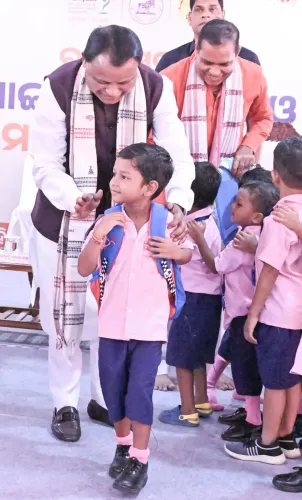
The primary beneficiaries are the state's youngest children and their mothers — the demographic most vulnerable to nutritional deficits and the most responsive to early intervention. By involving rural communities in activities like the toy bank and mehndi competition, the programme also targets fathers, grandparents, and neighbours, widening the circle of accountability for child health beyond the mother alone.
The next real test will come when POSHAN tracker data or state nutrition surveys measure whether community drives like this translate into movement on Chhattisgarh's child health indicators. Until then, the Anganwadi courtyard is where the work is happening — one nutrition plate at a time.
Point of View
Recognising that behavioural change — not just food supply — determines outcomes. By wrapping health messaging inside cultural events, the state is attempting to reduce the social distance between Anganwadi workers and the communities they serve. The Seva Sankalp Abhiyan framing also signals the ruling dispensation's intent to build a visible welfare-delivery narrative ahead of future electoral cycles. The real measure of success, however, will be in the next round of POSHAN tracker data — where optics must translate into declining malnutrition numbers.
NationPress
30 Sept 2026
Frequently Asked Questions
What is Aangan Milan Seva in Chhattisgarh?
Aangan Milan Seva is a community engagement initiative run at Anganwadi centres in Chhattisgarh, focusing on nutrition awareness and child development through activities like Poshan Thali, Poshan Matka, mehndi competitions, and toy banks.
What is Seva Sankalp Abhiyan?
Seva Sankalp Abhiyan is a Chhattisgarh government campaign aimed at improving public service delivery and welfare outreach across the state, under which Aangan Milan Seva is being conducted.
How does Aangan Milan Seva relate to POSHAN Abhiyan?
Aangan Milan Seva aligns with the national POSHAN Abhiyan launched in 2018, which tasks state governments with reducing child stunting, undernutrition, and anaemia through the Integrated Child Development Services network, including Anganwadi centres.
Who benefits from Aangan Milan Seva?
The primary beneficiaries are young children and their mothers, along with the broader rural community, who are engaged through cultural and interactive activities to promote healthier nutrition habits at the household level.
What is a Poshan Thali?
A Poshan Thali is a nutrition plate used in awareness activities to visually demonstrate balanced, healthy meals for children and mothers, helping communities understand what a nutritious diet looks like in practice.