CM Bhupendra Patel Reviews Gujarat's Quadrangular Security Grid
Synopsis
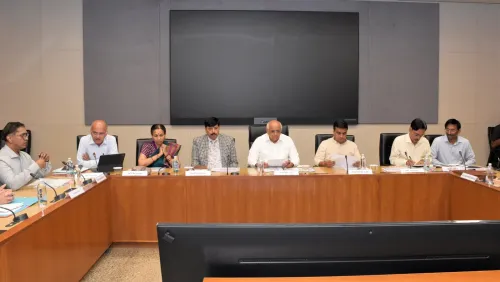
Gujarat CM Bhupendra Patel and Deputy CM Harsh Sanghavi chaired a high-level security review in Gandhinagar, directing agencies to implement the 'One Border, One Picture, One Chain of Action' doctrine across six operational areas of the state's western border districts.
Key Takeaways
CM Bhupendra Patel chaired a high-level border security review in Gandhinagar on September 30, 2026 alongside Deputy CM Harsh Sanghavi .
Central and State agencies have been directed to implement the 'One Border, One Picture, One Chain of Action' unified border doctrine.
The Quadrangular Security Grid now covers six key operational areas with 360-degree surveillance across Gujarat's border districts.
The initiative targets drug trafficking , illegal infiltration , and land encroachments with an explicit zero-tolerance mandate.
The review builds on a recent Union Home Minister Amit Shah security assessment and inauguration of border infrastructure in Bhuj , Kutch.
The framework aligns with the Border Area Development Programme and central government border-security investments active since 2014 .
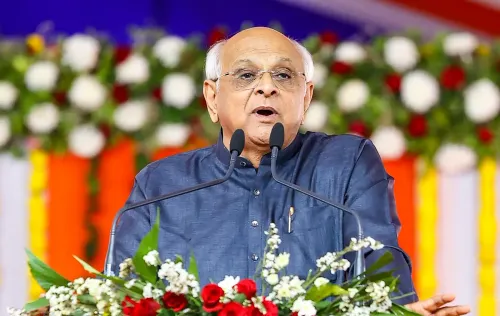
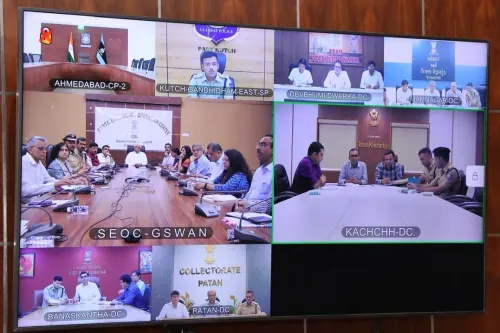
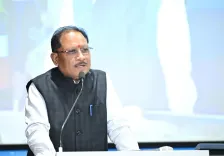
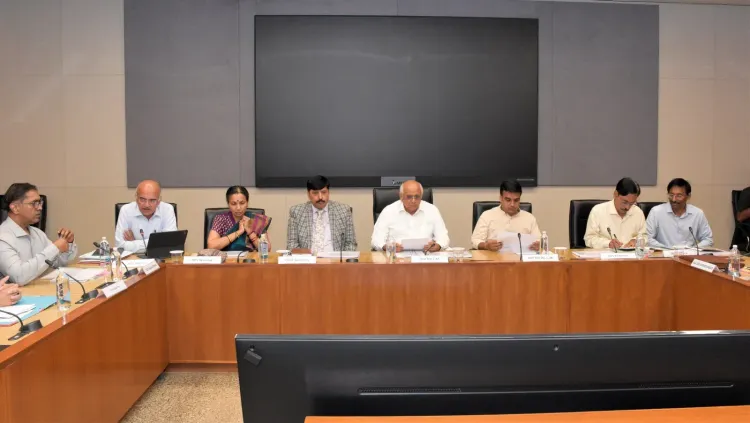
A high-level security review in Gandhinagar on Wednesday, September 30, 2026 signalled Gujarat's sharpest push yet to seal its western frontier — Gujarat Chief Minister Bhupendra Patel chaired the meeting alongside Deputy Chief Minister Harsh Sanghavi, directing Central and State agencies to implement a unified border-action doctrine built on 360-degree surveillance across six key operational areas.
The 'One Border, One Picture, One Chain of Action' doctrine
The centrepiece of Wednesday's directives is a doctrine the state is now formally calling 'One Border, One Picture, One Chain of Action' — a framework designed to collapse the traditional silos between central forces, state police, and intelligence agencies into a single, real-time operational picture. The approach targets three specific threat vectors: illegal infiltration, drug trafficking, and land encroachments along Gujarat's border districts.
CM Patel framed the initiative as a direct extension of Prime Minister Narendra Modi's vision of a 'secure and resilient nation,' invoking a zero-tolerance posture that has anchored BJP's national security messaging since 2014. The meeting also built on a recent high-level security review by Union Home Minister Amit Shah and the inauguration of critical border infrastructure in Bhuj — Kutch district's headquarters and the logistical nerve centre for India's western border operations.
Why Bhuj and the Kutch frontier matter
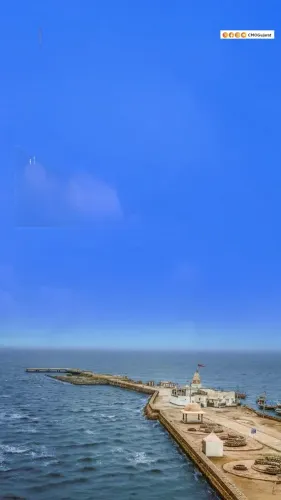
Bhuj sits at the strategic heart of Gujarat's border calculus. Its proximity to the India-Pakistan border makes Kutch the primary corridor for narcotics smuggling networks and infiltration attempts that security agencies have long flagged as a persistent pressure point on India's western flank. Central government programmes — including the Border Area Development Programme — have funded successive rounds of fencing, outpost upgrades, and technology-based surveillance across Kutch and neighbouring border districts since 2014.
The Quadrangular Security Grid, Gujarat's state-level architecture for coordinating this multi-agency effort, now becomes the delivery mechanism for the 'One Border' doctrine — with Wednesday's meeting effectively upgrading its mandate and operational scope.
Seamless coordination as the benchmark
Deputy CM Harsh Sanghavi, who holds the home and security portfolio, was central to the review — a signal that implementation accountability sits at the highest level of the state government. The insistence on 'seamless coordination' across six operational areas reflects a pattern visible across India's border-security upgrades: technology alone is insufficient without a unified command-and-control layer that keeps central and state actors in lockstep.
For residents of Kutch and Gujarat's other border districts, the grid's success will ultimately be measured not in policy language but in whether narcotics seizures rise, encroachment cases drop, and the communities closest to the frontier feel the security dividend on the ground.
The next test for the Quadrangular Security Grid is execution — joint drills, technology rollouts, and inter-agency coordination milestones will tell the real story of whether Gujarat's western border becomes as impregnable as its leadership now insists it must be.
Point of View
One Picture, One Chain of Action' framework publicly, CM Patel is staking reputational accountability on a measurable operational outcome, not just a policy intent. The explicit linkage to both PM Modi's security vision and Home Minister Shah's recent review also positions Gujarat as a model implementer of the BJP's national security agenda ahead of any federal-state coordination benchmarks. The real test will come in the grid's first joint operational cycle — seizure data, encroachment reversals, and inter-agency response times will either validate the doctrine or expose it as administrative signalling.
NationPress
30 Sept 2026
Frequently Asked Questions
What is Gujarat's Quadrangular Security Grid?
The Quadrangular Security Grid is a Gujarat state initiative for coordinated, multi-agency surveillance and enforcement across the state's border districts, designed to integrate central forces, state police, and intelligence agencies into a single operational framework targeting infiltration, drug trafficking, and encroachments.
What does 'One Border, One Picture, One Chain of Action' mean?
It is a unified border-management doctrine directed by CM Bhupendra Patel, aiming to give all security agencies — Central and State — a single real-time operational picture and a coordinated chain of command, eliminating inter-agency silos along Gujarat's western frontier.
Why is Bhuj important for Gujarat's border security?
Bhuj is the headquarters of Kutch district and the logistical hub for India's western border operations. Its proximity to the India-Pakistan border makes it a critical node for border fencing, outpost infrastructure, and counter-narcotics efforts in Gujarat.
What role does Harsh Sanghavi play in Gujarat's border security?
Deputy Chief Minister Harsh Sanghavi holds the home and security portfolio in Gujarat and co-chaired the September 30 high-level review, making him the primary accountability figure for implementing the Quadrangular Security Grid directives.
How does Gujarat's border security effort connect to central government policy?
Gujarat's initiative aligns with the Union Home Ministry's integrated border management programme and the Border Area Development Programme, which have funded fencing, outposts, and surveillance technology along the Gujarat-Pakistan border since 2014 under successive central budgets.