How Did Gujarat CM Inaugurate 'Bharatkool Chapter-2' Event?
Click to start listening
Synopsis
At the recent 'Bharatkool Chapter-2' launch, CM Bhupendra Patel emphasized the media's role in nation-building while urging positive criticism. The event celebrated Gujarat's cultural identity and aimed to inspire the youth towards a developed India by 2047.
Key Takeaways
- The role of media is crucial in shaping a progressive society.
- Positive criticism is essential for good governance.
- 2025 marks significant cultural milestones for India.
- The youth should embrace India's civilizational values.
- Gujarat aims to lead in cultural and developmental aspects towards Viksit Bharat @2047.
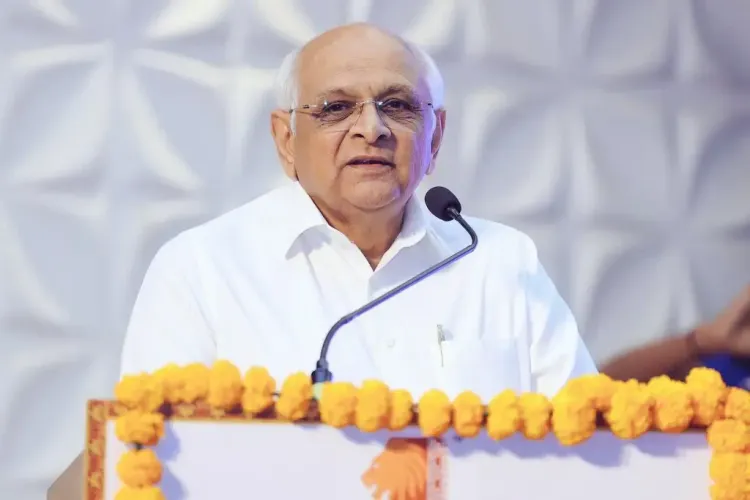
Ahmedabad, Dec 12 (NationPress) During the inauguration of 'Bharatkool Chapter-2', hosted by the Gujarat Media Club at Gujarat University on Friday, Chief Minister Bhupendra Patel stressed the essential function of the media in fostering a progressive society.
He pointed out that "all criticism should have a positive intention and a dedication to public welfare," asserting that constructive criticism enhances governance.
The Chief Minister also noted that 2025 is set to be a momentous year for national pride, coinciding with the 150th birth anniversaries of Birsa Munda and Sardar Patel, as well as 150 years of Vande Mataram.
Highlighting the cultural revival represented at the National Tribal Pride Day and Bharat Parv in Ekta Nagar, he encouraged the youth to stay connected to India's civilizational values while embracing modernity.
Reiterating the importance of collaborative efforts to achieve the vision of Viksit Bharat @2047, CM Patel affirmed that Gujarat will continue to be a leader, combining its rich cultural heritage with development.
Deputy Chief Minister Harsh Sanghavi remarked that Gujarat's growth narrative is fueled by "bhaav, raag, and taal" — emotion, harmony, and rhythm — and lauded the event for aligning themes with the state's spirit.
He highlighted significant cultural infrastructure projects, including India's largest music studio being developed in Vadnagar, showcasing the government’s ongoing commitment to heritage and creativity.
Deputy CM Sanghavi also urged the event organizers to provide research-based suggestions that could influence policy-making.
The event featured insights from BAPS saint Brahmavihari Swami, who emphasized the media's responsibility to unveil truth while advocating for self-reflection.
Gujarat Media Club President Nirnay Kapoor described the vision behind BharatCool, now in its second phase, as a platform for celebrating India's cultural identity.
The assembly included Members of Parliament, prominent journalists, cultural aficionados, and a significant number of students.
India's media landscape is among the largest and most varied globally, encompassing thousands of newspapers, numerous news channels, a rapidly growing digital ecosystem, and a lively regional press.
While it plays a crucial role in shaping public opinion, holding power accountable, and promoting grassroots issues, it also contends with challenges like political polarization and corporate influence, alongside dwindling newsroom resources and the race for immediate, engaging content.
Despite these hurdles, the Indian media remains a vibrant and influential cornerstone of democracy, continually adapting to technological advancements and the needs of a young, interconnected audience.
Point of View
It's crucial to recognize that media plays a pivotal role in shaping societal discourse. The emphasis on constructive criticism, as highlighted by CM Patel, reflects a broader need for positive engagement in nation-building. This event not only celebrates Gujarat's rich cultural heritage but also encourages a forward-thinking approach towards a developed India by 2047.
NationPress
13/12/2025
Frequently Asked Questions
What is 'Bharatkool Chapter-2'?
Bharatkool Chapter-2 is an event organized by the Gujarat Media Club aimed at celebrating India's cultural identity and promoting constructive discussions on media's role in society.
Who inaugurated the event?
The event was inaugurated by Gujarat's Chief Minister, Bhupendra Patel.
What did CM Patel emphasize about criticism?
CM Patel emphasized that all criticism should have a positive intent and a commitment to public welfare, which he believes strengthens governance.
What cultural milestones were discussed at the event?
The event highlighted the upcoming 150th birth anniversaries of Birsa Munda and Sardar Patel, as well as the 150 years of Vande Mataram in 2025.
What is the vision behind the Gujarat Media Club?
The vision behind the Gujarat Media Club, as outlined by President Nirnay Kapoor, is to serve as a platform for celebrating and promoting India's cultural identity.