Gujarat CM releases NEP-2020 SCF and SQAAF booklets for schools
Synopsis
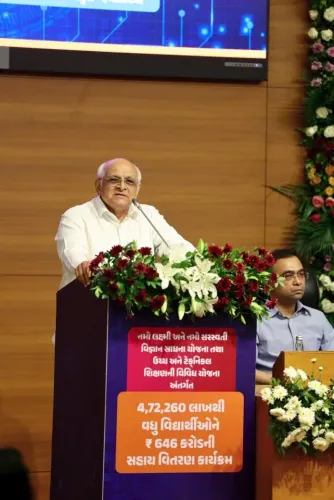
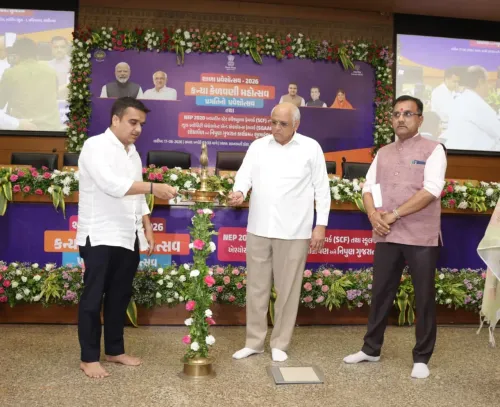
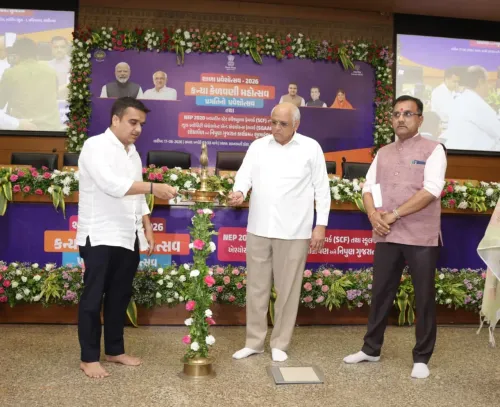
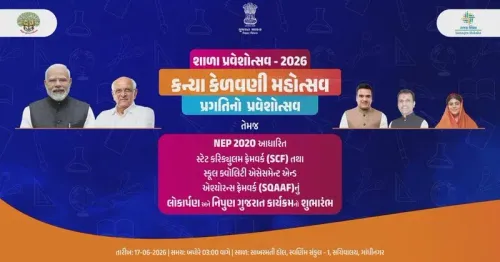
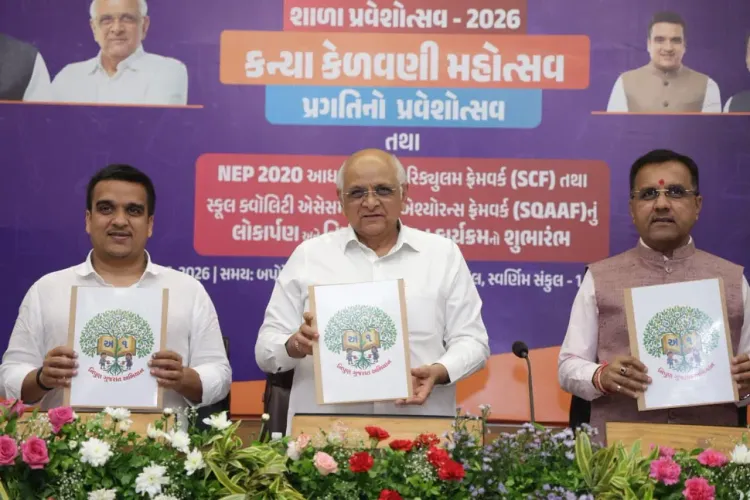
Gujarat's Chief Minister released the NEP-2020-based State Curriculum Framework and the School Quality Assessment and Assurance Framework booklets on 17 June 2026, and conferred approval letters for new secondary schools. For the first time, all state anganwadis have been included in the enrollment drive with a 100% enrollment target.
Key Takeaways
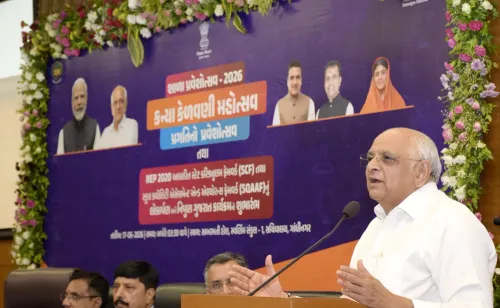
The Chief Minister of Gujarat released the State Curriculum Framework (SCF) for school education, aligned with NEP-2020 , on 17 June 2026 .
The School Quality Assessment and Assurance Framework (SQAAF) booklet was also released to ensure globally benchmarked quality standards in Gujarat's schools.
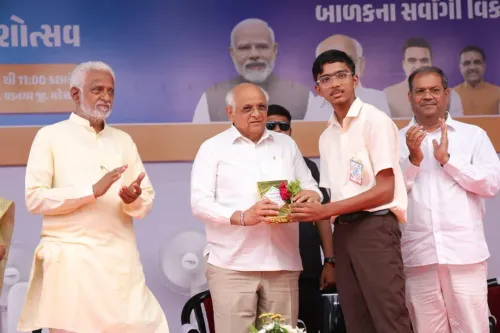
Approval letters for newly sanctioned secondary schools , upgraded from existing primary schools, were conferred at the event.
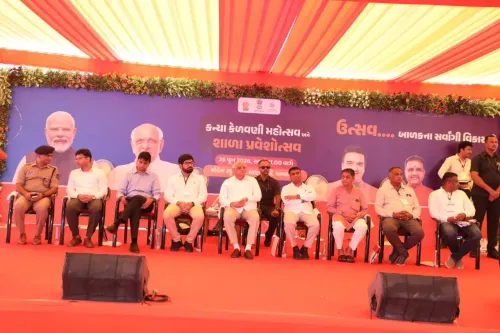
For the first time , all government anganwadis across Gujarat have been included in the enrollment drive alongside government primary schools.
The state has set a target of 100% enrollment across all government primary schools and anganwadis this year.
Full implementation of SCF and SQAAF is expected across Gujarat's districts during the 2026-27 academic year .
The Chief Minister's Office of Gujarat announced on 17 June 2026 that the Chief Minister released two landmark education documents — the State Curriculum Framework for School Education (SCF) based on the National Education Policy 2020 (NEP-2020), and the School Quality Assessment and Assurance Framework (SQAAF) booklet — along with approval letters for newly sanctioned secondary schools to be upgraded from existing primary schools across the state.
The official post, shared in Gujarati, stated that the SCF booklet operationalises NEP-2020 goals at the state level, while the SQAAF booklet is designed to ensure quality assessment in schools aligned with global standards. Approval letters for newly sanctioned secondary schools were also conferred at the event, marking a significant expansion of secondary education infrastructure in Gujarat.
Context
The release follows the Union Cabinet's approval of the National Education Policy in July 2020, which replaced the 1986 National Education Policy and mandated every state to develop its own curriculum framework. The NEP-2020 introduced a structural overhaul of Indian schooling through a 5+3+3+4 curricular design emphasising foundational literacy and numeracy in the earliest years. Gujarat had already initiated NEP-aligned foundational literacy missions from 2021-22, covering both anganwadis and primary schools.
Policy Backdrop
The SCF for School Education translates NEP-2020's national vision into Gujarat-specific curriculum structures, teaching-learning approaches, and assessment practices. The SQAAF introduces a standardised, globally benchmarked accreditation mechanism for schools — a framework that multiple states have been developing in the post-2020 period as part of national education reform. Together, the two documents are intended to bring systemic coherence from the classroom to the policy level.
A particularly notable feature of this year's enrollment drive, as stated in the official post, is that all government anganwadis across the state have been directly included alongside government primary schools for the first time, with a stated goal of achieving 100% enrollment. Anganwadis, which operate under the Integrated Child Development Services (ICDS) scheme, serve as the earliest point of contact between the state and young children — and their inclusion signals a deliberate policy effort to link early childhood care with the formal school system.
Stakeholders and Impact
The primary beneficiaries are children enrolled in government primary schools and anganwadi centres across Gujarat, along with students who will gain access to newly upgraded secondary schools. Teachers and school administrators will be expected to align their pedagogy and institutional practices with the SCF and SQAAF frameworks from the upcoming academic year. The inclusion of anganwadis in the 100% enrollment pledge extends the state's accountability to children in the 3-6 age group — a cohort that has historically been harder to capture in formal enrollment data.
The approval letters for newly sanctioned secondary schools, granted to existing primary schools, directly expand access to upper-level schooling in areas where students previously had no local secondary option, reducing dropout risk at the critical transition stage.
What's Next
Implementation of the SCF and SQAAF across Gujarat's districts is expected to proceed through the 2026-27 academic year, with outcomes to be tracked through the state's school education dashboard. The 100% enrollment target for both government primary schools and anganwadis will be a key metric to watch in the months ahead. How effectively the SQAAF framework translates into on-ground quality improvements — particularly in rural and tribal districts — will determine the longer-term significance of Wednesday's announcements.
Point of View
End-to-end reform rather than a piecemeal exercise. The inclusion of anganwadis in a formal 100% enrollment pledge is the sharpest policy signal here: it attempts to close the gap between early childhood care and primary schooling that has long undermined foundational learning outcomes. Nationally, Gujarat joins a cohort of states racing to demonstrate NEP compliance ahead of the policy's five-year review window. Whether the SQAAF framework becomes a genuine accountability tool or a box-checking exercise will depend almost entirely on district-level enforcement and the independence of assessment bodies.
NationPress
16 Sept 2026
Frequently Asked Questions
What is the State Curriculum Framework (SCF) released by Gujarat?
The State Curriculum Framework (SCF) for School Education is a Gujarat-specific curriculum document that operationalises the goals of the National Education Policy 2020, outlining teaching-learning approaches, content structure, and assessment practices for different school stages.
What is SQAAF and why is it important for Gujarat schools?
The School Quality Assessment and Assurance Framework (SQAAF) is a standardised framework designed to evaluate and accredit schools against globally benchmarked quality standards, helping ensure consistent educational outcomes across Gujarat's government schools.
Why are anganwadis being included in Gujarat's school enrollment drive for the first time?
In 2026, Gujarat included all government anganwadis alongside primary schools in its enrollment drive for the first time, reflecting NEP-2020's emphasis on linking early childhood care with formal schooling to achieve universal access from the foundational stage.
What do the secondary school approval letters released by Gujarat CM mean?
The approval letters sanction the upgrade of existing government primary schools to secondary schools, directly expanding access to upper-level education in areas that previously lacked a local secondary school, which is expected to reduce student dropout rates.
When will Gujarat implement the SCF and SQAAF in schools?
The SCF and SQAAF frameworks are expected to be rolled out across Gujarat's districts during the 2026-27 academic year, with progress tracked through the state's school education dashboard.