CM Bhupendra Patel Launches SCF, SQAAF and Nipun Gujarat Ahead of Shala Praveshotsav 2026
Synopsis
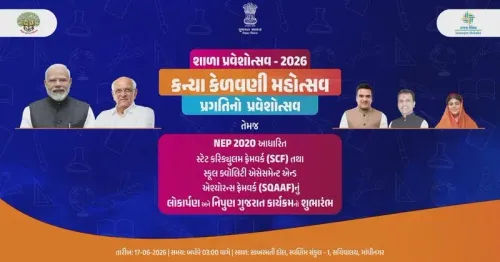
Gujarat CM Bhupendra Patel on 17 June 2026 launched the State Curriculum Framework, SQAAF and Nipun Gujarat Abhiyan at a Gandhinagar review meeting, setting the stage for the 23-25 June Shala Praveshotsav and Kanya Kelavani Mahotsav 2026 across the state.
Key Takeaways
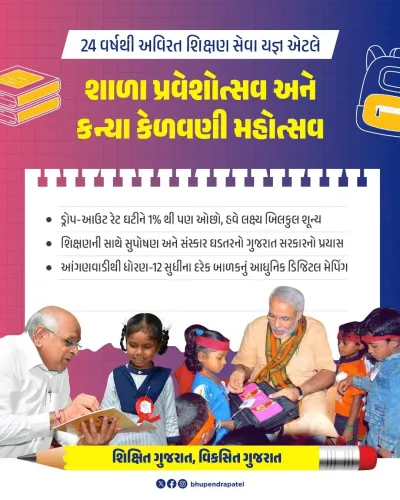
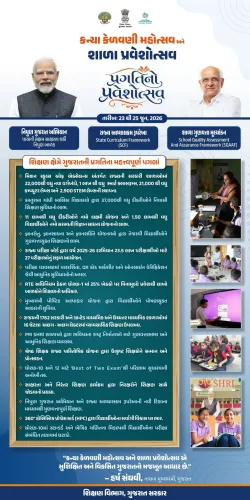
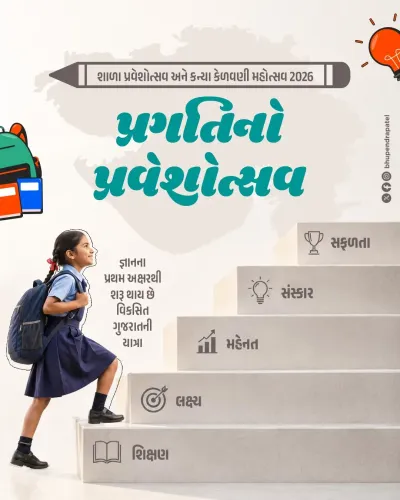
Shala Praveshotsav and Kanya Kelavani Mahotsav 2026 will be held across Gujarat from 23 to 25 June 2026 .
CM Bhupendra Patel released the State Curriculum Framework (SCF) aligned to National Education Policy 2020 at a preparatory review in Gandhinagar .
The School Quality Assessment and Assurance Framework (SQAAF) was unveiled to benchmark Gujarat schools against global standards.
The Nipun Gujarat Abhiyan was launched to strengthen foundational literacy and numeracy among primary-grade students, mirroring the central NIPUN Bharat mission.
Sanction letters for new secondary school sections within existing primary school campuses were distributed to reduce student drop-out rates.
Patel called on parents, school communities, and society to collectively realise the vision of 'Shikshit Gujarat — Viksit Gujarat' (Educated Gujarat — Developed Gujarat).
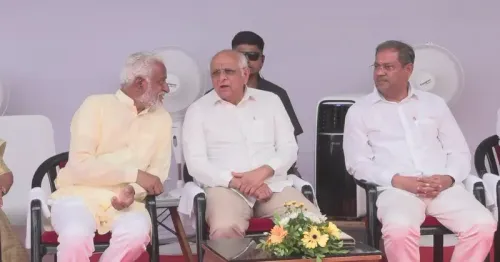
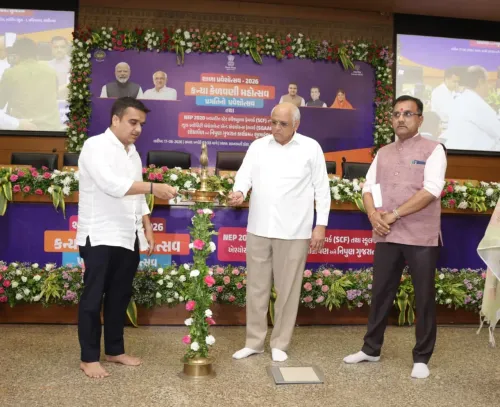
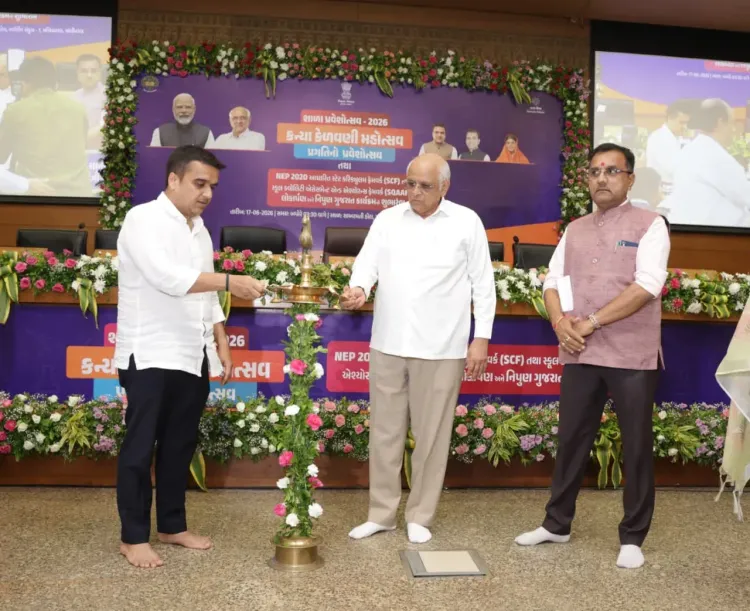
Gujarat Chief Minister Bhupendra Patel chaired a comprehensive preparatory review meeting in Gandhinagar on Wednesday, 17 June 2026, ahead of the state-wide Shala Praveshotsav and Kanya Kelavani Mahotsav 2026, scheduled from 23 to 25 June. At the meeting, attended by cabinet colleagues and senior officials of the Education Department, Patel launched three major education initiatives aimed at shifting Gujarat's focus from school enrolment to measurable learning quality.
Context
Posting in Gujarati, CM Patel described the occasion as 'Shala Praveshotsav… Pragati no Praveshotsav' — 'School Enrolment Festival… a festival of progress.' He said the review covered all preparatory arrangements for the three-day statewide drive and that he personally released two new policy frameworks along with launching a foundational learning mission.
The Shala Praveshotsav is an annual enrolment drive that Gujarat has conducted since 2002-03, designed to bring out-of-school children — particularly girls — into the formal education system. The companion Kanya Kelavani Mahotsav focuses specifically on girl-child education across districts.
Policy Backdrop
The centrepiece of Wednesday's event was the release of Gujarat's State Curriculum Framework (SCF), a document aligned to the National Education Policy (NEP) 2020 that replaces the earlier 1986 framework. NEP 2020 had mandated all states to prepare their own curriculum frameworks; Gujarat's SCF operationalises that directive for its school education stages.
Alongside the SCF, Patel unveiled the School Quality Assessment and Assurance Framework (SQAAF), a new state-level tool designed to evaluate schools against global benchmarks across teaching quality, infrastructure, and learning outcomes. The dual release signals a deliberate move to institutionalise standards rather than rely solely on enrolment numbers.
A third initiative, the Nipun Gujarat Abhiyan, was also formally launched. Modelled on the central government's NIPUN Bharat mission — announced by the Ministry of Education in July 2021 with a target of universal foundational literacy and numeracy by 2026-27 — the state programme specifically targets primary-grade students to strengthen basic reading and arithmetic skills.
Stakeholders and Impact
CM Patel also distributed sanction letters for new secondary school sections to be opened within existing approved primary school campuses across the state. The move is intended to reduce drop-out rates by providing a seamless transition from primary to secondary education within familiar school premises.
Addressing the broader community, Patel called on the 'shala parivar' — the school family — including parents, guardians, and society at large to make the education drive a collective effort. His closing appeal invoked the vision of 'Shikshit Gujarat — Viksit Gujarat', or 'Educated Gujarat — Developed Gujarat', linking school-level reforms to the state's wider development agenda.
What's Next
All eyes will be on the 23–25 June 2026 Praveshotsav fortnight, during which the SCF, SQAAF, and Nipun Gujarat frameworks will receive their first public rollout alongside the enrolment drive. Implementation quality — particularly teacher preparedness for the new curriculum and the operationalisation of quality-assessment tools in rural schools — will be the immediate test for the policy announcements made on Wednesday.
State budget allocations for the newly sanctioned secondary school sections and the pace of SQAAF assessments across districts will be closely watched as indicators of whether Gujarat's shift from access-focused to outcome-focused education policy translates into measurable gains on the ground.
Point of View
SQAAF, and Nipun Gujarat — represents a calculated pivot in Gujarat's education narrative: from the optics of enrolment festivals to the harder metrics of curriculum quality and learning outcomes, a shift that aligns with the post-NEP 2020 national push. By tying these framework releases to the Shala Praveshotsav calendar, the Bhupendra Patel government ensures maximum administrative and media attention during the annual drive. The simultaneous grant of secondary school sanction letters addresses a long-standing structural gap where primary enrolment gains were eroded by the absence of local secondary options. Whether the frameworks move beyond document releases to classroom-level change will ultimately define the political dividend of this education push for the BJP in Gujarat.
NationPress
26 Sept 2026
Frequently Asked Questions
What is Shala Praveshotsav 2026 and when will it be held?
Shala Praveshotsav 2026 is Gujarat's annual school enrolment festival, held this year from 23 to 25 June across the state. It aims to bring out-of-school children, especially girls, into formal education, and is accompanied by the Kanya Kelavani Mahotsav focused on girl-child education.
What is the Nipun Gujarat Abhiyan?
Nipun Gujarat Abhiyan is a state mission launched by CM Bhupendra Patel to build foundational literacy and numeracy skills among primary school students. It is modelled on the central government's NIPUN Bharat mission, which targets universal basic reading and arithmetic competency by 2026-27.
What is the State Curriculum Framework (SCF) released by Gujarat?
The State Curriculum Framework (SCF) is a Gujarat-specific curriculum document aligned to the National Education Policy 2020. It outlines learning standards and pedagogical approaches for different school education stages, replacing the framework based on the older 1986 national policy.
What is SQAAF in Gujarat education?
SQAAF stands for School Quality Assessment and Assurance Framework. Released by CM Bhupendra Patel on 17 June 2026, it is a state-level tool to evaluate Gujarat's schools against global benchmarks covering teaching quality, infrastructure, and learning outcomes.
What did Gujarat CM Bhupendra Patel announce for secondary schools?
CM Patel distributed sanction letters approving new secondary school sections within existing primary school campuses across Gujarat. The move is designed to reduce drop-out rates by allowing students to continue into secondary grades without changing schools.