Gujarat CMO announces portal to digitise scheme evaluations

Synopsis
The Chief Minister's Office of Gujarat has announced a Transforming Survey Ecosystem Web Portal, built with NIC support, to take scheme evaluation from proposal to final report fully online under Digital Gujarat.
Key Takeaways
On 27 November 2026, the Chief Minister's Office of Gujarat announced the Transforming Survey Ecosystem Web Portal.
The portal is meant to digitise scheme evaluation from a department's proposal through study to the final report.
It was developed by the Director of Evaluation's office under the General Administration Department's Planning Division.
The National Informatics Centre provided technical support.
The CMO linked the project to Prime Minister Narendra Modi's Digital India vision and Chief Minister Bhupendra Patel's Digital Gujarat drive.
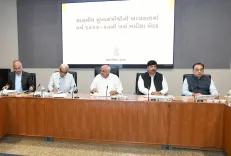
Gujarat is putting the evaluation of government schemes on a digital assembly line. On 27 November 2026, the Chief Minister's Office of Gujarat announced that a Transforming Survey Ecosystem Web Portal has been developed to take every department's proposal, study and final report fully online.
Writing in Gujarati, the office tied the project to Prime Minister Narendra Modi's Digital India vision and to ડિજિટલ ગુજરાત (Digital Gujarat) under Chief Minister Bhupendra Patel. The stated aim is to make evaluation studies of government schemes modern, transparent and time-bound — so that, in the CMO's words, ‘the entire process from every department's proposal to the study and the final report will become online’.
End-to-end online, from proposal to report
The portal was built by the office of the Director of Evaluation, under the guidance of the General Administration Department's Planning Division, with technical support from the National Informatics Centre (NIC). That is the chain the CMO named: GAD and Planning as guides, the evaluation directorate as developer, NIC as the technical partner.
Once departments use it, the paper trail of scheme evaluation is meant to collapse into a single web workflow. The CMO listed the intended gains in one breath: administrative efficiency, systematic monitoring, and a new pace for good governance.
Digital Gujarat's quieter layer
Since 2015, Digital India has pushed states to convert not only citizen services but the government's own files into online processes. Gujarat's new portal sits in that second category. It does not announce a new welfare scheme. It digitises how existing schemes are studied and scored.
The announcement does not set a rollout calendar or name first-wave departments. What it does fix is the design: one portal, every department, proposal to final report. If that workflow holds, evaluation reports should become easier to track and harder to stall.
The next test is operational, not oratorical: whether files actually move on the portal, and whether evaluation turnaround times shrink across the secretariat.
Point of View
So an end-to-end portal is a governance play, not a publicity gadget. The political risk is familiar — a named portal that departments treat as optional — while the opportunity is a comparable, time-stamped record of how every scheme is studied.
NationPress
27 Nov 2026
Frequently Asked Questions
What is the Transforming Survey Ecosystem Web Portal in Gujarat?
It is a state web portal announced by the Chief Minister's Office of Gujarat to take evaluation of government schemes fully online, from a department's proposal through the study to the final report. It is meant to make those studies modern, transparent and time-bound.
Who developed Gujarat's new scheme evaluation portal?
The office of the Director of Evaluation developed it under the guidance of the General Administration Department's Planning Division, with technical support from the National Informatics Centre. The CMO presented it as part of Digital Gujarat under Chief Minister Bhupendra Patel.
How does the Gujarat portal link to Digital India?
The CMO framed the portal as a step to realise Prime Minister Narendra Modi's Digital India vision, launched in 2015 to move government processes onto digital platforms. The state branding for the same push is Digital Gujarat.
Which Gujarat departments will use the new evaluation portal?
The CMO said the entire process for every department of the state government — from proposal to study and final report — will become online. It did not name a first-wave list of departments or a rollout calendar.
What changes in scheme evaluation after Gujarat's new portal?
Evaluation studies of government schemes are intended to run as a single online workflow instead of a paper trail. The CMO said that should improve administrative efficiency, systematic monitoring and good governance.